
Overview
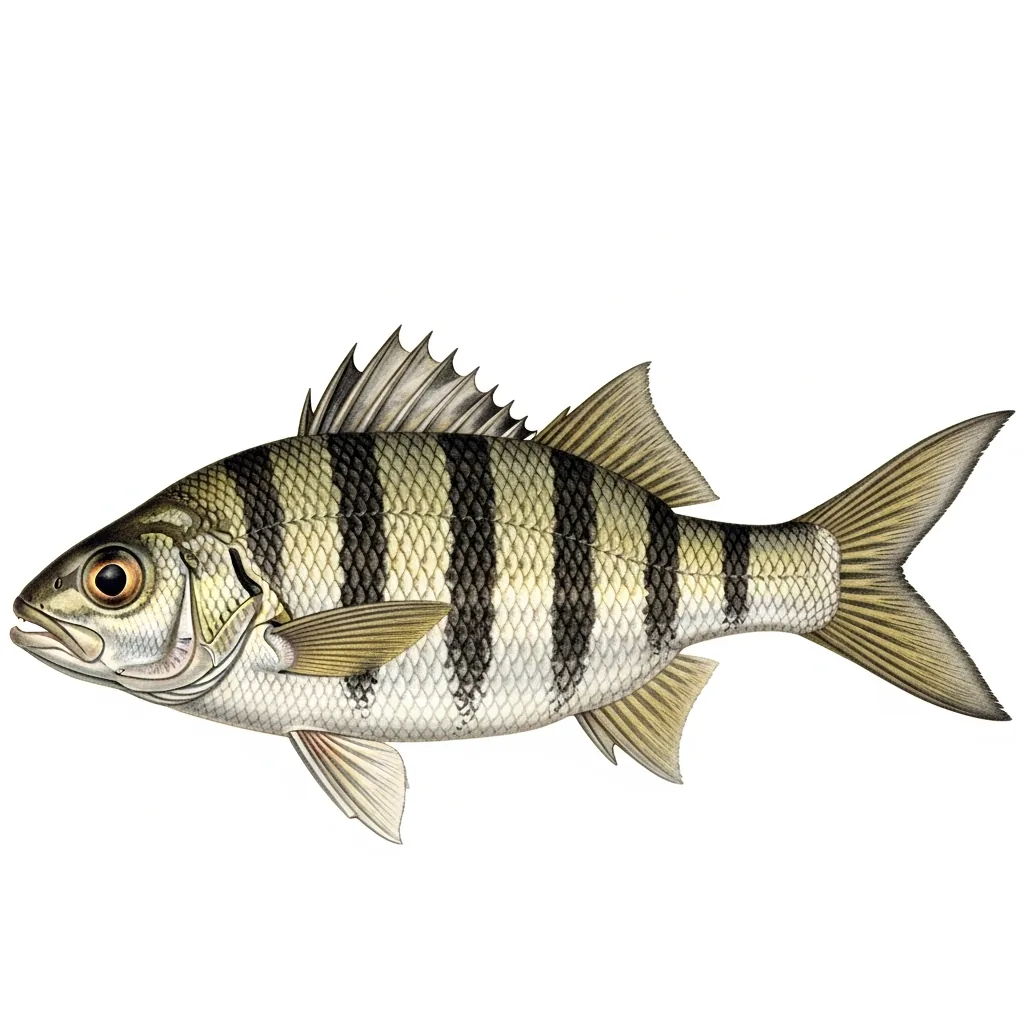
THE quintessential surf fishing species in California. Caught directly from the beach in the surf zone.
Identification
- Body
- Laterally compressed body with an oval shape.
- Colouration
- Silver body with dark vertical bands on both sides.
- Sexual dimorphism
- Absent/not very evident
- Growth
- medium, with regular growth under favorable conditions
Taxonomy
- Family
- Embiotocidae
- Order
- Perciformes
- Class
- Actinopterygii
Related species
Habitat & distribution
- Environment
- Coast, Reefs
- Preferred bottom
- Sand, Reef
- Geographic distribution
- Found along the eastern Pacific coast, from Baja California to Washington.
- Micro-habitat
- Often found in the surf zone between the waves near the shore.
Prefers areas where wave turbulence aids in exposing prey.
Presence by sea area
Diet
- Primary prey
- shrimp, copepods, amphipods
- Secondary prey
- isopods, polychaetes, small bivalves
- Occasional prey
- algae, small fish
- Feeding behaviour
- Hunts in groups close to shore, using the wave action to expose prey.
- Natural predators
- sea lions, dolphins, large predatory fish
Utilizes wave movements to gain access to prey.
Behaviour
- Activity
- diurnal
- Social behaviour
- large_schools
- Aggressiveness
- low
- Migration
- resident, but may move along the coast in response to food availability.
- Seasonal behaviour
- Moves closer to shore during the summer season for spawning.
- Juveniles
- Juveniles form small schools and stay near the shore.
- Adults
- Adults form large schools and may venture slightly farther offshore.
Reproduction
- Spawning season
- June, July, August
- Spawning depth
- surface to a few meters deep
- Eggs
- eggs are not laid; live-bearing, the young are born alive.
- Larval stage
- Not applicable; the newborns resemble adults.
- Sexual maturity
- 2-3 years
When to catch Barred Surfperch
Activity calendar
Activity by season
Best times
This species shows peak fishing activity in spring, summer and autumn, when the productivity index (FPI) reaches its highest values.
Fishing activity decreases in winter, when conditions are less favourable.
Ideal conditions
Water temperature
Where to catch it
Best spots
Bottom preference
Spot type
Fishing techniques
Recommended
Other applicable
Recommended baits
Baits by pressure
How to really catch it
In the foam of the surf, where water surges back and forth along the beach edge, the striped surfperch appears suddenly in tight, restless schools. It is not a brutal predator but a methodical feeder of the wash zone, and that is exactly why, when you find it in the right water, the fishing feels alive, fast, and surprisingly technical.
🐟 Good to know
One real and remarkable biological trait of Amphistichus argenteus is that it does not lay eggs: it is live-bearing, and the young are born alive already resembling adults. Among coastal surf fishes this matters, because reproduction takes place close to shore, from the surface down to a few meters, in the height of summer.
🌊 Where & when
It lives along the eastern Pacific coast from Baja California to Washington, over sandy beaches and near reefs, piers, and rocky areas, often right in the first line of breaking waves. It is a diurnal, resident species, though it moves along the coast with food availability; from March to November it is highly fishable, with an even stronger push toward shore in summer, from June through August, during spawning.
🎣 How to really catch it
The most practical way to catch it is light surfcasting in the wash zone, reading the water between breaking waves and working the lanes where the surf digs and exposes the bottom. A medium-light surfcasting rod, 6-12 lb main line, 8-16 lb fluorocarbon leader, and 15-30 g sliding sinkers let you present marine worms or fresh shrimp effectively; size 2-6 hooks help match its small mouth.
💡 The detail that makes the difference
The soundest secret is not to cast beyond the outer breaker every time: striped surfperch often feed very close in, right where the wash stirs sand and dislodges small invertebrates. When the surf is working the shoreline well, a natural low presentation matters more than distance, because this species feeds by using wave action to uncover amphipods, copepods, and shrimp.
Catch & handling tips
- Fight
- Fights vigorously with rapid lateral movements.
- Handling
- Handle carefully to avoid damage to the delicate skin.
- Release
- Ensure the fish is released carefully to promote recovery.
Curiosities & culture
- Record catches
- Maximum documented size: up to about 43 cm in length (source: FishBase). There is no official IGFA All-Tackle record for this species.
- In the kitchen
- Delicacy and often cooked grilled or fried.
- Cultural notes
- Popular among sport fishermen in California.
- Historical notes
- Surf fishing for this species is a long-established tradition along the Californian coast.