
Overview
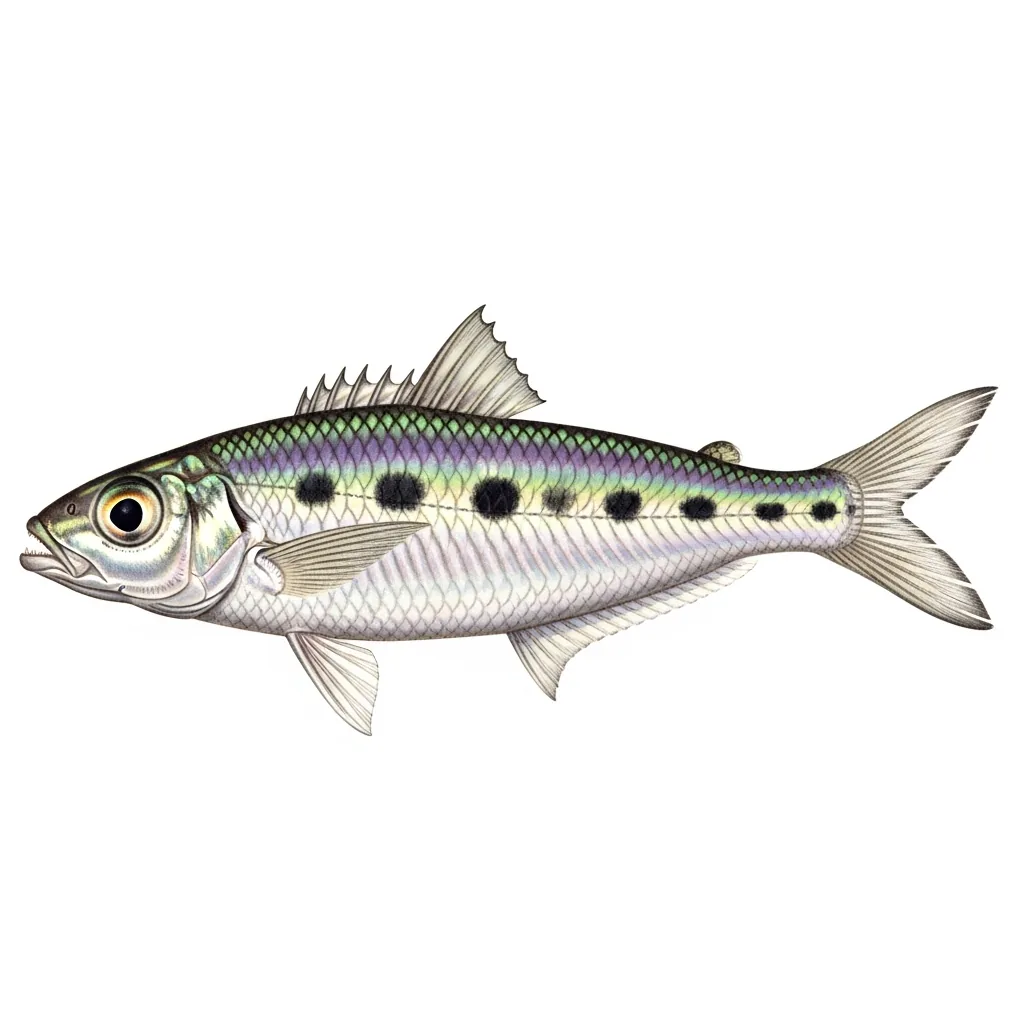
Also known as 'Gray Trout'. Elegant and feisty fish of the US Mid-Atlantic.
Identification
- Body
- Fish with a long and slender body, slightly arched dorsal profile.
- Colouration
- Silvery body with greenish hues and black spots on the back and sides.
- Sexual dimorphism
- Absent/not noticeable
- Growth
- Fast growth, with significant increase in weight and size during the first year.
Taxonomy
- Family
- Sciaenidae
- Order
- Perciformes
- Class
- Actinopterygii
Related species
Habitat & distribution
- Environment
- Coast, Estuaries, Brackish
- Preferred bottom
- Sand, Mud
- Geographic distribution
- Along the Atlantic coast of the United States, from Florida to New York, and in mid-Atlantic estuaries.
- Micro-habitat
- Prefers sandy or muddy bottoms, often near submerged structures or estuarine channels.
Adapts to a variety of coastal conditions but prefers murkier and calmer waters.
Presence by sea area
Diet
- Primary prey
- shrimp, crabs, small fish
- Secondary prey
- squid, insect larvae, mollusks
- Occasional prey
- algae, plankton, annelids
- Feeding behaviour
- Active predator, often chases prey in schools and catches them with quick sprints. Feeds mainly in the evening and night.
- Natural predators
- sharks, tunas, large bony fish, dolphins
Diet varies based on local prey availability, often exploiting high densities of shrimp and small fish.
Behaviour
- Activity
- nocturnal
- Social behaviour
- small_groups
- Aggressiveness
- medium
- Migration
- Resident along the coasts, but makes small seasonal migrations to warmer or cooler waters depending on temperatures.
- Seasonal behaviour
- Tends to move closer to the shores in spring and autumn for spawning and feeding.
- Juveniles
- Young ones seek refuge in estuaries and brackish waters, often under aquatic vegetation cover.
- Adults
- Adults form small groups that frequently move to exploit new food resources.
Reproduction
- Spawning season
- April, May, June
- Spawning depth
- between 10 and 30 meters
- Eggs
- Small, pelagic eggs capable of floating freely in the water.
- Larval stage
- Larvae are planktonic and develop rapidly in sheltered areas like estuaries.
- Sexual maturity
- varies between 2 and 4 years
When to catch Weakfish
Activity calendar
Activity by season
Best times
This species shows peak fishing activity in spring, summer and autumn, when the productivity index (FPI) reaches its highest values.
Fishing activity decreases in winter, when conditions are less favourable.
Ideal conditions
Water temperature
Where to catch it
Best spots
Bottom preference
Spot type
Fishing techniques
Recommended
Other applicable
Recommended baits
Baits by pressure
How to really catch it
Weakfish is a sleek, mobile coastal predator with a large mouth and prominent eyes, able to appear suddenly over sand and mud to chase small fish and crustaceans. When light fades and current settles, it truly comes alive: that is when it is worth targeting carefully, because it often moves in small groups and can turn a quiet stretch of estuary into a real hunt.
🐟 Good to know
One important biological feature of weakfish is its pelagic spawning strategy: it releases small eggs that drift freely in the water column, while the larvae are planktonic and develop quickly in sheltered areas such as estuaries. That detail helps explain how closely this species is tied to brackish coastal systems during its earliest life stages.
🌊 Where & when
You find it along the Atlantic coast of the United States, from Florida to New York, especially in estuaries, brackish water, and coastal stretches with sandy or muddy bottoms, often near channels or submerged structure. It is more targetable from spring through autumn, with strong activity from March to November; in spring and fall it tends to move closer to shore, and from April to June it also uses spawning areas between 10 and 30 meters.
🎣 How to really catch it
To really catch it, the most practical route is spinning around estuarine channels, submerged sand areas, coastal piers, and artificial reefs, focusing on evening and night hours. A medium-heavy spinning or casting rod with 20-30 lb braid or mono, a 20-25 lb fluorocarbon leader, and bright artificials works well; alternatively, drift fishing or bottom fishing with shrimp, squid, or live bait on 1/0 or 2/0 circle hooks and an egg sinker lets you work close to the bottom, where it often feeds.
💡 The detail that makes the difference
The most defensible tip is to fish both water movement and bottom type together: run the bait or lure along channel edges, over sand or mud, and beside submerged cover, because adults frequently move in small groups to exploit new food sources. If a strike does not come quickly, changing your line by just a few meters often makes more sense than staying put.
Catch & handling tips
- Fight
- Often puts up a strong fight and frequent runs, trying to dive deep.
- Handling
- Handle with care to avoid damaging the thin skin and gills.
- Release
- Release quickly and gently, avoiding prolonged out-of-water time.
Curiosities & culture
- Record catches
- Maximum documented size: up to about 100 cm in length (source: FishBase). IGFA All-Tackle record: 8.99 kg (19 lb 2 oz), caught at Delaware Bay (USA).
- In the kitchen
- Delicate and tasty meat, often fried or grilled; used in traditional fish soups.
- Cultural notes
- Frequently mentioned in the local literature of anglers from the American Atlantic coasts.
- Historical notes
- Historically fished by North American coastal populations, it was considered a commercially important species until the 20th century.