
Overview
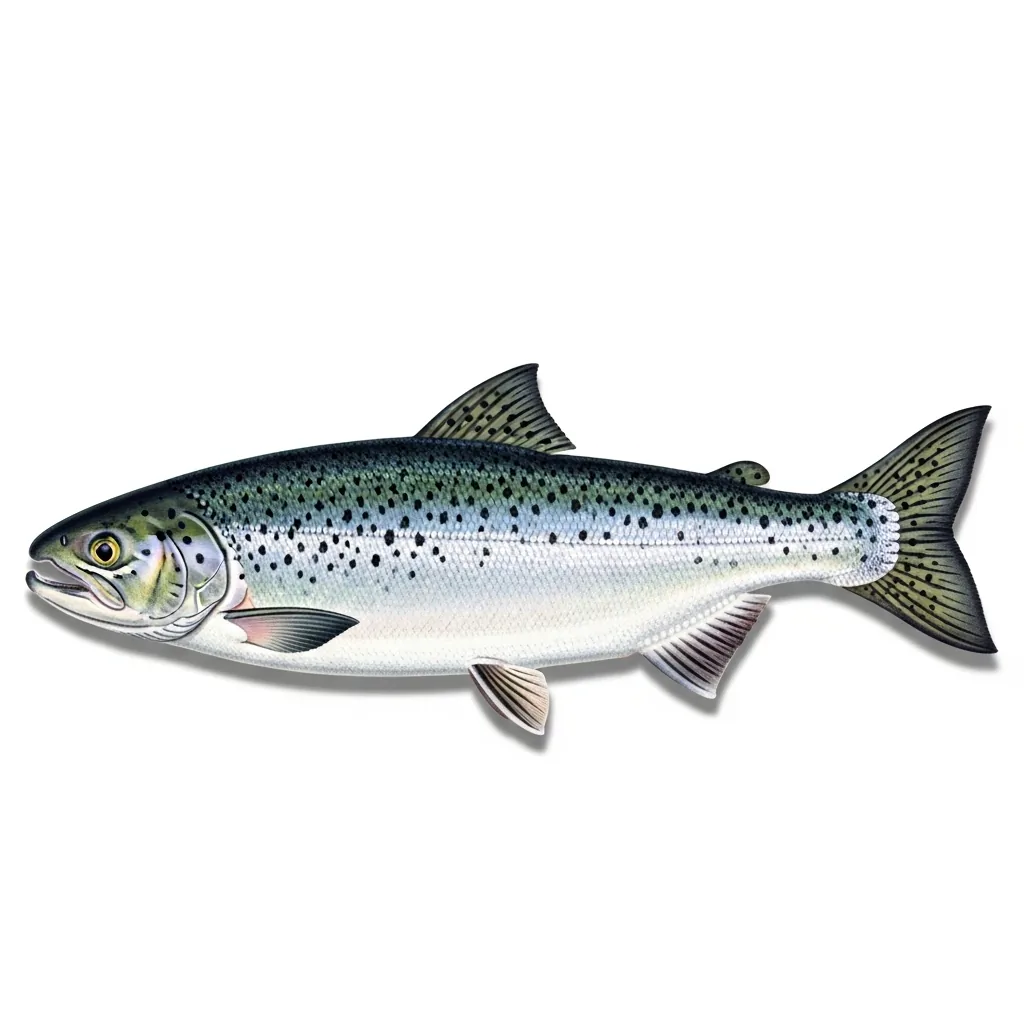
Known as 'Silver Salmon', one of the most acrobatic and feisty Pacific salmons. Found from Oregon to Alaska.
Identification
- Body
- Sturdy, stocky body, sleeker in ocean specimens.
- Colouration
- Silvery body with bluish-green back; males turn reddish during spawning season.
- Sexual dimorphism
- Males exhibit sexual dimorphism, notably during spawning: pronounced hooked jaw and red hue.
- Growth
- Rapid, reaches adult size in 2-3 years
Taxonomy
- Family
- Salmonidae
- Order
- Salmoniformes
- Class
- Actinopterygii
Related species
Habitat & distribution
- Environment
- Coast, Open sea, Estuaries
- Preferred bottom
- Gravel
- Geographic distribution
- Coho Salmon is widely distributed along the Pacific coast, from Oregon to Alaska, and in some parts of northeastern Asia.
- Micro-habitat
- Prefers clean, cool freshwater areas for spawning and seeks refuge in gravel and rock crevices.
Nostrils and sensory organs are highly developed to detect currents and return to native rivers.
Presence by sea area
Diet
- Primary prey
- crustaceans, shrimp, amphipods
- Secondary prey
- small fish, planktonic crustaceans, insect larvae
- Occasional prey
- algae, jellyfish
- Feeding behaviour
- The Coho Salmon is an opportunistic predator that feeds on a wide range of prey based on seasonal availability. It actively hunts in coastal waters and open sea.
- Natural predators
- orca, sea lions, sharks, bears, eagles
Omnivorous tendency in the sea, needing nutrients in freshwater before spawning.
Behaviour
- Activity
- diurnal
- Social behaviour
- large_schools
- Aggressiveness
- medium
- Migration
- Anadromous migration: migrates up rivers to spawn.
- Seasonal behaviour
- During spawning season, migrates upriver in freshwater. Lives in open sea the rest of the year.
- Juveniles
- Juveniles live in gravel beds of rivers, camouflaging to avoid predators.
- Adults
- In the ocean, they move in schools to hunt more efficiently and protect themselves from predators.
Reproduction
- Spawning season
- October, November
- Spawning depth
- between 12 and 40 inches deep in freshwater
- Eggs
- Round, red, sticky eggs laid in gravel.
- Larval stage
- Larval stage occurs in freshwater where they develop into fry.
- Sexual maturity
- 2-3 years
When to catch Coho Salmon
Activity calendar
Activity by season
Best times
This species shows peak fishing activity in spring, summer and autumn, when the productivity index (FPI) reaches its highest values.
Fishing activity decreases in winter, when conditions are less favourable.
Ideal conditions
Water temperature
Where to catch it
Best spots
Bottom preference
Spot type
Fishing techniques
Recommended
Other applicable
Recommended baits
Baits by pressure
How to really catch it
Coho salmon is a powerful, wide-ranging predator, a fish that moves from the open sea to river mouths and then into freshwater with the precision of an anadromous migrant. When you truly meet it, where brackish water boils and clean current slides over gravel, you immediately understand why it is so sought after: it strikes decisively and fights with spectacular jumps.
🐟 Good to know
One remarkable biological trait of coho salmon is its change in shape during the spawning phase: males develop a pronounced hooked snout, while the body loses some of the sleek look typical of ocean fish. It is a real, well-documented transformation linked to the shift from marine life to the freshwater run.
🌊 Where & when
Look for it along the Pacific coast from Oregon to Alaska, especially at river mouths, estuaries, protected bays, and coastal stretches where it feeds or passes through. It is catchable for much of the year, but especially relevant from March through November; in October and November it runs upriver to spawn in cool, clean freshwater over gravel.
🎣 How to really catch it
To really fish for it, the most concrete route is well-executed spinning in river mouths and estuaries, where the fish actively hunts on the move. A medium-heavy spinning rod, 20-30 lb line, 10-15 lb fluorocarbon leader, and size 1-4 hooks give control without making the presentation too stiff; minnows and spoons are logical choices, while a 15-20 g sinker helps in drift fishing when you need to stay in the productive band.
💡 The detail that makes the difference
The most defensible insider tip is to work transition zones: water changing color or speed, estuary edges, bay entrances, and lanes near gravel and rock. Coho salmon is diurnal, moves in schools, and feeds opportunistically on crustaceans, shrimp, and small fish: clean, repeated presentations through travel lanes matter more than forcing the retrieve.
Catch & handling tips
- Fight
- Acrobatic fighter known for spectacular leaps and resilience.
- Handling
- Handle with wet gloves to avoid damaging scales.
- Release
- Release quickly in water, keeping the fish wet at all times.
Curiosities & culture
- Record catches
- Maximum documented size: up to about 108 cm and 15 kg (source: FishBase). IGFA All-Tackle record: 15.08 kg (33 lb 4 oz), caught at the Salmon River, New York (USA), in 1989.
- In the kitchen
- Reddish flesh used for grilling and smoking; common in sushi in North America.
- Cultural notes
- The Coho Salmon is an iconic species in the myths and traditions of the Native Americans along the Pacific coast.
- Historical notes
- It was an important sustenance element for indigenous populations and remains a major economic resource today.