
Overview
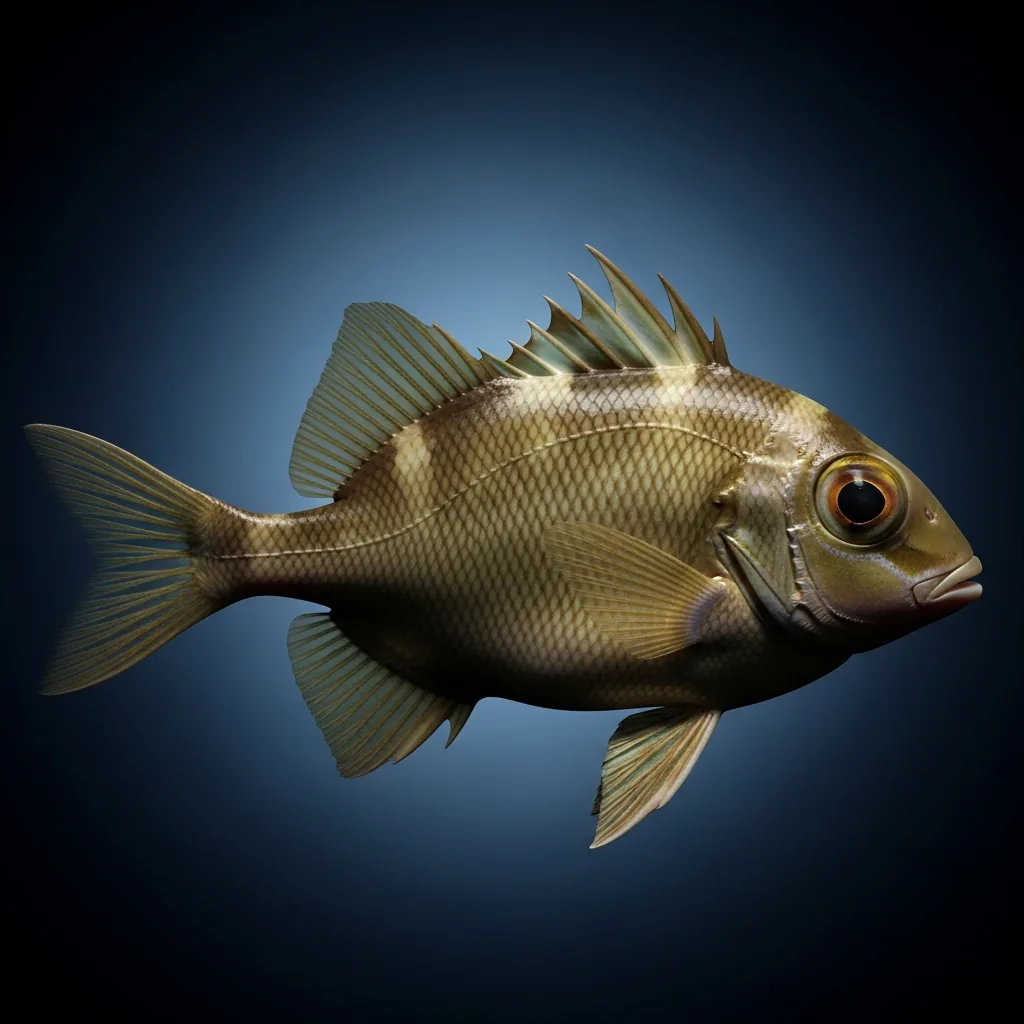
Tropicalized herbivorous species, very common in rocky areas rich in algae.
Identification
- Body
- Elongated body, flattened laterally with a sharp head.
- Colouration
- Generally gray-brown with variations that can include darker stripes or spots.
- Sexual dimorphism
- Absent/Not prominent
- Growth
- Medium; they grow slowly in the first years.
Taxonomy
- Family
- Siganidae
- Order
- Perciformes
- Class
- Actinopterygii
Related species
Habitat & distribution
- Environment
- Coast, Reefs
- Preferred bottom
- Rock, Reef, Seagrass
- Geographic distribution
- Found in the eastern Mediterranean Sea and along the coasts of northeastern Africa and the Middle East. Also present in some areas of the Red Sea.
- Micro-habitat
- Often found among rocks and algae where it feeds and shelters from predators.
Often observed in shallow coastal waters with abundant algae.
Presence by sea area
Diet
- Primary prey
- algae, sea plants
- Secondary prey
- phytoplankton, small invertebrates
- Occasional prey
- zooplankton, coral polyps
- Feeding behaviour
- Diurnal, grazes on algae from the surface of rocks and corals.
- Natural predators
- large predatory fish, seabirds, sea snakes
Herbivorous diet limits competition with many other carnivorous species.
Behaviour
- Activity
- diurnal
- Social behaviour
- small_groups
- Aggressiveness
- low
- Migration
- Non-migratory
- Seasonal behaviour
- Its activity might increase during warmer months when algae, its main food source, are more abundant.
- Juveniles
- Young ones form small schools for mutual protection and socialization.
- Adults
- Adults are more solitary or form small, often territorial groups.
Reproduction
- Spawning season
- June, July, August
- Spawning depth
- Between 30 and 100 feet
- Eggs
- Small pelagic eggs that develop in open water.
- Larval stage
- Larvae are pelagic and drift with currents before settling in grassy habitats.
- Sexual maturity
- Varies between 2 and 4 years
When to catch Dusky spinefoot
Activity calendar
Activity by season
Best times
This species shows peak fishing activity in spring, summer and autumn, when the productivity index (FPI) reaches its highest values.
Fishing activity decreases in winter, when conditions are less favourable.
Ideal conditions
Atmospheric pressure
Very active and less suspicious.
Regular activity.
Stays near rocks.
Water temperature
Where to catch it
Best spots
Bottom preference
Spot type
Fishing techniques
Recommended
Other applicable
Recommended baits
Baits by pressure
How to really catch it
The dusky rabbitfish slips through rocks and algae with near-perfect discretion: compressed body, cryptic livery, and a small mouth built for constant grazing. It is not a brutal fighter, but to catch it consistently you must read its feeding path, match its daytime rhythm, and fish where it brushes living stone.
🐟 Good to know
An important and often overlooked biological trait is the presence of venomous dorsal spines. This does not only affect how you unhook it; it also helps explain why this species can remain calm in exposed coastal habitats, feeding among rocks and algae.
🌊 Where & when
It lives along coasts, reefs, and mixed bottoms of rock, seagrass, and reef structure, from very shallow water down to about 50 meters, especially in the eastern Mediterranean and along the coasts of the Middle East and northeastern Africa. It becomes more approachable in warmer months, when algae are more abundant; from June to August it spawns between 10 and 30 meters.
🎣 How to really catch it
The most practical approach is float fishing, light and precise, worked close to exposed rocks, rocky shoreline, and the edges of seagrass beds. A light spinning rod, 6-8 lb monofilament, a 10 lb fluorocarbon leader, small size 10-12 hooks, and light split shot are enough; baits such as pieces of algae, bread, or dough work best when presented almost still, in daylight, where the fish is grazing.
💡 The detail that makes the difference
The detail that really matters is not to keep the bait too far off the bottom structure. This fish feeds by grazing the surface of rocks and corals: if the bait tracks too high and too far from stone it looks unnatural, while keeping it close to submerged algae places it exactly inside its feeding window. Always handle it carefully because of the spines.
Catch & handling tips
- Fight
- Does not put up much of a fight, but may attempt quick dashes.
- Handling
- Wear thick gloves to handle and avoid venomous spines.
- Release
- Release quickly and carefully, preferably in deeper water near rocks or algae.
Curiosities & culture
- Record catches
- Maximum documented size: up to about 30 cm in length (source: FishBase). There is no official IGFA All-Tackle record for this species.
- In the kitchen
- Not commonly eaten, but occasionally used in fish soups.
- Cultural notes
- Considered invasive in some parts of the Mediterranean, it has a significant impact on local marine vegetation.
- Historical notes
- Native to the Red Sea, it spread into the Mediterranean through the Suez Canal.