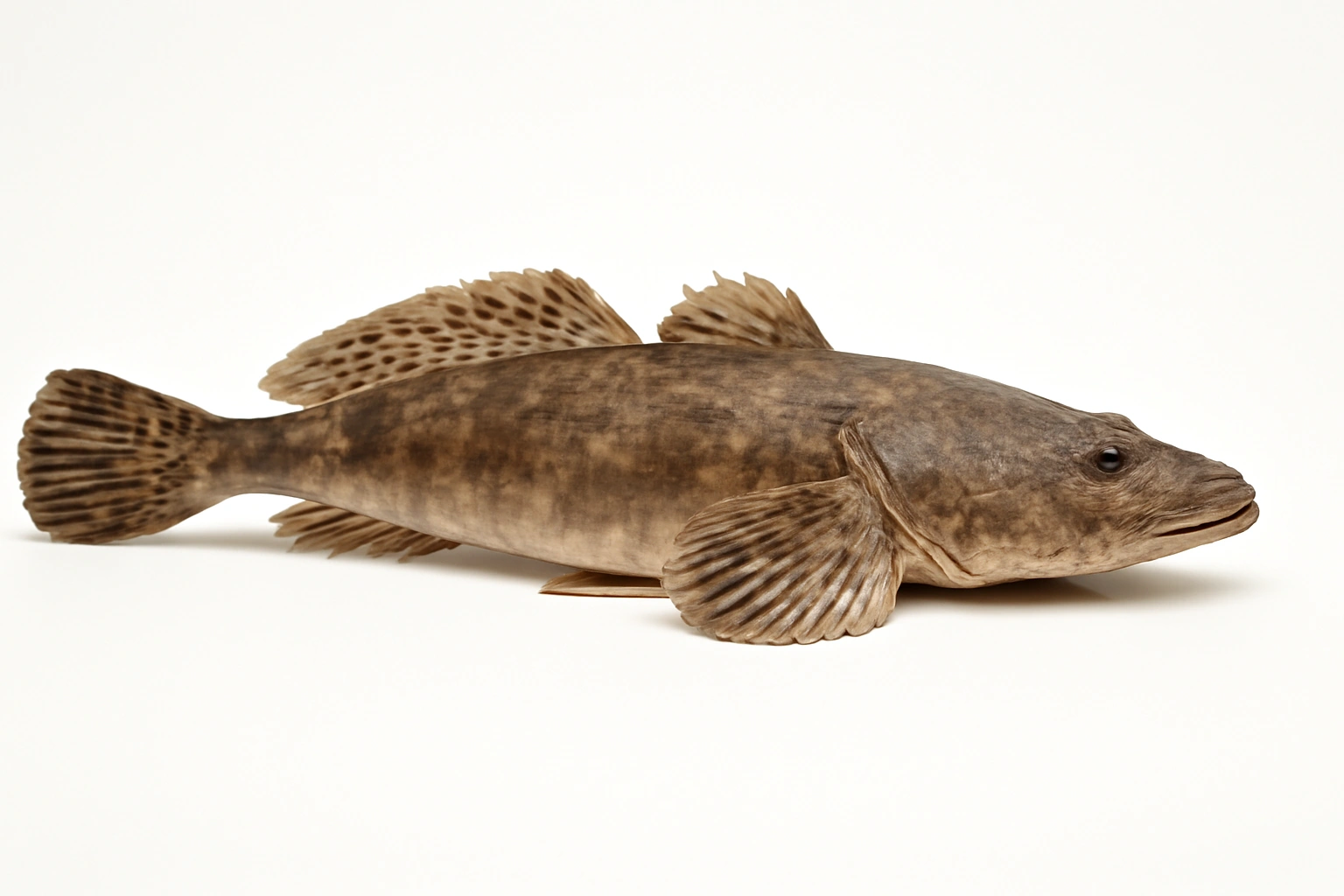

Overview
The Dusky Flathead is Australia's largest and most sought-after flathead species. An ambush predator that camouflages perfectly on sandy bottoms waiting for prey. Found along the entire east coast, it's the most popular recreational fishing species in Australia. Can exceed 1 metre in length.
Identification
- Body
- Elongated and flat body, with a broad, flattened head.
- Colouration
- Color ranges from gray to brown with dark spots providing perfect camouflage on the seabed.
- Sexual dimorphism
- Females tend to be larger than males.
- Growth
- medium, quickly reaches considerable sizes
Taxonomy
- Family
- Platycephalidae
- Order
- Scorpaeniformes
- Class
- Actinopterygii
Related species
Habitat & distribution
- Environment
- Coast, Estuaries, Brackish
- Preferred bottom
- Sand, Mud, Seagrass
- Geographic distribution
- Found along the eastern coast of Australia, from Queensland to Victoria.
- Micro-habitat
- Often partially buries itself in sand or mud, waiting for prey.
Prefers sandy and muddy bottoms where it can easily hide.
Presence by sea area
Diet
- Primary prey
- minnows, shrimp, crabs
- Secondary prey
- cephalopods, marine worms, mollusks
- Occasional prey
- aquatic insects, algae
- Feeding behaviour
- Ambush predator, waits motionless camouflaged on the seabed to surprise prey with a quick strike.
- Natural predators
- sharks, dolphins, rays
Variable diet depending on local prey availability.
Behaviour
- Activity
- diurnal
- Social behaviour
- solitary
- Aggressiveness
- medium
- Migration
- non-migratory
- Seasonal behaviour
- Reproductive activity increases during warmer months, becoming less active in winter months.
- Juveniles
- Juveniles are found in shallower waters and prefer areas with more cover.
- Adults
- Adults tend to occupy larger areas but remain within defined territories.
Reproduction
- Spawning season
- November, December
- Spawning depth
- between 1 and 20 meters
- Eggs
- Pelagic eggs between 0.9 and 1.5 mm in diameter, floating freely in water.
- Larval stage
- Planktonic larvae drift with currents towards shallow waters.
- Sexual maturity
- varies between 2 and 4 years
When to catch Dusky Flathead
Activity calendar
Activity by season
Best times
This species shows peak fishing activity in spring, summer and autumn, when the productivity index (FPI) reaches its highest values.
Fishing activity decreases in winter, when conditions are less favourable.
Ideal conditions
Water temperature
Where to catch it
Best spots
Bottom preference
Spot type
Fishing techniques
Recommended
Other applicable
Recommended baits
Baits by pressure
How to really catch it
The dusky flathead is a bottom predator that seems to vanish into the landscape: flattened head, eyes on top, body laid out over sand and mud until it suddenly strikes. If you really want to catch it, you need to read those shallow, quiet bottoms where camouflage does most of the work.
🐟 Good to know
One notable biological trait of this species is its reproduction through pelagic eggs, which drift freely in the water, while the planktonic larvae are carried by currents toward shallower areas. This is important because it links open coastal waters with the sheltered habitats used by juveniles.
🌊 Where & when
It lives along Australia’s eastern coast from Queensland to Victoria, especially in estuaries, coastal lagoons and brackish areas with sand, mud or seagrass bottoms, from 1 to 30 meters. It is a diurnal, non-migratory species, often partly buried on the bottom; it is generally more active from March to November, while reproductive activity increases in the warmer months, with spawning between November and December.
🎣 How to really catch it
The most practical way to target it is spinning close to the bottom, slow and controlled, over inshore sand flats, estuary mouths, mangrove edges and coastal lagoons. Soft plastics, crab imitations, prawns and small baitfish work well when kept low, almost brushing the substrate; alternatively, simple bottom fishing with a prawn or live baitfish presented on a medium-light spinning rod, 10-15 lb braid and a 20 lb fluorocarbon leader fits its hunting style perfectly.
💡 The detail that makes the difference
The most defensible ‘secret’ is to focus your casts on transitions between clean sand, soft mud and cover such as seagrass or mangrove edges. This fish hunts by ambush and often lies partly buried, so bringing the lure tight to those bottom changes, rather than high in the water, puts it directly in its strike zone.
Catch & handling tips
- Fight
- Shakes its head vigorously and makes sideways dashes.
- Handling
- Use non-slip gloves to avoid injuries from spiny dorsal fins.
- Release
- Release carefully to avoid damage to the spine and fins.
Curiosities & culture
- Record catches
- Maximum documented size: up to about 120 cm and 15 kg (source: FishBase). IGFA All-Tackle record: 6.33 kg (13 lb 15 oz), caught at Wallis Lake, Forster, NSW (Australia), in 1997.
- In the kitchen
- White and tasty meat, used in many Australian dishes like fish and chips.
- Cultural notes
- Very popular in recreational fishing competitions in Australia.
- Historical notes
- Present in traditional Australian cuisine and fished by Indigenous peoples for generations.