
Overview
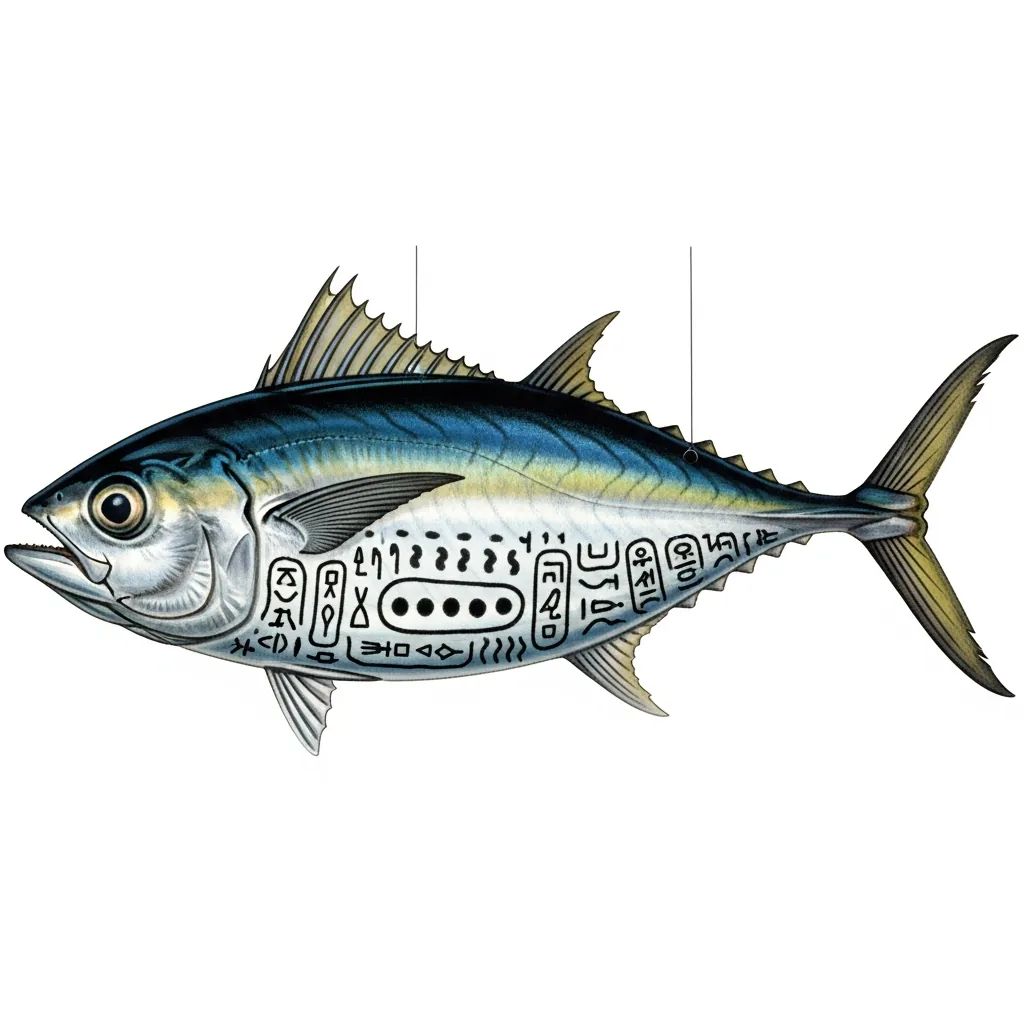
Very fast small tuna, often in schools, loves chasing feeding frenzies.
Identification
- Body
- Streamlined and tapered body, perfectly adapted for swimming speed.
- Colouration
- Steel blue back with dark spots, silver belly.
- Sexual dimorphism
- Absent/not very evident
- Growth
- Fast, develops quickly in nutrient-rich marine environments.
Taxonomy
- Family
- Scombridae
- Order
- Perciformes
- Class
- Actinopterygii
Related species
Habitat & distribution
- Environment
- Open sea, Coast, Reefs
- Preferred bottom
- Reef, Open sea
- Geographic distribution
- Found in the western and eastern Atlantic, Mediterranean, and along the coasts of Africa and the Americas.
- Micro-habitat
- Prefers open and coastal waters, often seen near schools of fish.
They prefer warm waters rich in plankton and small fish.
Presence by sea area
Diet
- Primary prey
- sardines, anchovies, mackerels
- Secondary prey
- squid, shrimp, jellyfish
- Occasional prey
- small crustaceans, plankton, other fish species
- Feeding behaviour
- Fast and aggressive predator, often hunts in packs, surrounding its prey.
- Natural predators
- sharks, large tunas, marlin
Excellent predators of fish schools, using speed to overwhelm prey.
Behaviour
- Activity
- diurnal
- Social behaviour
- large_schools
- Aggressiveness
- medium
- Migration
- Undergoes seasonal migrations to follow currents and food availability.
- Seasonal behaviour
- Mainly active during warm months, follows schools of pelagic fish.
- Juveniles
- Forms schools for protection and to improve hunting efficiency.
- Adults
- Active and fast hunter, tends to disperse into small groups before regrouping.
Reproduction
- Spawning season
- April, May, June, July
- Spawning depth
- between 10 and 50 meters
- Eggs
- Small, pelagic eggs that can float for thousands of marine miles.
- Larval stage
- Planktonic larval stage, develops rapidly due to water temperature and plankton availability.
- Sexual maturity
- varies between 2 and 3 years
When to catch Little tunny
Activity calendar
Activity by season
Best times
This species shows peak fishing activity in summer, when the productivity index (FPI) reaches its highest values.
Fishing activity decreases in autumn and winter, when conditions are less favourable.
Ideal conditions
Atmospheric pressure
Very active, hunts on surface.
Regular activity.
Deeper, follows thermoclines.
Water temperature
Where to catch it
Best spots
Bottom preference
Spot type
Fishing techniques
Recommended
Other applicable
Recommended baits
Baits by pressure
How to really catch it
The little tunny is a compact, high-strung tuna built to chase through blue water. When the surface roughens over fleeing bait, you immediately understand why it fires up anglers: it arrives fast, hits hard, and turns open water into pure motion.
🐟 Good to know
Unlike many bony fish, the little tunny has no swim bladder. This is a real trait of the fastest tunas and matches its streamlined, robust, tapered body, built for constant swimming through the water column, along currents, and around bait schools.
🌊 Where & when
You find it in open sea, coastal water, and around emergent reefs, generally from 10 to 200 meters, especially where currents concentrate forage fish. It becomes more reachable in warm months, peaking from June to August, while from April to July it spawns in waters between 10 and 50 meters: this is when it closely tracks pelagic schools.
🎣 How to really catch it
If you want to catch it for real, the most concrete route is spinning near feeding frenzies, current edges, islands, and offshore shoals. A powerful spinning rod, 20-30 lb braid, and a 0.50 mm fluorocarbon leader give you control over fast strikes and sudden runs; metal jigs and feather lures are ideal for imitating sardines, anchovies, and small mackerel.
💡 The detail that makes the difference
The soundest tip is to read the forage first and the water second. Little tunny follows schools of small pelagics and often hunts in groups: if you see broken surface activity, tight bait, or uneven eruptions, work the lure just outside the core of the school, where predators pick off prey that break away.
Catch & handling tips
- Fight
- Energetic fighter, with quick and sudden runs, attempts to pull the line towards the bottom.
- Handling
- Handle carefully, avoid sharp dorsal fins.
- Release
- Release quickly after capture, avoiding excessive stress.
Curiosities & culture
- Record catches
- Maximum documented size: up to about 122 cm and 16.5 kg (source: FishBase). IGFA All-Tackle record: 16.78 kg (36 lb), caught in Puerto Rico in 2003.
- In the kitchen
- Often used fresh in fish salads, grilled, or for sushi preparation.
- Cultural notes
- Symbol of speed and mobility in Mediterranean cultures.
- Historical notes
- Traditionally fished along Mediterranean coasts, known for its role in marine diets.