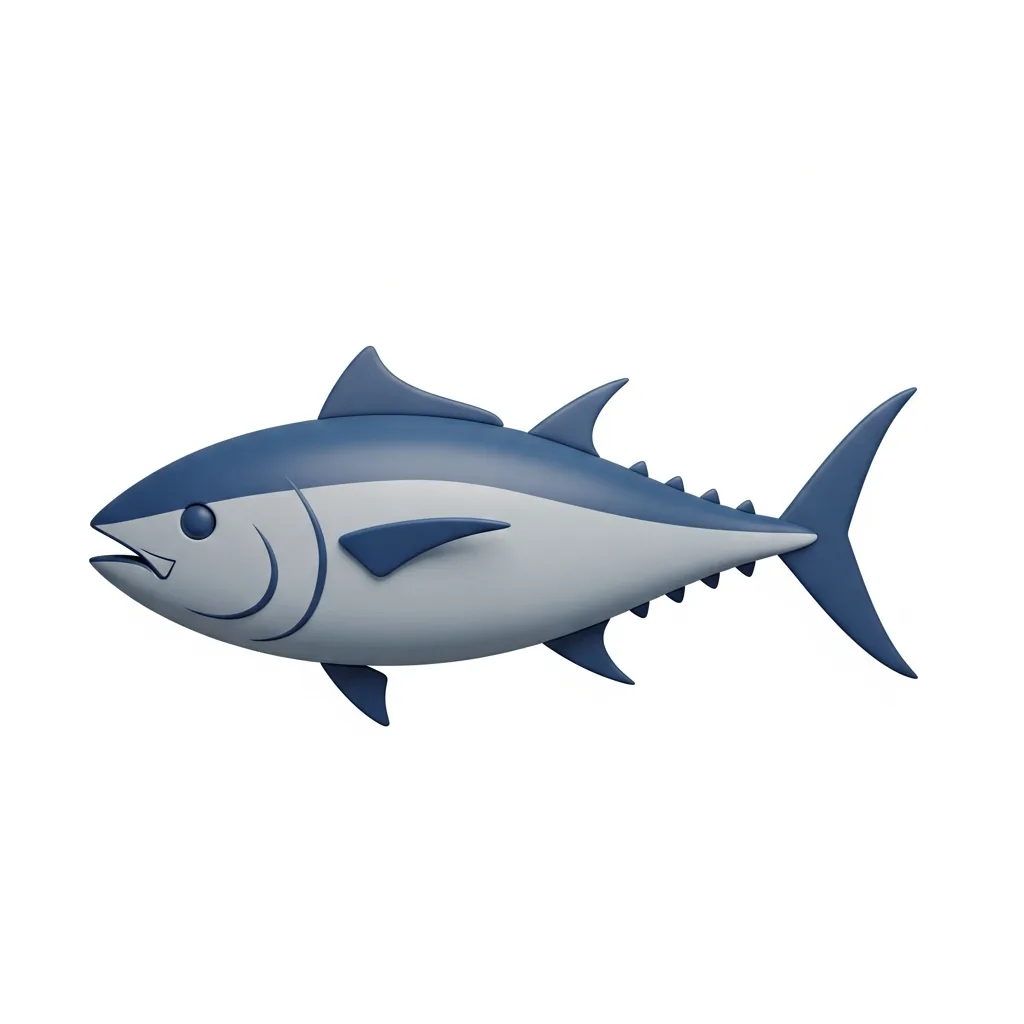

Overview
Aggressive pack hunter, famous for explosive attacks.
Identification
- Body
- Streamlined, laterally compressed body with a rather large head.
- Colouration
- Blue-green on the back, gradually lighter on the sides, and white on the belly.
- Sexual dimorphism
- Absent/Hardly noticeable
- Growth
- Rapid, especially in the early years.
Taxonomy
- Family
- Pomatomidae
- Order
- Perciformes
- Class
- Actinopterygii
Related species
Habitat & distribution
- Environment
- Coast, Open sea
- Preferred bottom
- Sand, Rock
- Geographic distribution
- Found in all temperate and subtropical oceans, widely distributed along the Atlantic, Mediterranean, and Indian Ocean coasts.
- Micro-habitat
- Prefers coastal waters when hunting, often near schools of fish.
Loves to move along currents that quickly bring new prey.
Presence by sea area
Diet
- Primary prey
- small fish, mullet, anchovies
- Secondary prey
- crustaceans, squid, cuttlefish
- Occasional prey
- jellyfish, octopuses
- Feeding behaviour
- Aggressive predator hunting in groups, attacking swiftly with power and precision.
- Natural predators
- sharks, tuna, dolphins
Prefers daytime for hunting in coordinated schools.
Behaviour
- Activity
- diurnal
- Social behaviour
- large_schools
- Aggressiveness
- high
- Migration
- Undertakes seasonal migrations depending on water temperature and food availability.
- Seasonal behaviour
- Moves closer to shore during summer months to feed and reproduce, moving to deeper waters in colder months.
- Juveniles
- Form small groups and tend to stay in shallower, protected waters.
- Adults
- Travel in large schools to hunt, exhibiting highly coordinated behavior.
Reproduction
- Spawning season
- May, June, July
- Spawning depth
- between 20 and 60 meters
- Eggs
- Pelagic eggs, small and spherical, carried by currents.
- Larval stage
- Pelagic larvae quickly develop into juvenile fish.
- Sexual maturity
- varies between 2 to 4 years
When to catch Bluefish / Tailor
Activity calendar
Activity by season
Best times
This species shows peak fishing activity in summer, when the productivity index (FPI) reaches its highest values.
Fishing activity decreases in autumn and winter, when conditions are less favourable.
Ideal conditions
Atmospheric pressure
Very aggressive, attacks anything that moves.
Moderate activity, attacks isolated prey.
Moves away from shore, less active.
Water temperature
Where to catch it
Best spots
Bottom preference
Spot type
Fishing techniques
Recommended
Other applicable
Recommended baits
Baits by pressure
How to really catch it
The bluefish is a coastal pelagic predator with a taut profile and sharp teeth, built to chase and strike in schools. When it moves in to hunt close to shore, the water seems to tighten around bait schools: that is when it becomes truly unforgettable for anglers who approach it with intent.
🐟 Good to know
Its eggs are pelagic: small, spherical, and carried by currents. The larvae are pelagic as well and quickly develop into juveniles, a detail that fits a mobile species widely distributed across temperate and subtropical seas.
🌊 Where & when
It can be found from the shoreline down to about 50 meters, over sandy or rocky coasts, around harbors, and in current lines, both inshore and offshore. The best months are June, July, and August: in summer it comes closer to shore to feed and reproduce, while in colder months it tends to move farther out and deeper.
🎣 How to really catch it
The most practical way to target it is spinning with a medium-heavy rod, 0.30 mm nylon or equivalent braid, and a 0.40-0.50 fluorocarbon leader, working an artificial lure where the school is pushing small fish, mullet, or anchovies toward the surface and current. Surfcasting and drifting also work well with sardines, mullet, or live bait, using size 2/0-4/0 single or double hooks and sliding sinkers or casting floats.
💡 The detail that makes the difference
The tip that really matters is to read the bait before the predator. Bluefish hunt in coordinated groups near schools of small fish: if you find moving water, compressed bait, or sudden bursts along the shore, stay on that area with repeated casts and clean retrieves, because the school often holds there as long as the forage remains.
Catch & handling tips
- Fight
- Energetic and acrobatic fighter, known for jumps and sudden changes of direction.
- Handling
- Use gloves to avoid cuts from teeth and fins.
- Release
- Handle carefully to minimize stress and release back into water as soon as possible.
Curiosities & culture
- Record catches
- Maximum documented size: up to about 130 cm and 14.4 kg (source: FishBase). IGFA All-Tackle record: 14.40 kg (31 lb 12 oz), caught by James Hussey at Hatteras, North Carolina (USA), in 1972.
- In the kitchen
- Flavorful meat suitable for grilling and stews, often used in fish soups.
- Cultural notes
- Renowned among sport-fishers for its voraciousness and aggressive tags.
- Historical notes
- Famously described by ancient Mediterranean fishermen for its voracity.