
Overview
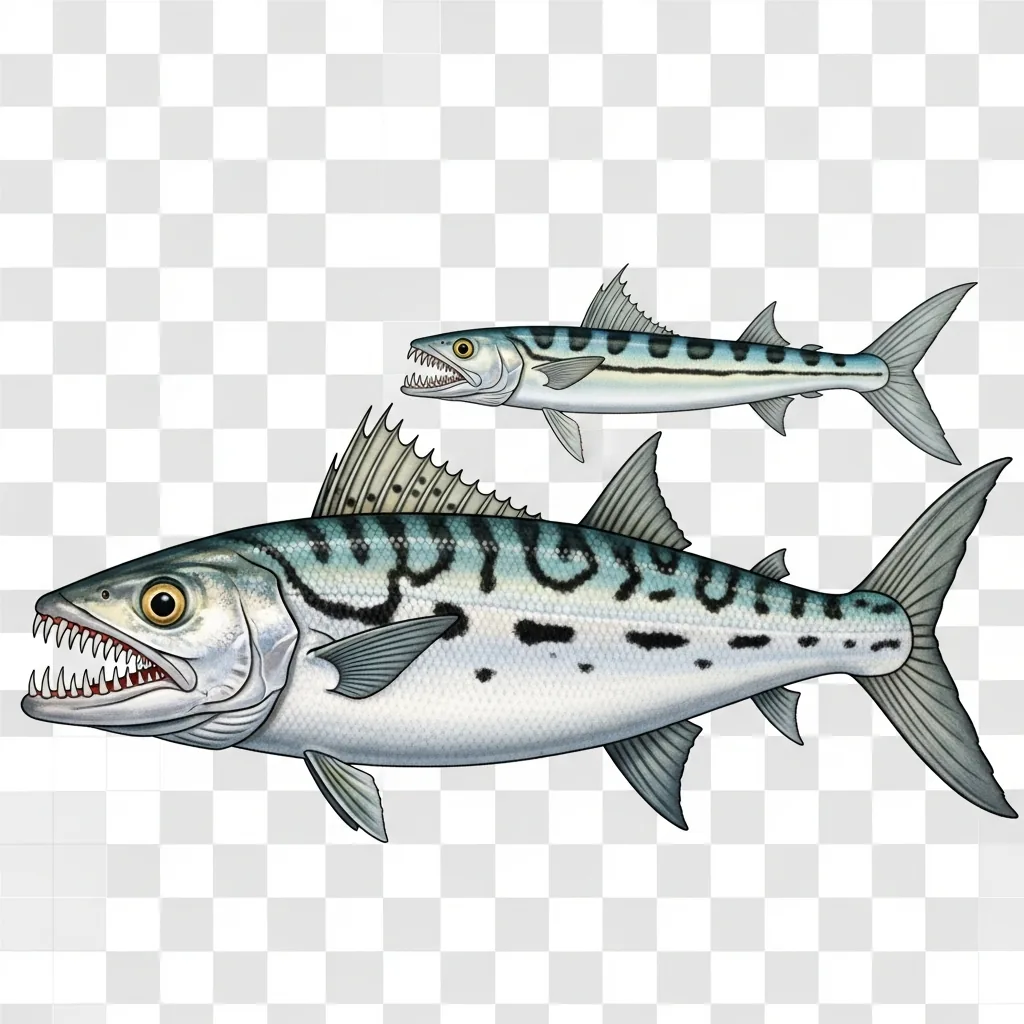
Elongated and fast predator, often in schools, active especially at dusk and night.
Identification
- Body
- Elongated and slender body with a pointed head.
- Colouration
- Silver-gray with bright sides and a distinctive yellow mouth.
- Sexual dimorphism
- Not very evident
- Growth
- Medium, reaches maturity in a few years
Taxonomy
- Family
- Sphyraenidae
- Order
- Perciformes
- Class
- Actinopterygii
Related species
Habitat & distribution
- Environment
- Coast, Open sea, Reefs
- Preferred bottom
- Sand, Rock, Reef
- Geographic distribution
- Found in the Mediterranean Sea and adjacent waters of the eastern Atlantic.
- Micro-habitat
- Hides among rocks and corals, often hunting near the surface in open waters.
Prefers clear and temperate waters, rich in hiding spots.
Presence by sea area
Diet
- Primary prey
- smaller fish, mullet, small cuttlefish
- Secondary prey
- crustaceans, squid, shrimp
- Occasional prey
- plankton, small invertebrates
- Feeding behaviour
- Active hunter, often in schools, attacks quickly when prey is spotted.
- Natural predators
- sharks, large tuna, swordfish
Prefers hunting by sight in clear waters, using twilight to surprise prey.
Behaviour
- Activity
- crepuscular
- Social behaviour
- small_groups
- Aggressiveness
- medium
- Migration
- Resident, with small seasonal movements.
- Seasonal behaviour
- More active during the warmer months, follows food currents.
- Juveniles
- Young fish stay closer to the shore and in shallower waters.
- Adults
- Moves to deeper and open waters as it matures.
Reproduction
- Spawning season
- May, June, July
- Spawning depth
- between 20 and 60 meters
- Eggs
- Pelagic eggs, small and transparent.
- Larval stage
- Larvae are pelagic until they reach safe sizes.
- Sexual maturity
- 3-4 years
When to catch Yellowmouth barracuda
Activity calendar
Activity by season
Best times
This species shows peak fishing activity in summer, when the productivity index (FPI) reaches its highest values.
Fishing activity decreases in autumn and winter, when conditions are less favourable.
Ideal conditions
Atmospheric pressure
Hunts near surface and harbour lights.
Regular activity, follows schools.
Deeper, less visible on surface.
Water temperature
Where to catch it
Best spots
Bottom preference
Spot type
Fishing techniques
Recommended
Other applicable
Recommended baits
Baits by pressure
How to really catch it
Long-bodied, sharp-headed, with marked flanks and a dark tail, the Mediterranean barracuda cuts through the water with a tense, precise presence. When it starts hunting near the surface, often in small groups, it turns reefs and harbors into a stage of sudden chases that no angler can ignore.
🐟 Good to know
The Mediterranean barracuda lays pelagic eggs that are small and transparent, and its larvae also remain pelagic during their early life. It is an important biological detail: the first part of its life cycle takes place in open water before juveniles become more closely tied to shallow coastal areas.
🌊 Where & when
You find it along coasts, reefs, rocky areas and open-water stretches, over sand, rock and mixed bottom, from 5 to 100 meters. It shelters among rocks and corals but often hunts high in the water column; it is crepuscular, more active in the warmer months with a summer peak, while from May to July it spawns between 20 and 60 meters.
🎣 How to really catch it
The most practical way to target it is spinning in the right places: reefs, harbors, rocky coastal areas and reef edges, especially when light is fading or returning. A 2.4-3 meter spinning rod with 15-20 lb main line and a 20-30 lb fluorocarbon leader works well with artificial lures; alternatively, trolling and fresh baitfish also make sense where schools patrol open water.
💡 The detail that makes the difference
One useful edge is to read the water layer before choosing the lure: if you see surface activity, keep your presentation high and moving, because this species attacks prey it sees and often hunts near the surface. If you are facing rocks, crevices or deeper water, work the margins between shelter and open water, where it can burst out to strike.
Catch & handling tips
- Fight
- Fighting, with rapid bursts and sudden runs.
- Handling
- Handle carefully to avoid sharp teeth.
- Release
- Release quickly to avoid thermal stress.
Curiosities & culture
- Record catches
- Maximum documented size: up to about 128 cm and 8.2 kg (source: FishBase). IGFA All-Tackle record: 10.2 kg (22 lb 8 oz), Azores.
- In the kitchen
- Used in fish soups and grilled dishes, highly appreciated in coastal regions of Italy.
- Cultural notes
- Valued for its flavorful meat, it symbolizes strength in local myths.
- Historical notes
- Always a target for fishing in the Mediterranean seas, it has been noted in navigation accounts since antiquity.