
Overview
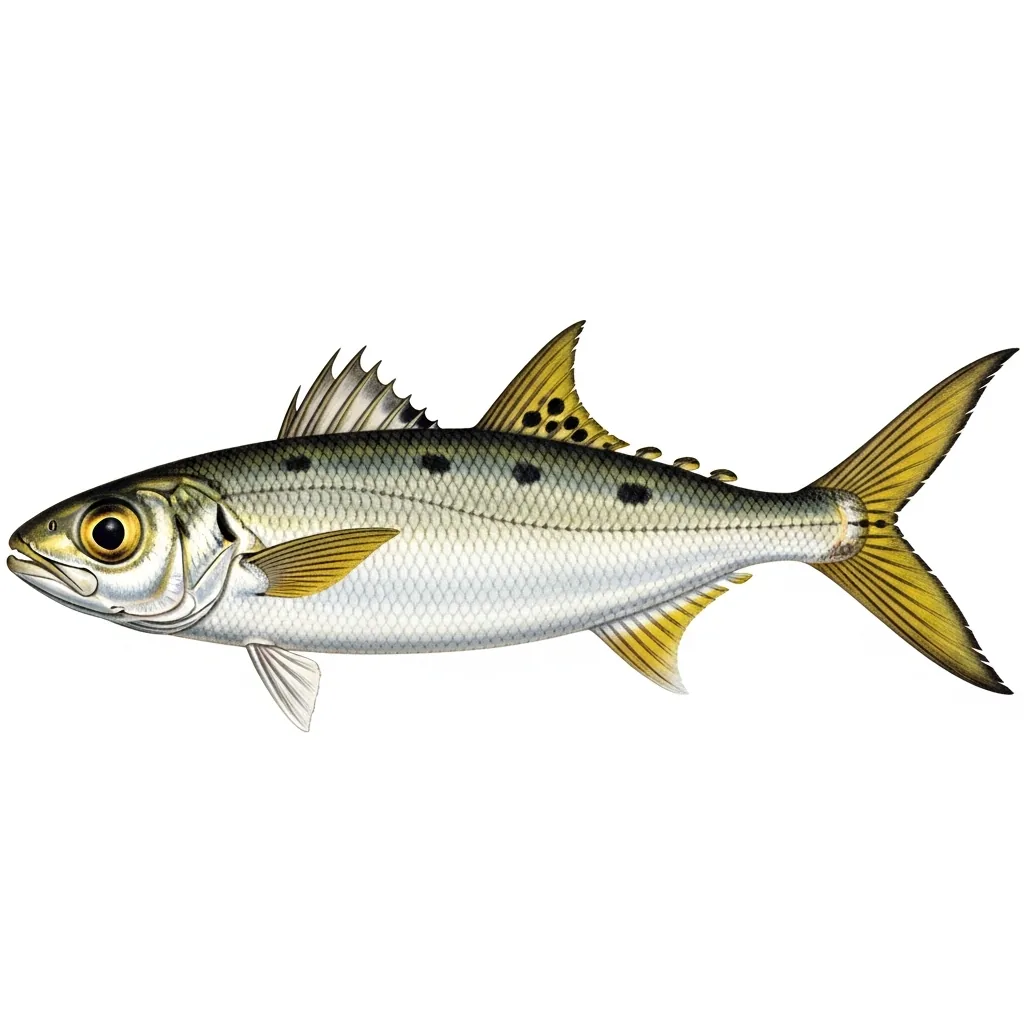
Powerful coastal predator, often near beaches and estuaries, loves chasing prey.
Identification
- Body
- Elongated body, laterally compressed, with a streamlined profile.
- Colouration
- Usually silver body with a metallic sheen and bluish shades on the back.
- Sexual dimorphism
- Absent/not prominent
- Growth
- Fast, especially in the early years.
Taxonomy
- Family
- Carangidae
- Order
- Perciformes
- Class
- Actinopterygii
Related species
Habitat & distribution
- Environment
- Coast, Open sea, Estuaries
- Preferred bottom
- Sand, Rock, Reefs
- Geographic distribution
- Found in the Mediterranean Sea, the eastern Atlantic from Portugal to Angola, and along the west coast of Africa.
- Micro-habitat
- Often seen near sandy beaches and estuaries, likes to hide among schools of fish.
Often inhabits shallower waters during warmer months, sticking to environments offering shelter and abundant food.
Presence by sea area
Diet
- Primary prey
- juvenile fish, mullets, sardines
- Secondary prey
- cuttlefish, squid, crabs
- Occasional prey
- shrimp, small mollusks
- Feeding behaviour
- Skilled predator that chases prey quickly, using sudden bursts and a wide mouth.
- Natural predators
- sharks, dolphins, large tuna
Diet is influenced by the availability of small fish and other marine organisms.
Behaviour
- Activity
- diurnal
- Social behaviour
- solitary
- Aggressiveness
- medium
- Migration
- Conducts seasonal coastal migrations in search of breeding areas and food.
- Seasonal behaviour
- Approaches the coast in spring and summer for spawning. In winter, it tends to move to deeper waters.
- Juveniles
- Juveniles form small groups and are often found in shallow coastal areas.
- Adults
- Generally solitary, but may form small groups when hunting.
Reproduction
- Spawning season
- May, June, July
- Spawning depth
- between 15 and 40 meters
- Eggs
- Pelagic and small-sized eggs
- Larval stage
- Larvae are planktonic and develop rapidly in protected coastal areas.
- Sexual maturity
- 3-4 years
When to catch Leerfish
Activity calendar
Activity by season
Best times
This species shows peak fishing activity in summer and autumn, when the productivity index (FPI) reaches its highest values.
Fishing activity decreases in winter, when conditions are less favourable.
Ideal conditions
Atmospheric pressure
Very active, hunts in packs near surface.
Good activity, follows mullet schools.
Moves away from shore, deeper.
Water temperature
Where to catch it
Best spots
Bottom preference
Spot type
Fishing techniques
Recommended
Other applicable
Recommended baits
Baits by pressure
How to really catch it
The leerfish is an elegant, powerful coastal predator, built to cut through the water with sharp bursts and fast pursuits. When it starts hunting near an estuary or along a sandy beach, the whole scene seems to switch on: this is not a fish you find by chance, but one you intercept by reading the water.
🐟 Good to know
A notable biological trait of the leerfish is its early life cycle: the eggs are pelagic and the larvae planktonic, then juveniles use shallow, protected coastal areas where they often form small groups. Adults, by contrast, are generally more solitary, though they may gather in small groups while hunting.
🌊 Where & when
It lives along the coast, in the open sea and in estuaries, over sand, rock and reefs, from very shallow water down to deeper areas. The best period matches the warm season: in spring and summer it moves closer to shore also for spawning, with reproduction from May to July between 15 and 40 meters; in winter it tends to shift farther out and deeper.
🎣 How to really catch it
To target it effectively, spinning is the most concrete approach: a medium-heavy spinning rod, 20-30 lb braid and a fluorocarbon leader let you cast artificial lures or present live baitfish around estuaries, sandy beaches, rocky shores and ports. Leerfish feeds during daylight and often blends into bait schools, so work the lure cleanly and briskly, ready for long runs once hooked.
💡 The detail that makes the difference
The practical edge is to watch the bait before you watch the water itself. Leerfish likes to hide among schools of small fish and strike with sudden acceleration: if you see sardines or mullet tightening up, splitting apart or changing direction near an estuary mouth or shoreline wash, run your lure through that exact zone without drifting too far from the active water.
Catch & handling tips
- Fight
- Combative and fast, tends to make long runs and quick dashes.
- Handling
- Handle carefully to avoid injuries to the fish and the angler.
- Release
- Release swiftly into the water, limiting air exposure.
Curiosities & culture
- Record catches
- Maximum documented size: up to about 200 cm and 50 kg (source: FishBase). An official IGFA All-Tackle record exists for this species.
- In the kitchen
- Appreciated meat, often roasted or stewed, especially in coastal Italian regions.
- Cultural notes
- The leerfish is symbolically associated with power and agility in the folklore of Mediterranean coastal cultures.
- Historical notes
- Leerfish fishing in the Mediterranean has been practiced for centuries with traditional techniques passed down through generations.