
Overview
Powerful coastal predator, often spotted near structures and sharks.
Identification
- Body
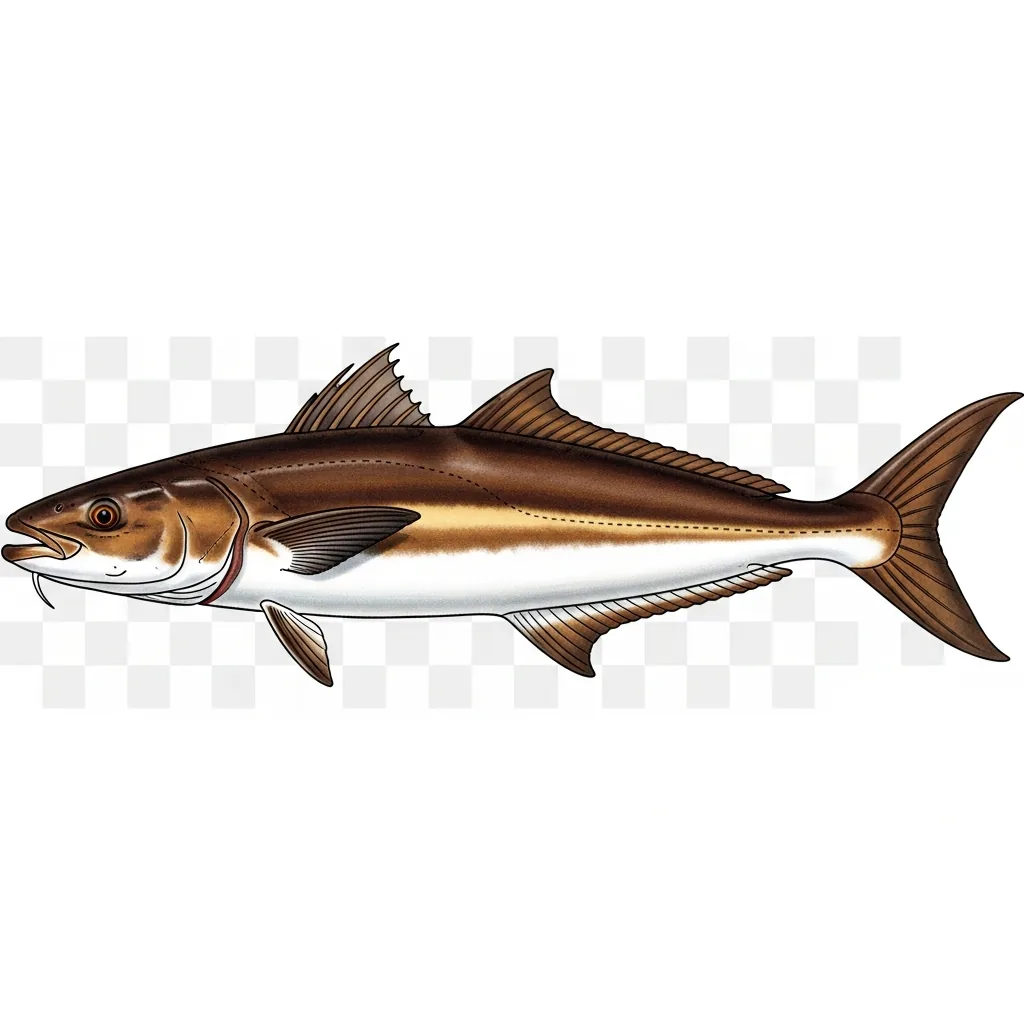
- Elongated, torpedo-shaped body with a flat head.
- Colouration
- Dark brown on the back with a white belly and lighter side bands.
- Sexual dimorphism
- Differences not obvious except during spawning.
- Growth
- fast
Taxonomy
- Family
- Rachycentridae
- Order
- Perciformes
- Class
- Actinopterygii
Related species
Habitat & distribution
- Environment
- Coast, Reefs, Open sea
- Preferred bottom
- Reef, Sand
- Geographic distribution
- Found in tropical and subtropical waters worldwide, particularly in the Atlantic and Indo-Pacific.
- Micro-habitat
- Often located near structures like buoys and platforms, typically in association with large fish and sharks.
Prefers to inhabit and hunt near floating structures and reefs.
Presence by sea area
Diet
- Primary prey
- fish, crustaceans, cephalopods
- Secondary prey
- carps, squid, crabs
- Occasional prey
- shrimp, anchovies
- Feeding behaviour
- An active predator feeding near floating structures or following large predators.
- Natural predators
- sharks, larger fish, humans
Employs opportunistic strategies, often trailing large predators.
Behaviour
- Activity
- diurnal
- Social behaviour
- solitary
- Aggressiveness
- medium
- Migration
- Migrates seasonally, following optimal water temperatures.
- Seasonal behaviour
- In warmer months, frequents coastal areas and reefs, while in colder months, moves to deeper waters.
- Juveniles
- Young form schools near floating objects.
- Adults
- Adults are more solitary, often trailing large predators.
Reproduction
- Spawning season
- June, July
- Spawning depth
- between 60 and 200 feet
- Eggs
- Small, free-floating pelagic eggs.
- Larval stage
- Planktonic larvae that rapidly grow in surface waters.
- Sexual maturity
- 3-4 years
When to catch Cobia
Activity calendar
Activity by season
Best times
This species shows peak fishing activity in spring, summer and autumn, when the productivity index (FPI) reaches its highest values.
Fishing activity decreases in winter, when conditions are less favourable.
Ideal conditions
Atmospheric pressure
Very active on surface.
Near structures.
Deeper.
Water temperature
Where to catch it
Best spots
Bottom preference
Spot type
Fishing techniques
Recommended
Other applicable
Recommended baits
Baits by pressure
How to really catch it
Cobia is a coastal-pelagic predator with a long body and flattened head, able to appear suddenly beside a buoy or along the edge of a reef. When you see one moving slowly but with purpose just under the surface, you immediately understand why it leaves a mark: it can commit fast, but it demands a believable presentation.
🐟 Good to know
One notable biological trait of cobia is its juvenile phase: young fish tend to form small groups near floating objects, while adults become more solitary. This shift with growth fits the species well, since mature fish make strong use of isolated structure and often associate with large fish.
🌊 Where & when
It lives in tropical and subtropical waters, across coasts, reefs, and open sea, from sandy areas to structured ground, including very shallow water. In warm months it comes closer to coasts, reefs, buoys, and platforms; in colder months it moves deeper. The most favorable period runs from March to November, with spawning activity in June and July between 20 and 60 meters.
🎣 How to really catch it
The most practical way to target it is by drifting or fishing around buoys, platforms, and underwater structure, using live fish as the primary bait. A heavy spinning rod, 30-50 lb braid, 50 lb fluorocarbon leader, 6/0 circle hook, and sliding sinker let you present the bait naturally and handle its powerful runs. Squid, sardines, and crabs also make sense, especially where cobia patrol near the bottom or along the edges of structure.
💡 The detail that makes the difference
The most reliable tip is not to fish "empty water": focus your casts or drift along the side of structure where baitfish hold or where a clear shadow line passes. Cobia feed close to floating or submerged reference points and often use them as patrol lanes, so a close, clean presentation matters more than covering a lot of water.
Catch & handling tips
- Fight
- Puts up a strong fight with powerful underwater runs.
- Handling
- Handle with care to avoid dorsal spines; support the body when holding.
- Release
- Encourage a quick release by minimizing out-of-water time.
Curiosities & culture
- Record catches
- Maximum documented size: up to about 200 cm and 68 kg (source: FishBase). IGFA All-Tackle record: 79.60 kg (175 lb 8 oz), caught by Koby Duncan off Rottnest Island, Western Australia, in 2025.
- In the kitchen
- Highly prized flesh used in sushi and sashimi; also grilled or fried.
- Cultural notes
- Valued sportfish known for its fighting qualities; a frequent target in fishing tournaments.
- Historical notes
- Long fished globally for food and sport.