
Overview
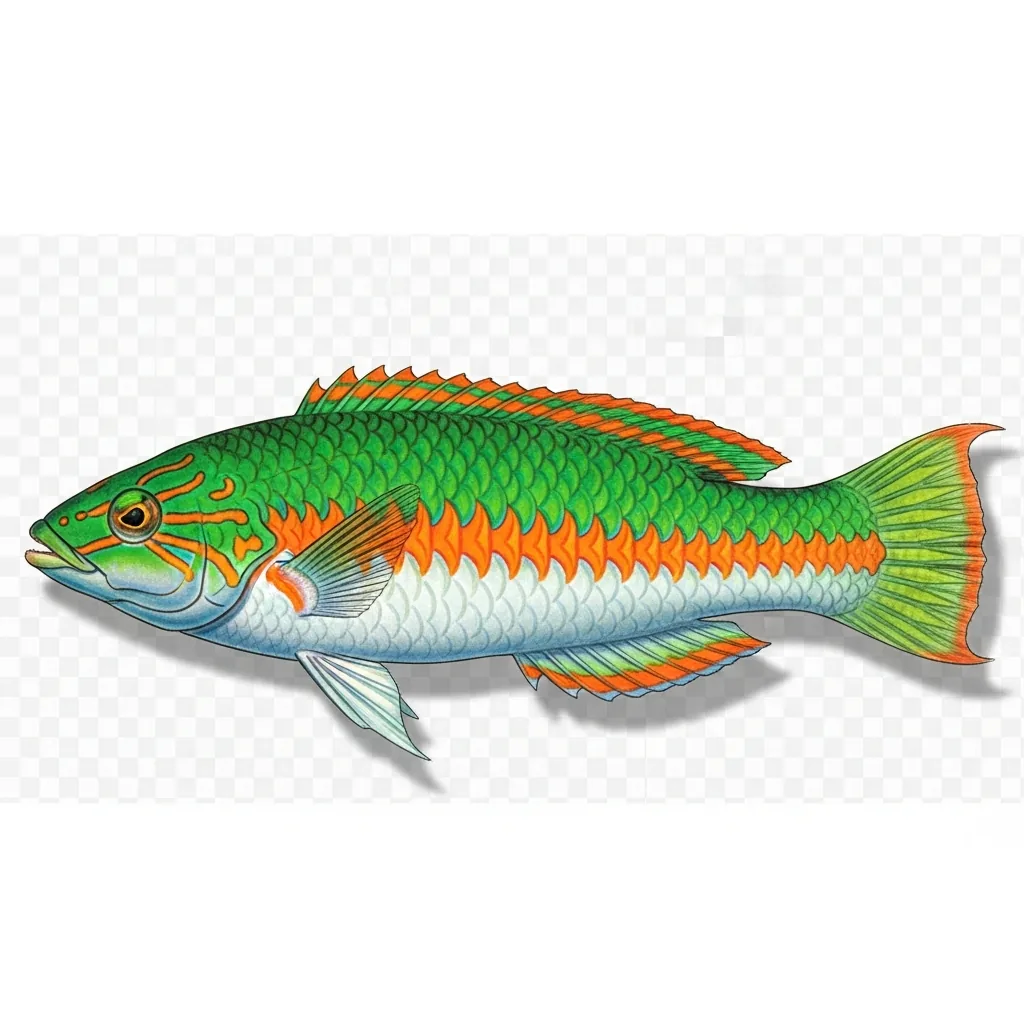
Colorful and curious fish, very common on reefs and Posidonia.
Identification
- Body
- Elongated and laterally compressed body, typical of the Wrasse family.
- Colouration
- Varies from bright blue stripes to orange bands, with seasonal and age-related color changes.
- Sexual dimorphism
- Pronounced, with adult males more colorful than females.
- Growth
- Moderate, reaches maturity around 2-3 years.
Taxonomy
- Family
- Labridae
- Order
- Perciformes
- Class
- Actinopterygii
Related species
Habitat & distribution
- Environment
- Coast, Reefs, Pelagic
- Preferred bottom
- Rock, Posidonia, Coralligenous
- Geographic distribution
- Commonly found in the Mediterranean Sea and along European Atlantic coasts up to southern Norway.
- Micro-habitat
- Takes shelter among algae and rocks, hunts in seagrass meadows.
Prefers seagrass meadows for better availability of refuge and food.
Presence by sea area
Diet
- Primary prey
- crustaceans, mollusks, annelids
- Secondary prey
- small fish, shrimps, planktonic organisms
- Occasional prey
- cnidarians, echinoderms
- Feeding behaviour
- Actively hunts along the seabed, utilizing cover from algae and underwater rocks.
- Natural predators
- scorpions, groupers, sea bream, eels, octopus
Omnivorous and adaptable, prefers small invertebrates abundantly found on rocky bottoms.
Behaviour
- Activity
- diurnal
- Social behaviour
- small_groups
- Aggressiveness
- low
- Migration
- Non-migratory
- Seasonal behaviour
- Becomes more active during warmer months and the breeding season when temperatures rise.
- Juveniles
- Juveniles hide in seagrasses and seek protection among rocks.
- Adults
- Adults are more territorial and form small groups often around rocks or coral reefs.
Reproduction
- Spawning season
- April, May, June
- Spawning depth
- between 5 and 30 meters
- Eggs
- Pelagic and transparent eggs, small in size.
- Larval stage
- Larvae are pelagic and develop rapidly, with a critical period of a few weeks.
- Sexual maturity
- 2-3 years
When to catch Rainbow wrasse
Activity calendar
Activity by season
Best times
This species shows peak fishing activity in spring, summer and autumn, when the productivity index (FPI) reaches its highest values.
Ideal conditions
Atmospheric pressure
Very active and curious.
Regular activity.
Stays near bottom.
Water temperature
Where to catch it
Best spots
Bottom preference
Spot type
Fishing techniques
Recommended
Other applicable
Recommended baits
Baits by pressure
How to really catch it
The rainbow wrasse is a small rocky-bottom labrid, lively and brightly colored, flashing blue and orange along the inshore shallows. It looks modest, but once it starts moving through algae, rocks, and seagrass, it demands precise fishing in ground that changes character meter by meter.
🐟 Good to know
One true and notable biological trait of the rainbow wrasse is its changeable livery, typical of this species. In wrasses, and in Coris julis in particular, coloration and appearance can vary with age and sex, which is one reason why underwater it may seem like a different fish depending on the individual you are watching.
🌊 Where & when
You find it along coasts, rocky reefs, coralligenous bottoms, and Posidonia meadows, from very shallow water down to 60 meters, sheltering among rocks and algae and hunting along the seabed. It is diurnal, resident, and more active in the warmer months; from April to June, during the breeding season, it also frequents the 5 to 30 meter range where it releases pelagic eggs.
🎣 How to really catch it
To catch it effectively, the most practical approach is a light 2 to 3 meter rod with 5 to 10 gram sinkers, a 0.18 fluorocarbon leader, and small size 8 to 10 hooks, presenting shrimp, mussel, or squid flesh tight to rocks and seagrass. Fish for it by day, with a short line and constant control, because it feeds on the bottom and, once hooked, twists quickly and tries to dive back into the stones.
💡 The detail that makes the difference
The detail that makes the difference is placing the bait in the lanes between weed clumps, stones, and the edges of seagrass, not in open water. The rainbow wrasse hunts by using cover and bottom structure, so a still or barely moving bait in those passages looks more natural and also gives you time to pull it clear of the rocks right after the take.
Catch & handling tips
- Fight
- Tends to wriggle quickly and seeks refuge among rocks.
- Handling
- Handle gently to avoid damaging the colorful appearance.
- Release
- Quickly release back into the water, ensuring the fish is alive and active.
Curiosities & culture
- Record catches
- Maximum documented size: up to about 30 cm in length (source: FishBase); estimated weight around 370 g in the largest specimens. There is no IGFA All-Tackle record for this species.
- In the kitchen
- Used in fish soups and local rustic dishes, especially on Italian coasts.
- Cultural notes
- Featured in some Mediterranean legends and tales as a symbol of change and adaptability.
- Historical notes
- Historically part of the Mediterranean fisherman's diet, often caught accidentally in nets.