
Overview
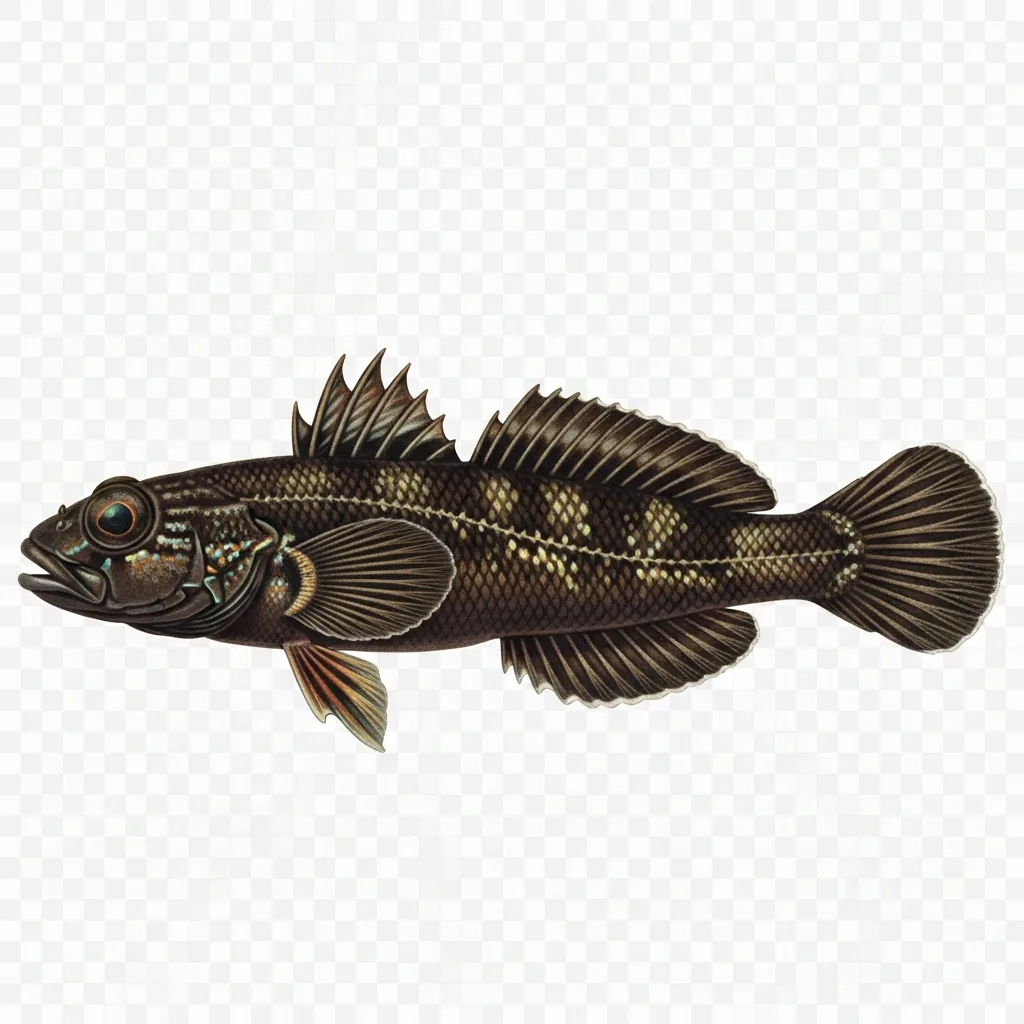
Small bottom fish living among rocks, sand and Posidonia.
Identification
- Body
- Elongated and cylindrical body with a wide head.
- Colouration
- Dark brown or black with lighter spots, often changes color for camouflage.
- Sexual dimorphism
- absent/not noticeable
- Growth
- rapid in warm waters with abundant food supply
Taxonomy
- Family
- Gobiidae
- Order
- Perciformes
- Class
- Actinopterygii
Related species
Habitat & distribution
- Environment
- Coast, Reefs, Brackish
- Preferred bottom
- Sand, Rock, Posidonia
- Geographic distribution
- Found in the coastal waters of the eastern Atlantic Ocean, from the North Sea to the Mediterranean Sea coasts.
- Micro-habitat
- Hides among rocks and marine vegetation such as seagrass.
Prefers areas where it can easily hide, like rocks and marine vegetation.
Presence by sea area
Diet
- Primary prey
- crustaceans, polychaetes, small mollusks
- Secondary prey
- insect larvae, amphipods, copepods
- Occasional prey
- filamentous algae, organic detritus
- Feeding behaviour
- Hunts at the bottom by digging in the sand or hiding to ambush prey.
- Natural predators
- large carnivorous fish, seabirds, sea snakes
Adapts to a wide range of available food in its coastal habitats.
Behaviour
- Activity
- diurnal
- Social behaviour
- solitary
- Aggressiveness
- low
- Migration
- non-migratory
- Seasonal behaviour
- During spring and summer, it becomes more active for reproduction.
- Juveniles
- Young ones tend to hide in debris for protection.
- Adults
- Adults become more territorial and may defend small areas.
Reproduction
- Spawning season
- March, April, May
- Spawning depth
- between 3 and 33 feet
- Eggs
- Adhesive eggs, attached to hard substrates, benthic
- Larval stage
- Pelagic larvae that develop quickly in warm coastal waters.
- Sexual maturity
- 1-2 years
When to catch Black goby
Activity calendar
Activity by season
Best times
This species shows peak fishing activity in spring, summer and autumn, when the productivity index (FPI) reaches its highest values.
Fishing activity decreases in winter, when conditions are less favourable.
Ideal conditions
Atmospheric pressure
Very active.
Regular activity.
Stays hidden.
Water temperature
Where to catch it
Best spots
Bottom preference
Spot type
Fishing techniques
Recommended
Other applicable
Recommended baits
Baits by pressure
How to really catch it
The black goby is a small bottom fish that seems to vanish into sand, rock, and seagrass until you learn to look for it properly. It does not offer dramatic runs, and that is exactly its appeal: to catch it consistently, you must read the bottom and fish with precision.
🐟 Good to know
During reproduction it lays adhesive eggs attached to hard substrates on the bottom: they do not drift freely in the water, but remain fixed to a precise spot in its microhabitat. It is a detail that shows how closely this species is tied to the seabed and to small coastal shelters.
🌊 Where & when
It lives along coasts, reefs, sandy bottoms, and seagrass beds, also in brackish waters, from one to fifty meters deep, hiding among rocks and marine vegetation. As a non-migratory, diurnal species, it is best targeted in shallow coastal ground; from spring into summer, and especially from March to May, it becomes more active for reproduction.
🎣 How to really catch it
The most practical approach is light bottom fishing, lowered gently into rocky areas, along the edges of seagrass beds, or in shallow inlets. A light rod, thin line, light monofilament leader, small hooks, and a light sinker are enough; small worms, pieces of shrimp, and mollusks are effective baits when presented still or with only tiny movements on the bottom.
💡 The detail that makes the difference
The most useful trick is to maintain bottom contact without making the rig too heavy. The goby feeds among sand, debris, and shelter, so a small bait settling naturally beside a rock or between seagrass shoots looks far more convincing than a noisy or overly active presentation.
Catch & handling tips
- Fight
- Not very combative, relies on camouflage.
- Handling
- Handle gently to avoid damaging its delicate skin.
- Release
- Release quickly into the water to increase survival.
Curiosities & culture
- Record catches
- Maximum documented size: up to about 18-25 cm in length (source: FishBase). There is no IGFA All-Tackle record for this species.
- In the kitchen
- Rarely used in cooking due to small size, but occasionally used in traditional fish soups.
- Cultural notes
- Appreciated in underwater collections for its ability to integrate into the marine life of the seafloor.
- Historical notes
- Known since ancient times, often depicted in Roman mosaics.