
Overview
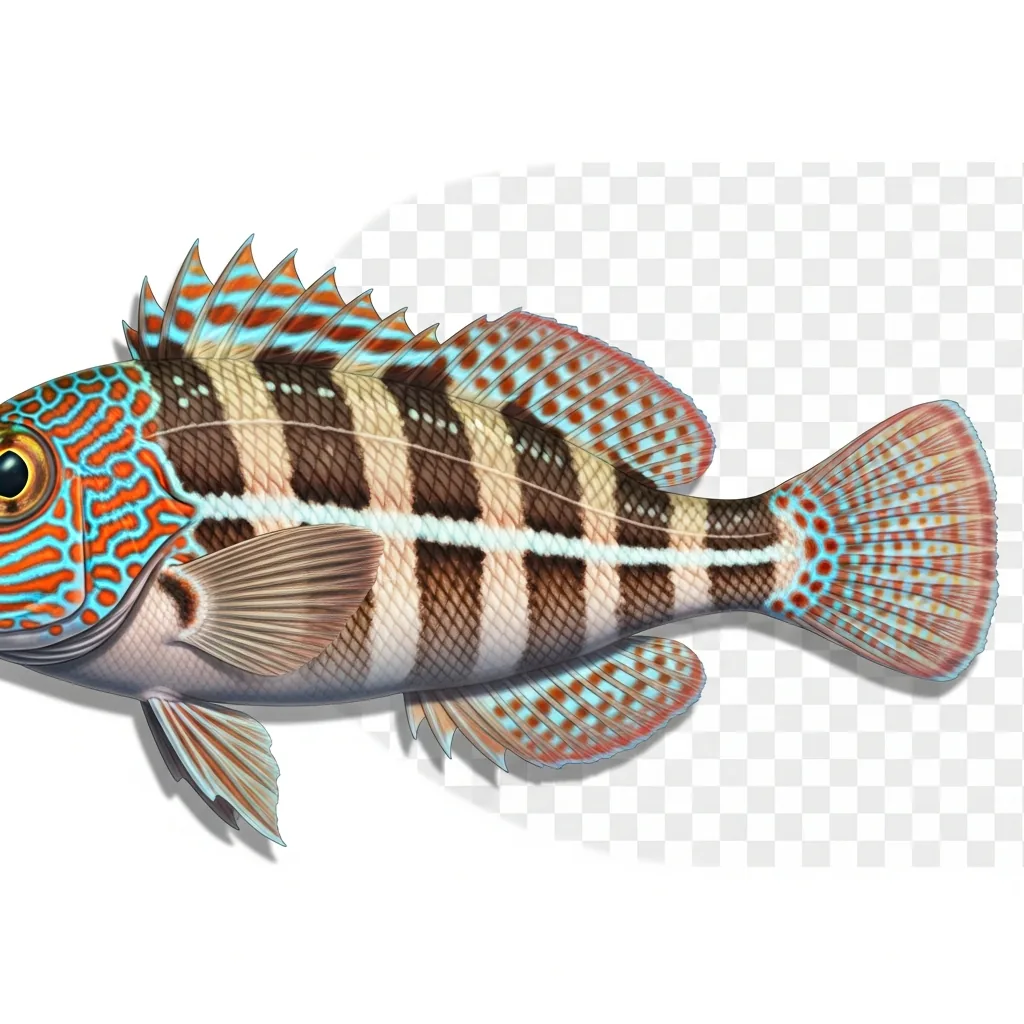
Small very territorial serranid, lives among rocks and crevices.
Identification
- Body
- Elongated and laterally compressed body, wide pectoral fins.
- Colouration
- Color varies from brown to red, with bluish stripes and spots and a distinctive blue spot on the head.
- Sexual dimorphism
- Absent/barely noticeable
- Growth
- Moderate, grows steadily in rocky environments.
Taxonomy
- Family
- Serranidae
- Order
- Perciformes
- Class
- Actinopterygii
Related species
Habitat & distribution
- Environment
- Coast, Reefs
- Preferred bottom
- Rock, Reef, Seagrass
- Geographic distribution
- Common in the Mediterranean Sea and eastern Atlantic from the Iberian coasts to Morocco.
- Micro-habitat
- Often hides in rocky crevices and among seagrass meadows.
Prefers areas rich in natural shelters and rocky outcrops.
Presence by sea area
Diet
- Primary prey
- crustaceans, small fish, mollusks
- Secondary prey
- marine worms, gastropods, cephalopods
- Occasional prey
- zooplankton, small cephalopods
- Feeding behaviour
- Ambushes prey among rocks, uses speed and camouflage to surprise its targets.
- Natural predators
- moray eels, large groupers, bluefish
Primarily hunts near the bottom with moderate aggression.
Behaviour
- Activity
- diurnal
- Social behaviour
- solitary
- Aggressiveness
- medium
- Migration
- Non-migratory
- Seasonal behaviour
- Shows high activity in warmer months, and retreats to deeper water during colder months.
- Juveniles
- Young fish tend to stay closer to the bottom and hide more often.
- Adults
- Adults defend well-defined territories and use cleaning stations with small fish.
Reproduction
- Spawning season
- April, May, June
- Spawning depth
- between 10 and 30 meters
- Eggs
- Small pelagic eggs
- Larval stage
- Pelagic larvae that develop rapidly in mid-depth waters.
- Sexual maturity
- varies between 2 and 3 years
When to catch Painted comber
Activity calendar
Activity by season
Best times
This species shows peak fishing activity in spring, summer and autumn, when the productivity index (FPI) reaches its highest values.
Ideal conditions
Atmospheric pressure
Very active and territorial.
Regular activity.
Stays hidden in crevices.
Water temperature
Where to catch it
Best spots
Bottom preference
Spot type
Fishing techniques
Recommended
Other applicable
Recommended baits
Baits by pressure
How to really catch it
The painted comber is a small rocky serranid, elegant and edgy, living tight to the bottom among light, shade, and broken reef. If you want to catch it for real, you need to think like prey passing too close to its shelter: that is where it strikes.
🐟 Good to know
One well-known biological trait of the painted comber is simultaneous hermaphroditism, a rare condition among marine fishes: the same individual carries both male and female reproductive tissue. It is a key part of the species' biology and helps explain its success in structured coastal habitats.
🌊 Where & when
It lives over rocky bottoms, reefs, cliffy shore zones, and seagrass meadows from 5 to 50 meters, often tucked into crevices or among seagrass. It is a diurnal, non-migratory species and becomes more active in warmer months; from March to November it is more catchable, while in colder periods it tends to move deeper. Spawning takes place from April to June, between 10 and 30 meters.
🎣 How to really catch it
The most practical way to target it is light bottom fishing or light ledgering, presenting a natural bait very close to the rocks without overloading the rig. Shrimp, marine worms, small crabs, and small fish pieces match its diet; a light spinning rod, 0.20 nylon, 0.18 fluorocarbon leader, small hooks, and light sinkers help you stay low and discreet, exactly where it lies in ambush.
💡 The detail that makes the difference
The detail that makes the difference is not fishing "in the middle," but on the sharp edge between shelter and open space: the mouth of a crevice, the rim of a rock, a window in the seagrass. The painted comber is an ambush hunter and tries to dive back into cover immediately, so the presentation should stay tight to the bottom and the fish should be lifted clear in the first meters.
Catch & handling tips
- Fight
- Fairly resistant, tries to take shelter in rocks.
- Handling
- Avoid damaging the fins and handle carefully to minimize stress.
- Release
- Promptly release back into the water, preferably near natural shelters.
Curiosities & culture
- Record catches
- Maximum documented size: up to about 36 cm in length (source: FishBase). There is no official IGFA All-Tackle record for this species.
- In the kitchen
- Eaten in fish soups and mixed grills, valued for its sweet flesh.
- Cultural notes
- Often considered a symbol of tenacity and adaptability in local cultures.
- Historical notes
- Fishing for sciarrano has been documented since Roman times, highly valued by local fishermen for its quality.