
Overview
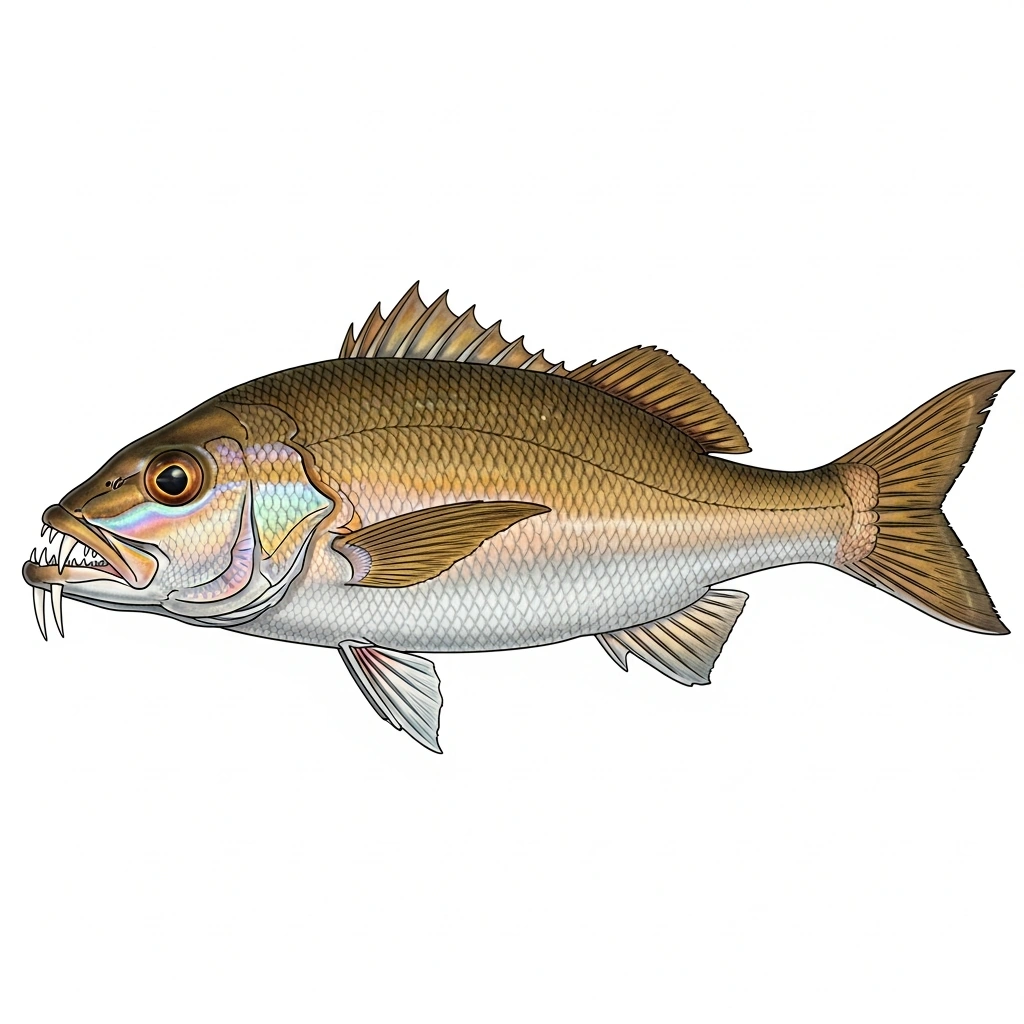
Large aggressive snapper of Brazilian reefs. Powerful predator with prominent canine teeth.
Identification
- Body
- Long, robust body with a prominent snout and wide mouth.
- Colouration
- Color ranges from red to bronze, with golden hues and dark vertical bands.
- Sexual dimorphism
- Absent/not noticeable
- Growth
- Moderate; grows quickly in early years, then slows.
Taxonomy
- Family
- Lutjanidae
- Order
- Perciformes
- Class
- Actinopterygii
Related species
Habitat & distribution
- Environment
- Coast, Reefs, Estuaries
- Preferred bottom
- Rock, Reef, Seagrass
- Geographic distribution
- Found along the western Atlantic coast, from Massachusetts to Brazil, including the Caribbean.
- Micro-habitat
- Hides among rocks and coral reefs, often near underwater caves.
Prefers areas with plenty of crevices and caves for shelter.
Presence by sea area
Diet
- Primary prey
- fish, crustaceans, squid
- Secondary prey
- octopus, shrimps, mollusks
- Occasional prey
- sponges, algae
- Feeding behaviour
- Opportunistic predator, actively hunts by hiding in reef crevices.
- Natural predators
- sharks, barracuda, other large marine predators
Diet varies with the seasonal availability of marine prey.
Behaviour
- Activity
- diurnal
- Social behaviour
- solitary
- Aggressiveness
- medium
- Migration
- Resident
- Seasonal behaviour
- Shows increased activity during warm months, with reduced movement in winter.
- Juveniles
- Juveniles live among mangroves and seagrass, developing stealth hunting techniques.
- Adults
- Become more solitary and dominant, occupying large territorial areas.
Reproduction
- Spawning season
- June, July, August
- Spawning depth
- between 20 and 60 meters
- Eggs
- Pelagic and transparent eggs, small in size.
- Larval stage
- Pelagic larvae disperse with ocean currents before reaching protected habitats.
- Sexual maturity
- varies between 2 and 5 years
When to catch Dog snapper
Activity calendar
Activity by season
Best times
This species shows peak fishing activity in spring, summer and autumn, when the productivity index (FPI) reaches its highest values.
Fishing activity decreases in winter, when conditions are less favourable.
Ideal conditions
Atmospheric pressure
Very aggressive, comes out of structures.
Hunts near the reef.
Hidden in structure.
Water temperature
Where to catch it
Best spots
Bottom preference
Spot type
Fishing techniques
Recommended
Other applicable
Recommended baits
Baits by pressure
How to really catch it
The dog snapper is a powerful, wary reef predator, living among shade, rock, and coral. When it decides to strike, it does so close to the bottom, where any mistake by the angler can end in a hard dive straight back to cover.
🐟 Good to know
An important biological trait is its habitat shift with growth: juveniles use mangroves and seagrass beds, while adults become more solitary and territorial on rocky and reef bottoms. This real transition explains much of the adult fish’s cautious behavior.
🌊 Where & when
You’ll find it along the western Atlantic coast, from Massachusetts to Brazil, including the Caribbean, in coastal waters, estuaries, and reefs from 10 to 90 meters. It holds among rocks, coral structure, and underwater caves, and is more active in warm months; from March to November it is especially fishable, while from June to August it spawns between 20 and 60 meters.
🎣 How to really catch it
To truly catch it, bottom fishing or vertical bottom rigs are the most concrete approaches: drop your bait close to submerged rocks, coral ledges, piers, or harbors, letting a pyramid or round sinker hold near the bottom. Live fish, shrimp, and squid are key baits for an opportunistic predator that feeds on fish, crustaceans, and cephalopods from reef crevices; a sturdy spinning or casting rod, 30-50 lb braid, a 60 lb fluorocarbon leader, and strong 4/0-6/0 circle hooks help manage its first run toward the rocks.
💡 The detail that makes the difference
The most defensible tip is simple: place the bait tight to structure, not far from it. Dog snapper hunts from ambush inside reef cracks and tends to stay close to cover and territory; presenting the bait just outside a crevice or along the edge of a rock puts it directly in its strike lane.
Catch & handling tips
- Fight
- Fierce and tough, tends to dive toward the bottom and hide among rocks.
- Handling
- Handle carefully due to sharp teeth; wear protective gloves.
- Release
- Release carefully to avoid damaging fins and eyes, preferably in sheltered areas.
Curiosities & culture
- Record catches
- Maximum documented size: up to about 128 cm and 28.6 kg (source: FishBase). There is no official IGFA All-Tackle weight record for this species.
- In the kitchen
- Consumed fresh, valued for its quality meat in local grills and soups.
- Cultural notes
- Featured in local fishermen's tales as a symbol of marine resilience.
- Historical notes
- Caught by artisanal fishermen along the Caribbean and Atlantic coasts, with ancient fishing traditions.