
Overview
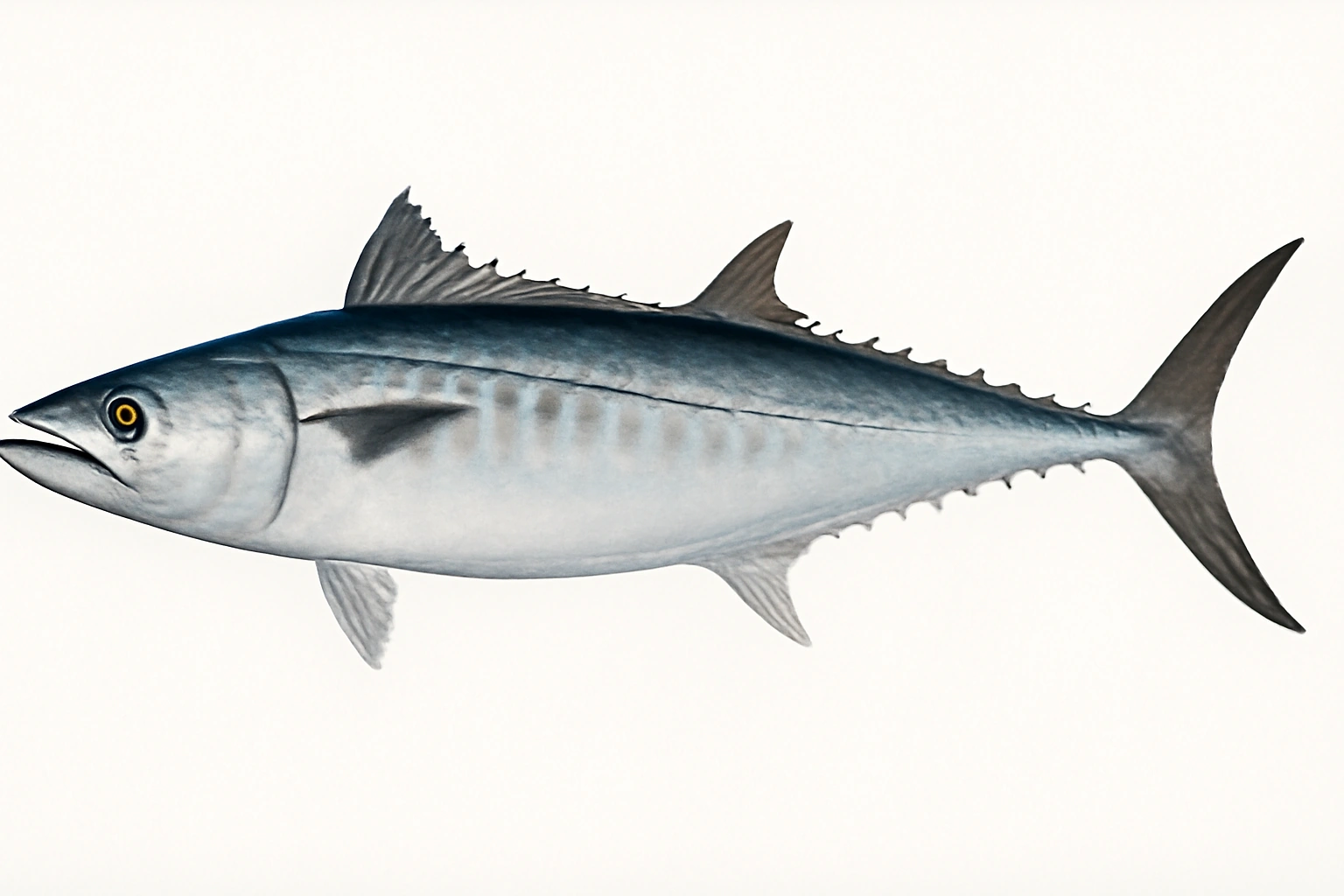
Very fast pelagic predator of the western Atlantic. Hunts in schools slashing fish with razor-sharp teeth.
Identification
- Body
- Elongated, streamlined body with a crescent-shaped tail.
- Colouration
- Blue-green coloration on the back with silvery sides and a white belly.
- Sexual dimorphism
- Absent/not obvious
- Growth
- Fast, grows quickly in the first year of life.
Taxonomy
- Family
- Scombridae
- Order
- Perciformes
- Class
- Actinopterygii
Related species
Habitat & distribution
- Environment
- Coast, Open sea, Reefs, Pelagic
- Preferred bottom
- Sand, Reef
- Geographic distribution
- Widespread in the western Atlantic, from the New England coast to Brazil, including the Gulf of Mexico and the Caribbean.
- Micro-habitat
- Prefers warm, clear waters, often near sandy bottoms or coral reefs.
Prefers warm, well-oxygenated waters near coral reefs and sandy bottoms.
Presence by sea area
Diet
- Primary prey
- pelagic fish, small cephalopods, shrimp
- Secondary prey
- squid, anchovies, sardines
- Occasional prey
- crab larvae, jellyfish
- Feeding behaviour
- Extremely fast predator that hunts in schools, slicing through fish with its sharp teeth.
- Natural predators
- sharks, large tunas, dolphins
Excellent predator due to speed and agility, capable of quickly pursuing prey.
Behaviour
- Activity
- diurnal
- Social behaviour
- small_groups
- Aggressiveness
- high
- Migration
- Conducts seasonal migrations to warmer waters during winter.
- Seasonal behaviour
- During winter, migrates to warmer waters to optimize body temperature and food resources.
- Juveniles
- Juveniles tend to form large protective schools to avoid predators.
- Adults
- Adults form small groups while hunting, displaying more aggressive behaviors.
Reproduction
- Spawning season
- April, May, June
- Spawning depth
- between 20 and 60 meters
- Eggs
- Pelagic eggs with a diameter between 1.5 and 1.8 mm, pelagic.
- Larval stage
- Larvae are planktonic and move toward protected areas as they grow.
- Sexual maturity
- 3-4 years
When to catch King mackerel
Activity calendar
Activity by season
Best times
This species shows peak fishing activity in spring, summer and autumn, when the productivity index (FPI) reaches its highest values.
Fishing activity decreases in winter, when conditions are less favourable.
Ideal conditions
Atmospheric pressure
Approaches coast, very active.
Regular activity.
Moves away from coast.
Moves away from coast.
Productive trolling along reefs.
Approaches, aggressive bite.
Water temperature
Where to catch it
Best spots
Bottom preference
Spot type
Fishing techniques
Recommended
Other applicable
Recommended baits
Baits by pressure
How to really catch it
The king mackerel is a true pelagic predator: long, bright, armed with sharp teeth, and built to cut through water at speed. When it starts hunting near a reef or along a sandy edge, the whole scene tightens up: this is a fish that allows no distraction, and that is exactly why it pulls you in.
🐟 Good to know
A biological detail often overlooked is that its eggs are pelagic: during spawning they remain suspended in the water column, and the larvae also pass through a planktonic stage before moving toward more protected areas. That cycle fits perfectly with the species’ pelagic nature.
🌊 Where & when
Look for it in warm, clear waters of the western Atlantic, from New England to Brazil, including the Gulf of Mexico and the Caribbean, often near sandy bottoms, coral reefs, harbor mouths, and open offshore water. It is most approachable from March to November; in winter it migrates toward warmer water, while from April to June it spawns between 20 and 60 meters.
🎣 How to really catch it
The most practical way to truly target it is trolling: work live baitfish, anchovies, or artificials along reef edges, sandy lanes, and inlet mouths, where small groups of adults patrol by day. A heavy spinning rod with 20-30 lb main line, 40-60 lb fluorocarbon leader, and 2/0-4/0 circle hooks gives control over the first burst and the fish’s attempts to dive deeper.
💡 The detail that makes the difference
The tip that really matters is to keep the bait in clean, bright water rather than dragging it on the bottom: king mackerel is a diurnal pelagic predator that hunts moving fish and small cephalopods. If the bait crosses clear water near reef or sand with a neat, natural presentation, it enters the fish’s hunting lane far more convincingly.
Catch & handling tips
- Fight
- Fights vigorously with fast runs and attempts to dive deep.
- Handling
- Use gloves to avoid sharp teeth.
- Release
- Release quickly keeping the fish in the water as much as possible.
Curiosities & culture
- Record catches
- Maximum documented size: up to about 184 cm and 45 kg (source: FishBase). There is no official IGFA All-Tackle record (only line-class records exist).
- In the kitchen
- Valued for its flavorful meat, often used in dishes like 'ceviche' and grilling.
- Cultural notes
- Symbol of abundance in Caribbean cultures.
- Historical notes
- Traditional fishing practiced by Native Americans on the Atlantic coast for centuries.