
Overview
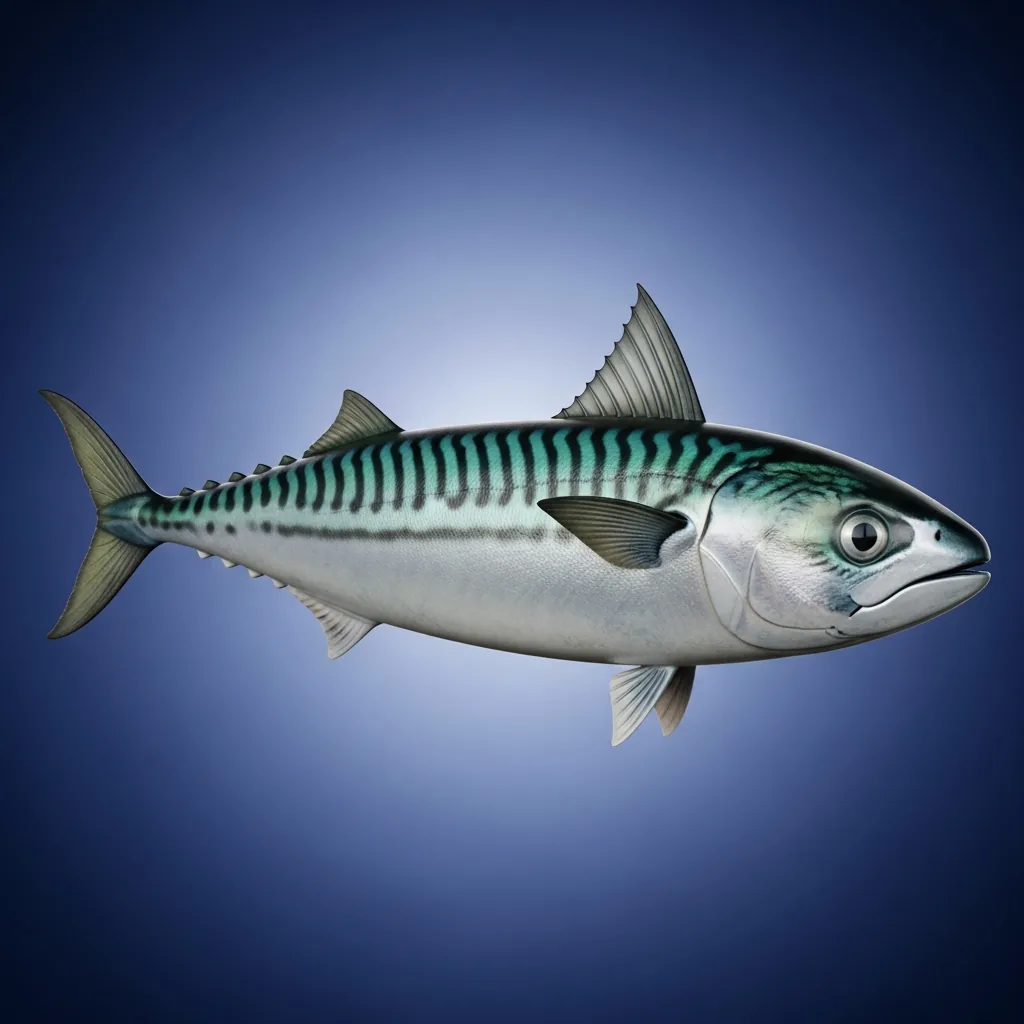
Very fast pelagic fish moving in huge schools. Voracious predator of small fish and crustaceans.
Identification
- Body
- Fusiform and hydrodynamic, with a streamlined and slender body.
- Colouration
- Blue-green coloration with black oblique stripes on the back and white belly.
- Sexual dimorphism
- Absent/not obvious
- Growth
- Fast, reaches adult size in a few years.
Taxonomy
- Family
- Scombridae
- Order
- Perciformes
- Class
- Actinopterygii
Related species
Habitat & distribution
- Environment
- Coast, Open sea, Pelagic
- Preferred bottom
- Sand, Reef
- Geographic distribution
- Found in the North Atlantic, from the Mediterranean Sea to the North Sea and Iceland.
- Micro-habitat
- Often found in open waters near coasts and in large schools.
Prefers temperate waters, forming schools extensively offshore.
Presence by sea area
Diet
- Primary prey
- anchovies, sardines, herrings
- Secondary prey
- zooplankton, crustaceans, squids
- Occasional prey
- fish larvae, fish eggs
- Feeding behaviour
- Active predator, hunts in schools swimming fast to overwhelm prey.
- Natural predators
- tuna, dolphins, sharks, seabirds
Diet varies seasonally, adapting to prey availability.
Behaviour
- Activity
- diurnal
- Social behaviour
- large_schools
- Aggressiveness
- low
- Migration
- Undergoes extensive seasonal migrations for feeding and spawning.
- Seasonal behaviour
- Moves closer to the coasts for spawning in spring, then migrates to deeper waters in summer.
- Juveniles
- Young form schools with similar-sized individuals for protection.
- Adults
- Adults are tireless migrators, forming large schools for hunting and predator avoidance.
Reproduction
- Spawning season
- April, May, June
- Spawning depth
- between 20 and 60 meters
- Eggs
- Pelagic eggs, transparent and light, float in the water column.
- Larval stage
- Larvae are planktonic, developing quickly in nutrient-rich areas.
- Sexual maturity
- varies between 2 and 3 years
When to catch Atlantic mackerel
Activity calendar
Activity by season
Best times
This species shows peak fishing activity in summer and autumn, when the productivity index (FPI) reaches its highest values.
Fishing activity decreases in winter, when conditions are less favourable.
Ideal conditions
Atmospheric pressure
Very active on surface, compact and aggressive schools.
Regular activity, moves at mid-water.
Goes deeper, less accessible from shore.
Water temperature
Where to catch it
Best spots
Bottom preference
Spot type
Fishing techniques
Recommended
Other applicable
Recommended baits
Baits by pressure
How to really catch it
The Atlantic mackerel is a true pelagic fish: streamlined body, deeply forked tail, and a life spent schooling in open water. When a feeding shoal pushes close to shore, everything speeds up and the fishing turns dynamic, visual, almost electric; understanding that rhythm is the key to catching it consistently.
🐟 Good to know
An important biological trait of mackerel is its pelagic spawning: the eggs are transparent and light, remaining suspended in the water column instead of sticking to the bottom. The larvae are planktonic as well and develop in nutrient-rich areas, fully consistent with the species’ pelagic way of life.
🌊 Where & when
You find it in the North Atlantic and the Mediterranean, from coastal waters to offshore, over sandy areas or near reefs, from the surface down to 200 meters. In spring it moves closer to the coast to spawn, between 20 and 60 meters; then in summer it shifts into deeper offshore water, while the most favorable period remains from June to November.
🎣 How to really catch it
To really catch it, the most practical approach is feathering rigs or fast spinning with small metal lures and imitation baitfish, retrieved steadily to mimic fleeing anchovies and sardines. Use a medium-light spinning rod, 8-10 lb line, a 12-15 lb fluorocarbon leader and, when needed, light split shot or sinkers to keep the lure in the depth band where the school is moving.
💡 The detail that makes the difference
The soundest tip is to look for school activity in open water near the coast and avoid staying too long on one fixed spot: mackerel is a diurnal predator that moves in large groups and feeds at speed. When you intercept a passing school, getting a compact moving lure in front of it matters more than a complicated rig.
Catch & handling tips
- Fight
- Feisty, but tires quickly once hooked.
- Handling
- Handle carefully to avoid removing scales and use a moist cloth.
- Release
- Release quickly back into the water, preferably without removing it from the water.
Curiosities & culture
- Record catches
- Maximum documented size: up to about 60 cm and 3.4 kg (source: FishBase). There is no widely documented global IGFA All-Tackle record for this species.
- In the kitchen
- Valued very fresh, ideal for grilling and marinating; used in Mediterranean cuisine.
- Cultural notes
- In paintings and literature, symbolizes agility and responsiveness.
- Historical notes
- Traditional mackerel fishing has been practiced throughout the Mediterranean Sea since ancient times.