
Overview
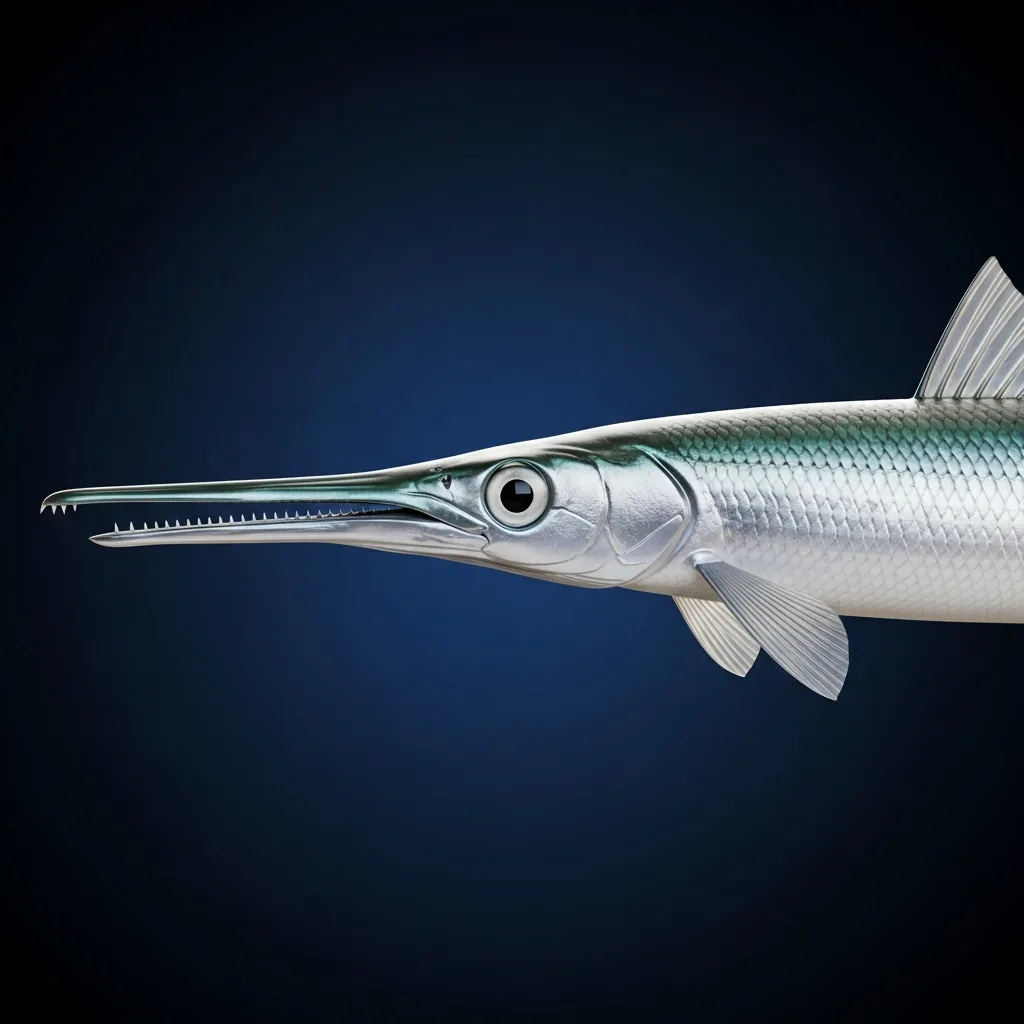
Pelagic fish with elongated body and pointed beak. Swims very fast on surface, spectacular fighter.
Identification
- Body
- Long and slender body with a pointed beak resembling that of a bird.
- Colouration
- The coloration is usually silvery with bluish reflections, especially on the back, while the belly is lighter.
- Sexual dimorphism
- Absent/not very evident
- Growth
- Medium; rapidly reaches typical adult sizes.
Taxonomy
- Family
- Belonidae
- Order
- Beloniformes
- Class
- Actinopterygii
Related species
Habitat & distribution
- Environment
- Coast, Open sea
- Preferred bottom
- Sand, Rock
- Geographic distribution
- Found in all temperate European seas, including the Mediterranean Sea and the northeastern Atlantic Ocean.
- Micro-habitat
- Often hides among algae and also frequents surface waters near the coast.
Prefers the surface waters of the coasts and can be seen zipping near the surface.
Presence by sea area
Diet
- Primary prey
- small fish, horned pout, small cephalopods
- Secondary prey
- shrimps, plankton, aquatic insects
- Occasional prey
- fish larvae, planktonic crustaceans
- Feeding behaviour
- Hunts effectively at the surface, often leaping out of the water to catch its prey.
- Natural predators
- tuna, swordfish, seabirds, sharks
The needlefish favors small-sized prey and hunts using speed and agility.
Behaviour
- Activity
- diurnal
- Social behaviour
- small_groups
- Aggressiveness
- medium
- Migration
- The species may undertake seasonal migrations, moving to warmer waters in winter.
- Seasonal behaviour
- In summer, it comes closer to the coasts, while in winter it tends to live further offshore.
- Juveniles
- Juveniles tend to live closer to shore and often form small schools.
- Adults
- Adults prefer to live in small groups, moving near the surface.
Reproduction
- Spawning season
- April, May, June
- Spawning depth
- between 1 and 5 meters
- Eggs
- The eggs are pelagic and reach 3 mm in diameter, floating on the water's surface.
- Larval stage
- The larvae are typically pelagic and initially resemble little to the adults.
- Sexual maturity
- 2-3 years
When to catch Garfish
Activity calendar
Activity by season
Best times
This species shows peak fishing activity in spring, summer and autumn, when the productivity index (FPI) reaches its highest values.
Ideal conditions
Atmospheric pressure
Very active on surface, visible jumps and hunting.
Present and active, good reactivity.
Less visible, moves away from coast.
Water temperature
Where to catch it
Best spots
Bottom preference
Spot type
Fishing techniques
Recommended
Other applicable
Recommended baits
Baits by pressure
How to really catch it
The garfish is a blade of water: long, slim, silvery, with a beak lined with sharp teeth slicing the surface near piers, rocks, and patches of weed. When it starts feeding, it gives itself away with quick chases and flashing leaps: a fish that makes itself visible, yet does not always come easily.
🐟 Good to know
One real and rather unusual trait of garfish is that it lays pelagic eggs that float at the surface during the spawning season. The larvae are pelagic as well and, in their early stages, look quite unlike the long-bodied, beak-shaped adults.
🌊 Where & when
It lives in temperate European seas, including the Mediterranean, between the coast and open sea, mostly within the top 20 meters over sandy or rocky bottoms. It often uses surface layers and weed beds close to shore; in summer it comes nearer the coast, while in winter it tends to stay farther offshore. Between April and June it spawns from 1 to 5 meters, and from March to November it remains especially approachable to anglers.
🎣 How to really catch it
To catch it for real, the most concrete approach is light spinning at the surface or just under the skin of the water, where it hunts small fish and small cephalopods. A light spinning rod, 8-12 lb monofilament, a 15-20 lb fluorocarbon leader, and small sharp hooks let you cast spinning lures or plumes naturally along piers, harbors, and natural barriers. Live bait and light trolling also make sense, but the key is to stay in its lane: high, bright, and moving.
💡 The detail that makes the difference
The most defensible tip is simple: first find the right level, not the right bottom. Garfish is a daytime surface predator that moves in small groups; if the water looks calm but shows chases, blue flashes, or jumps, run your lure through the top layer with a clean, steady retrieve, because that is where it is reading the outline of its prey.
Catch & handling tips
- Fight
- Offers lively resistance and makes spectacular leaps out of the water.
- Handling
- Handling should be gentle to avoid breaking the beak.
- Release
- Ensure to release the animal carefully, preferably in clean and stable waters.
Curiosities & culture
- Record catches
- Maximum documented size: up to about 93 cm in length (source: FishBase). IGFA All-Tackle record: 1.16 kg (David Mesure, La Teste, France, 2002).
- In the kitchen
- In cooking, it is often grilled or fried. It is appreciated for its delicate flavor and tender meat.
- Cultural notes
- The needlefish has been mentioned in several marine literature texts for its peculiar appearance.
- Historical notes
- Historically fished by the ancient Romans and present in local markets due to its ease of catch.