
Overview
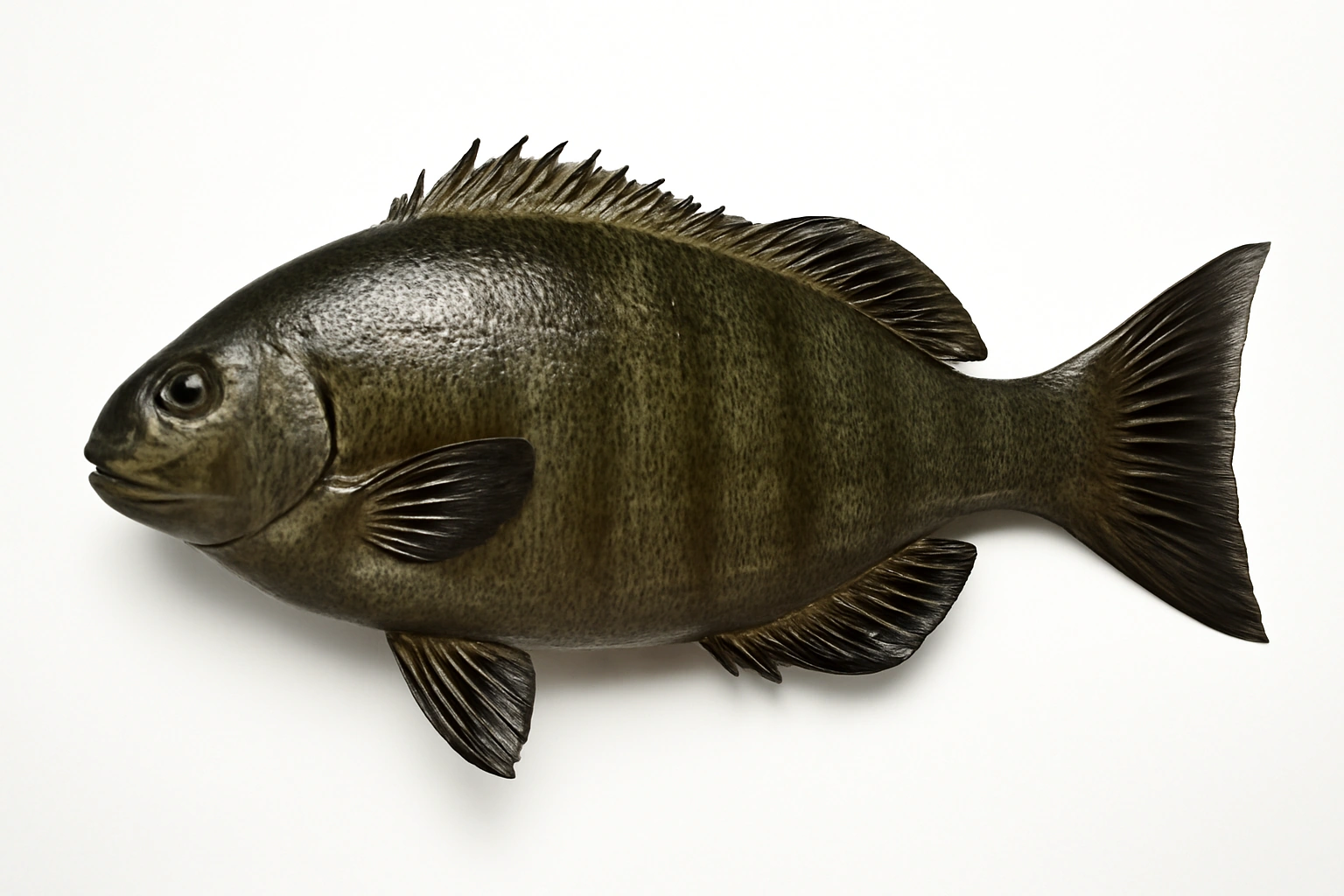
The Luderick, also known as 'Blackfish', is an iconic species of the Australian east coast. Famous for being difficult to catch, requiring technique and patience. Traditionally fished with green weed bait under a float. A true challenge for experienced anglers.
Identification
- Body
- Sturdy, elongated body with a slightly curved dorsal profile.
- Colouration
- Predominantly gray-black coloration with darker vertical stripes on the body.
- Sexual dimorphism
- Absent or not noticeable
- Growth
- Moderate, with variations depending on food availability.
Taxonomy
- Family
- Girellidae
- Order
- Perciformes
- Class
- Actinopterygii
Related species
Habitat & distribution
- Environment
- Coast, Reefs, Estuaries
- Preferred bottom
- Reef, Rock, Seagrass
- Geographic distribution
- Common along the eastern coast of Australia, particularly between New South Wales and Victoria.
- Micro-habitat
- Hides among algae and rock crevices, providing shelter from predators.
Prefers rocky environments with clear waters and algae presence.
Presence by sea area
Diet
- Primary prey
- green algae, red algae, brown algae
- Secondary prey
- small crustaceans, insect larvae, organic debris
- Occasional prey
- mollusks, zooplankton
- Feeding behaviour
- Feeds by scraping algae from rocks and consuming aquatic vegetation in coastal zones.
- Natural predators
- sharks, large predatory fish, seabirds
Heavily dependent on the availability of algae in coastal areas.
Behaviour
- Activity
- diurnal
- Social behaviour
- small_groups
- Aggressiveness
- low
- Migration
- Resident, with small local movements in search of food.
- Seasonal behaviour
- Exhibits increased activity during summer months due to abundant food supply.
- Juveniles
- Young form small groups in shallow waters, using algae as shelter.
- Adults
- Adults move in larger groups, actively swimming along the coast.
Reproduction
- Spawning season
- June, July, August
- Spawning depth
- between 16 and 49 feet
- Eggs
- Small, highly buoyant pelagic eggs.
- Larval stage
- Planktonic larvae that develop rapidly in the first days of life.
- Sexual maturity
- 3-4 years
When to catch Luderick
Activity calendar
Activity by season
Best times
This species shows peak fishing activity in spring, summer and autumn, when the productivity index (FPI) reaches its highest values.
Fishing activity decreases in winter, when conditions are less favourable.
Ideal conditions
Water temperature
Where to catch it
Best spots
Bottom preference
Spot type
Fishing techniques
Recommended
Other applicable
Recommended baits
Baits by pressure
How to really catch it
The luderick is a rock-dwelling herbivore that looks calm until you hook it: then the rod loads up and it heads straight for weed and crevices. To catch it consistently, you have to read water, vegetation, and the edges of rock, because that is where the session is really decided.
🐟 Good to know
Its tricuspid teeth are not just a visual trait: they are a real specialization for grazing and scraping algae from hard surfaces. That is one of the clearest signs of its mainly plant-based diet on rocky coasts and in estuaries.
🌊 Where & when
You find it along Australia’s eastern coast, especially between New South Wales and Victoria, in coastal waters, estuaries, reefs, and rocky ground from 1 to 20 meters. It stays among algae, seagrass, and rock cracks, moves in small groups, and feeds by day. Activity increases in summer, while spawning takes place from June to August between 5 and 15 meters.
🎣 How to really catch it
For luderick, float fishing with fresh algae is the most concrete approach. Picture the rig drifting beside a weed-covered rock face or along a jetty washed by moving water: a light-medium rod, 6-10 lb mono, a 12 lb fluorocarbon leader, size 6-8 hooks, and 1/4 to 1/2 oz weights are enough to present the bait close to the weed without making the setup too stiff. Artificial algae, algae dough, and small crustaceans also fit the species, but the presentation must stay natural and close to living bottom cover.
💡 The detail that makes the difference
The most defensible practical tip is simple: fish where algae is actually growing on the rock, not just where the rock looks good. Luderick feeds by scraping vegetation and tends to stay close to both cover and food, so a short drift along weed and crevices is usually more meaningful than a long cast into clean water.
Catch & handling tips
- Fight
- Fights vigorously with powerful runs and attempts to take cover among rocks.
- Handling
- Handle carefully to avoid excessive stress, use wet gloves.
- Release
- Release as soon as possible to minimize trauma, preferably in the water.
Curiosities & culture
- Record catches
- Maximum documented size: up to about 71 cm and 4 kg (source: FishBase). There is no official IGFA All-Tackle record for this species (the largest recreational catches are around 3.9 kg).
- In the kitchen
- Traditionally grilled or fried, popular in fish soups.
- Cultural notes
- Often mentioned in fishermen's tales as a challenging catch due to its unique feeding habits.
- Historical notes
- Popularly fished along Australia's coast for generations, traditionally consumed by coastal communities.