
Overview
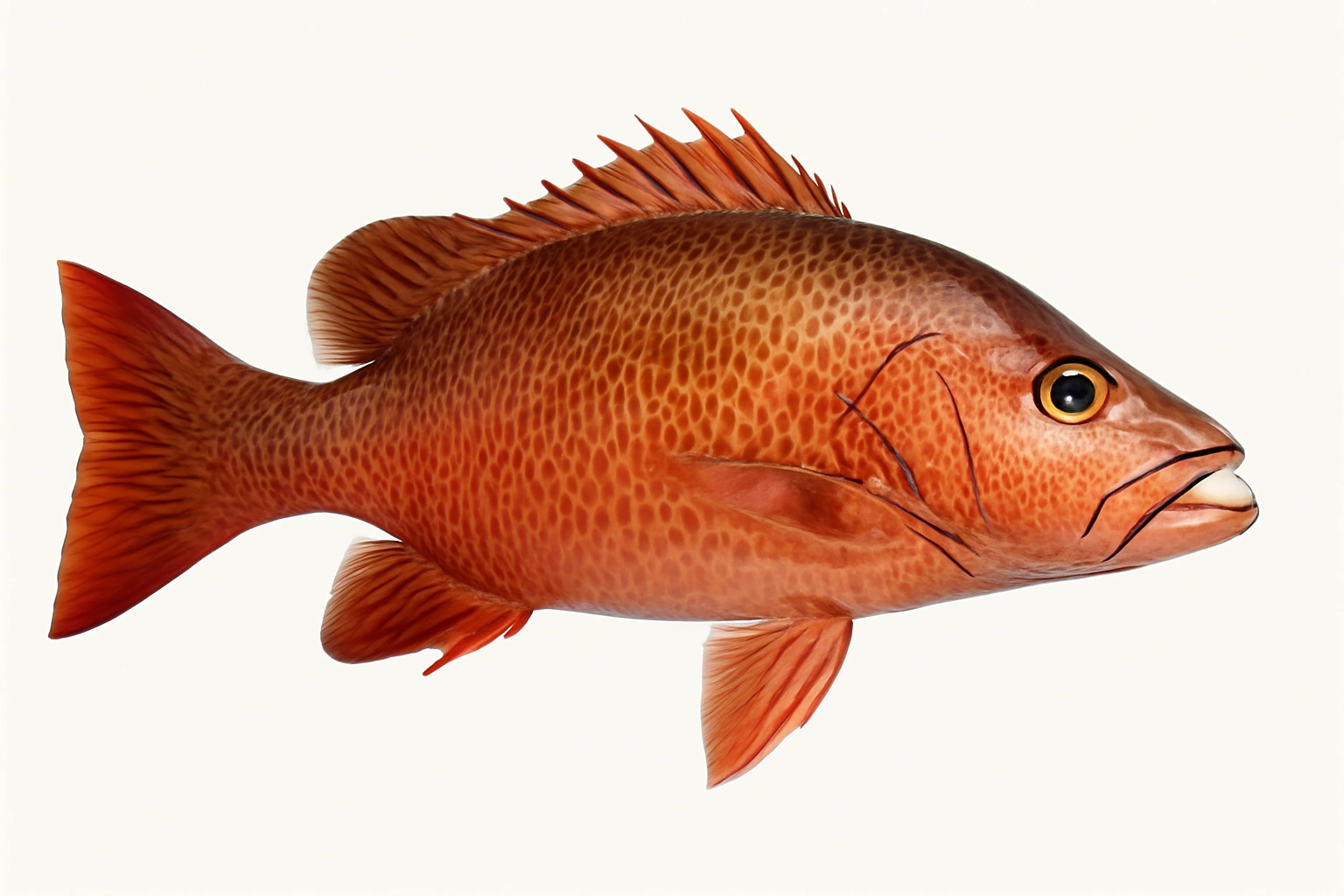
The Mangrove Jack is considered by many as Australia's hardest fighter pound-for-pound. Lives among mangroves and submerged structures, immediately attempting to run for cover when hooked. Catching one requires heavy tackle and fast reflexes.
Identification
- Body
- The Mangrove Jack has a strong, elongated body with a large, powerful mouth.
- Colouration
- It exhibits a reddish-brown coloration with lighter stripes and scattered silver spots along its sides.
- Sexual dimorphism
- absent/not noticeable
- Growth
- medium, grows moderately in the early years of life
Taxonomy
- Family
- Lutjanidae
- Order
- Perciformes
- Class
- Actinopterygii
Related species
Habitat & distribution
- Environment
- Coast, Reefs, Estuaries
- Preferred bottom
- Rock, Reef, Estuarine
- Geographic distribution
- The Mangrove Jack is found in the western Indo-Pacific, from the eastern African coasts to the western Pacific islands.
- Micro-habitat
- It hides among mangrove roots and submerged structures, taking refuge in reef crevices.
Prefers areas with good vegetative cover or submerged structures for protection and hunting.
Presence by sea area
Diet
- Primary prey
- fish, crustaceans, mollusks
- Secondary prey
- shrimp, squid, krill
- Occasional prey
- small cephalopods, algae
- Feeding behaviour
- Actively hunts at night, using its keen eyesight and strong bite to immobilize prey.
- Natural predators
- sharks, barracuda, larger predatory fish
Attracts prey due to its ability to observe quickly and stealthily.
Behaviour
- Activity
- nocturnal
- Social behaviour
- solitary
- Aggressiveness
- medium
- Migration
- resident
- Seasonal behaviour
- During the rainy season, the Mangrove Jack moves closer to the coast and estuaries to spawn.
- Juveniles
- Juvenile Mangrove Jacks tend to stay in shallow waters among mangroves.
- Adults
- Adults tend to establish territory and defend their space from other predators.
Reproduction
- Spawning season
- November, December, January
- Spawning depth
- between 20 and 60 meters
- Eggs
- Pelagic eggs, small in size, widely dispersed in the water.
- Larval stage
- In the larval stage, they are carried by currents towards estuaries.
- Sexual maturity
- varies between 3 and 5 years
When to catch Mangrove Jack
Activity calendar
Activity by season
Best times
This species shows peak fishing activity in spring, summer and autumn, when the productivity index (FPI) reaches its highest values.
Fishing activity decreases in winter, when conditions are less favourable.
Ideal conditions
Water temperature
Where to catch it
Best spots
Bottom preference
Spot type
Fishing techniques
Recommended
Other applicable
Recommended baits
Baits by pressure
How to really catch it
The Mangrove Jack is a solitary, robust, territorial predator that can turn a dark crevice or a submerged root into a perfect ambush point. If you want to catch it for real, you have to think like it does: tight to cover, at the right moment, and ready to stop its first surge back into shelter.
🐟 Good to know
A key part of its life cycle runs through estuaries: the eggs are pelagic, and the larvae are carried by currents toward these sheltered waters, where juveniles then tend to remain among mangroves and shallow areas. It is a strong biological link between offshore waters, the coast, and coastal nursery habitat.
🌊 Where & when
It lives along coasts, reefs, and estuaries of the western Indo-Pacific, over rocky bottoms and structured ground, from very shallow water down to 100 meters. It hides among mangrove roots, submerged structures, and reef crevices. Being mainly nocturnal, it becomes more approachable in low light; during the rainy season it moves closer to the coast and estuaries to spawn, with spawning taking place between 20 and 60 meters.
🎣 How to really catch it
The most concrete way to target it is bottom fishing in direct contact with structure, in mangrove channels, river mouths, coastal reefs, or beside submerged cover. A strong 7-8 ft rod, 30-50 lb main line, 50 lb fluorocarbon leader, 5/0 or 6/0 circle hook, and a drop or ball sinker let you present live shrimp, small baitfish, or fresh squid where this fish truly hunts. Spinning, light trolling, and jigging also work, but the key here is keeping the bait low and close to shelter.
💡 The detail that makes the difference
The practical edge is simple: do not fish "in front of" the structure, fish its usable edge. This snapper uses roots, ledges, and cracks as immediate cover, so the first real chance often comes when the bait drops tight along that refuge. And once hooked, you must turn it at once, because its genuine first move is to drive straight back toward the nearest hole or snag.
Catch & handling tips
- Fight
- Once hooked, the Mangrove Jack rushes to shelters or submerged structures, requiring quick response and sturdy gear.
- Handling
- Use gloves to firmly hold the mouth and be cautious of its sharp teeth.
- Release
- Handle with care, keeping it in the water during release to minimize stress.
Curiosities & culture
- Record catches
- Maximum documented size: up to about 150 cm and 14.5 kg (source: FishBase). IGFA All-Tackle record: 11.62 kg (Japan).
- In the kitchen
- The fish is highly valued for its white, flavorful flesh. It is commonly grilled or steamed.
- Cultural notes
- In local cultures, the Mangrove Jack is known for its resilience and poses a sought-after challenge for sport fishermen.
- Historical notes
- Historically, the Mangrove Jack has been an important target fish for artisanal fishermen in tropical coastal regions.