
Overview
Cunning and wary reef fish, very common in mangroves and ports of Florida and the Caribbean.
Identification
- Body
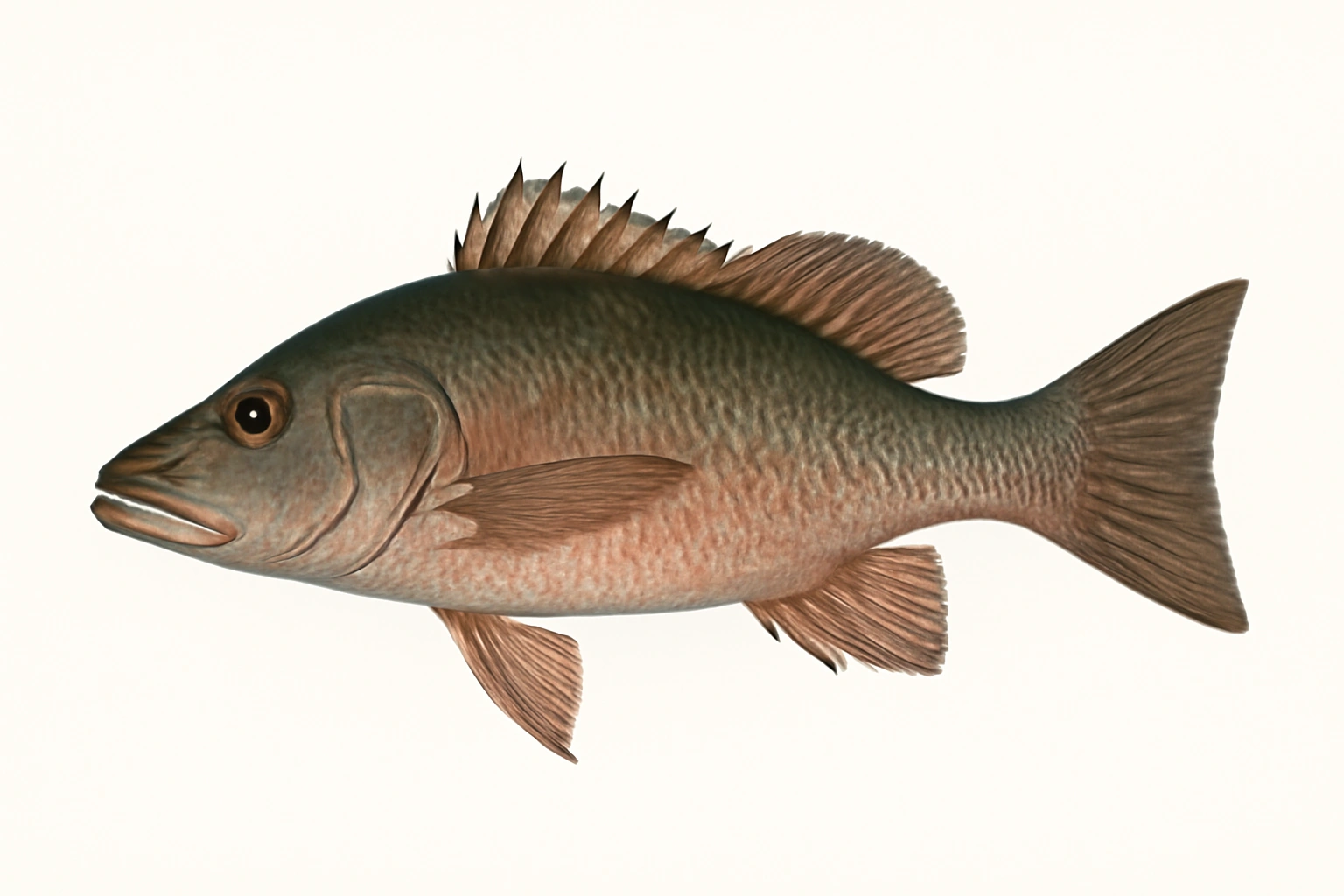
- Slender, laterally compressed body with a pointed head.
- Colouration
- Silvery gray body with reddish hues, often crossed by thin stripes.
- Sexual dimorphism
- Absent/not very noticeable
- Growth
- Moderate, reaches maturity in a few years.
Taxonomy
- Family
- Lutjanidae
- Order
- Perciformes
- Class
- Actinopterygii
Related species
Habitat & distribution
- Environment
- Coast, Reefs, Estuaries
- Preferred bottom
- Rock, Mud, Reef
- Geographic distribution
- Found along the western Atlantic coast, from Massachusetts to Brazil, and common in the Caribbean.
- Micro-habitat
- Often shelters among mangrove roots and near submerged structures such as wrecks and pilings.
Mangroves and rocky bottoms offer natural shelter and an abundance of food.
Presence by sea area
Diet
- Primary prey
- crustaceans, small fish, squid
- Secondary prey
- shrimp, crabs, octopus
- Occasional prey
- marine worms, algae
- Feeding behaviour
- Opportunistic predator that actively hunts at dawn and dusk, using its keen vision to spot prey.
- Natural predators
- bull shark, barracuda, nurse shark
Prefers to hunt at dusk using shadows and structures to ambush prey.
Behaviour
- Activity
- nocturnal
- Social behaviour
- small_groups
- Aggressiveness
- medium
- Migration
- Usually resident in mangrove areas; may migrate seasonally to spawn.
- Seasonal behaviour
- During the spawning season, approaches the coasts to lay eggs.
- Juveniles
- Juveniles are often found in shallow waters among mangroves for protection.
- Adults
- Adults live near complex structures or reef slopes.
Reproduction
- Spawning season
- June, July, August
- Spawning depth
- Between 20 and 60 meters
- Eggs
- Pelagic transparent eggs that float with the current.
- Larval stage
- Larvae are pelagic and develop in the water column before settling near the bottom.
- Sexual maturity
- 3-4 years
When to catch Gray snapper
Activity calendar
Activity by season
Best times
This species shows peak fishing activity in spring, summer and autumn, when the productivity index (FPI) reaches its highest values.
Fishing activity decreases in winter, when conditions are less favourable.
Ideal conditions
Atmospheric pressure
Active, feeds aggressively.
Regular activity.
More wary, harder to fool.
More wary.
Good activity.
Feeds actively.
Water temperature
Where to catch it
Best spots
Bottom preference
Spot type
Fishing techniques
Recommended
Other applicable
Recommended baits
Baits by pressure
How to really catch it
The mangrove snapper, Lutjanus griseus, is a structure-oriented predator: sleek profile, prominent eyes, a powerful mouth, and a habit of living where roots, pilings, and rock break the current. When it decides to feed, it does so decisively, but almost always within a step of cover; that balance between accessibility and refuge is exactly what makes it so compelling to fish for.
🐟 Good to know
An important biological trait is its habitat shift with growth: juveniles are often found in shallow mangrove waters, while adults frequent more complex structure, wrecks, pilings, and reef slopes. Reproduction reflects that mobility as well: the eggs are pelagic, and the larvae develop in the water column before settling near the bottom.
🌊 Where & when
You’ll find it along the western Atlantic coast from Massachusetts to Brazil, and it is common in the Caribbean, among estuaries, coasts, reefs, rock or mud bottoms, and submerged structure from 1 to 100 meters. It becomes more fishable from spring through autumn, especially at dawn, dusk, and at night; from June through August it may move closer to the coast for spawning, which takes place between 20 and 60 meters.
🎣 How to really catch it
To catch it for real, the most concrete approach is bottom casting tight to cover: docks, mangrove roots, artificial reefs, coral structure, or wrecks. A medium-heavy spinning rod with 10-15 lb monofilament, a 20 lb fluorocarbon leader, a 1/2 to 1 oz sliding sinker, and size 2/0-4/0 J or circle hooks works well with fresh fish, crustaceans, or squid. The bait should get down near the bottom and stay in the lane the fish patrols.
💡 The detail that makes the difference
The most defensible tip is to fish the edge of the structure, not its deepest heart. Mangrove snapper uses complex cover, but actively hunts with its vision especially at dawn and dusk: presenting a natural bait just outside roots, pilings, or rocks keeps it visible without hanging up immediately, and gives you a little more room when the fish makes its fast surge back toward the bottom.
Catch & handling tips
- Fight
- Vigorous resistance with rapid dashes towards the bottom or cover.
- Handling
- Use wet hands to avoid damaging the protective slime.
- Release
- Gently release back into the water, ensuring it's vital and capable of swimming away.
Curiosities & culture
- Record catches
- Maximum documented size: up to about 89 cm and 20 kg (source: FishBase). IGFA All-Tackle record: 7.71 kg (17 lb), caught at Port Canaveral, Florida (USA), in 1992.
- In the kitchen
- Highly valued in cooking, often used for smoked or fried fillets, especially in Caribbean cuisine.
- Cultural notes
- In many coastal cultures, it is considered a prized catch and a challenge for sport fishers.
- Historical notes
- Historically, the Mangrove snapper has been an important part of commercial and recreational catches in the coastal areas of the Caribbean.