
Overview
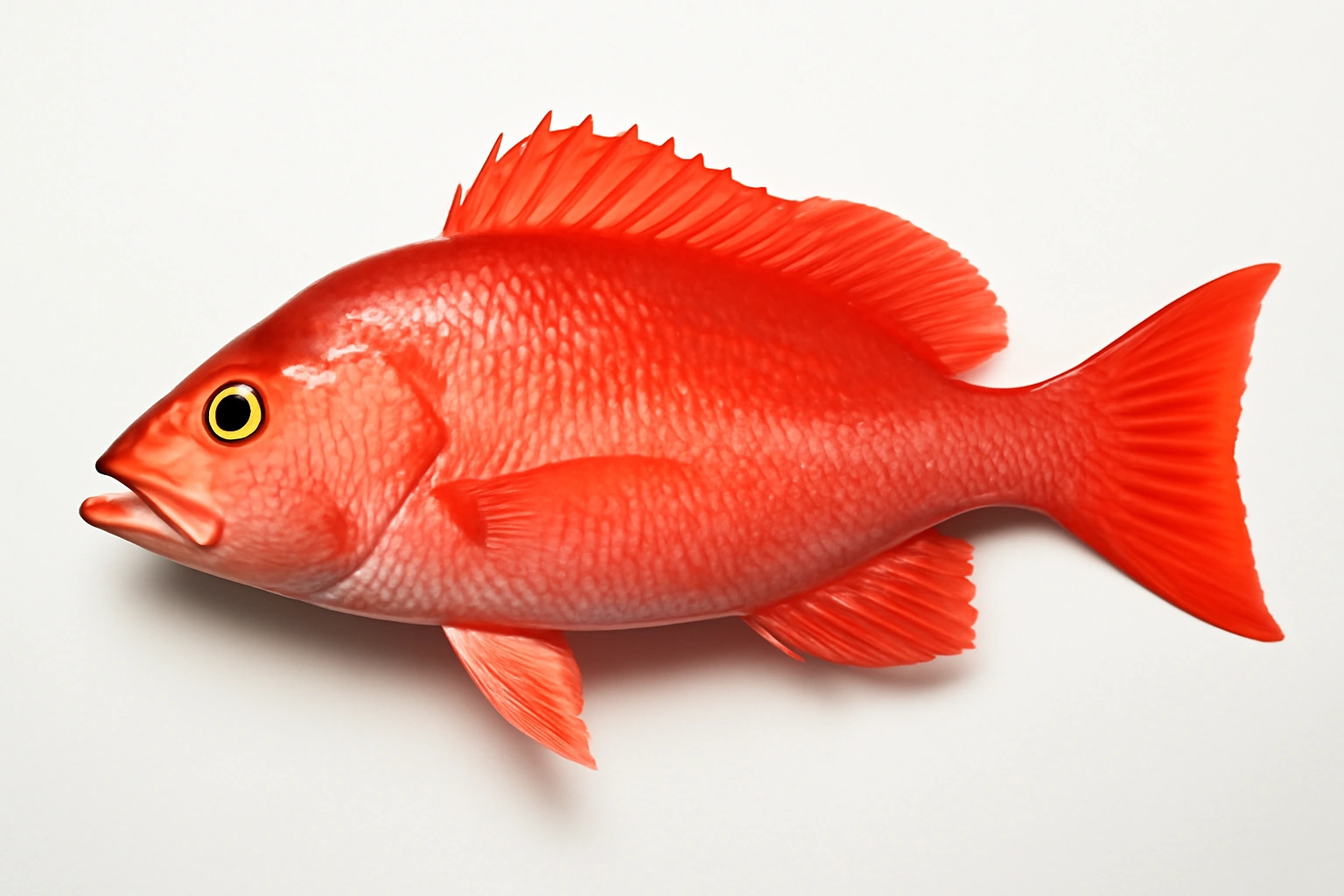
The Nannygai (Crimson Snapper) is a bright red reef fish very popular among Queensland anglers. Found on deep reefs and offshore structures. Has firm white flesh, considered among the best eating in Australia.
Identification
- Body
- Elongated body with a pointed head and a prominent mouth.
- Colouration
- Bright red with silvery reflections on the belly and darker dorsal fins.
- Sexual dimorphism
- Absent/not apparent
- Growth
- Moderate, reaches maturity in a few years
Taxonomy
- Family
- Lutjanidae
- Order
- Perciformes
- Class
- Actinopterygii
Related species
Habitat & distribution
- Environment
- Reefs, Coast, Open sea
- Preferred bottom
- Reef, Rock
- Geographic distribution
- Found in tropical Indo-Pacific waters, especially along Australia's northern coast and around Indonesian archipelagos.
- Micro-habitat
- Hides among coral structures and rock crevices during the day.
Inhabits preferred deep, structured reefs providing protection from predators.
Presence by sea area
Diet
- Primary prey
- small fish, crustaceans, squid
- Secondary prey
- shrimp, polychaetes, jellyfish
- Occasional prey
- algae, organic detritus
- Feeding behaviour
- Nocturnal predator that actively hunts near reef structures, using darkness to ambush prey.
- Natural predators
- sharks, cormorants, dolphins
Unlike other predators, utilizes nocturnal stealth for efficient hunting.
Behaviour
- Activity
- nocturnal
- Social behaviour
- small_groups
- Aggressiveness
- medium
- Migration
- Non-migratory
- Seasonal behaviour
- During the rainy season, often moves closer to food-rich areas. More active in warmer months.
- Juveniles
- Juveniles often form small schools in shallow waters for protection.
- Adults
- Adults tend to be more solitary or form small groups.
Reproduction
- Spawning season
- November, December
- Spawning depth
- between 20 and 60 meters
- Eggs
- Pelagic eggs, small and transparent, drift until hatching.
- Larval stage
- Larvae are pelagic, transparent, and develop quickly.
- Sexual maturity
- 4-5 years
When to catch Crimson Snapper
Activity calendar
Activity by season
Best times
This species shows peak fishing activity in spring, summer and autumn, when the productivity index (FPI) reaches its highest values.
Fishing activity decreases in winter, when conditions are less favourable.
Ideal conditions
Water temperature
Where to catch it
Best spots
Bottom preference
Spot type
Fishing techniques
Recommended
Other applicable
Recommended baits
Baits by pressure
How to really catch it
The Nannygai is a reef snapper with a sharp profile, large eyes, and red fins that seem to glow over the bottom. It lives tight to structure, patrols the edge of the shade, and when it decides to feed it does so with fast, committed strikes: that is where real fishing begins.
🐟 Good to know
An important biological trait of Nannygai is its pelagic spawning eggs: they are released into open water, small and transparent, and drift until hatching. The larvae are also pelagic, transparent, and develop quickly, a common strategy among tropical reef fishes.
🌊 Where & when
You’ll find it on reefs and rocky bottoms from 20 to 100 meters, along tropical Indo-Pacific coasts and offshore waters, especially off northern Australia and around the Indonesian archipelagos. By day it tends to stay hidden among coral structures and rock crevices, while it becomes more active in warmer months and during the rainy season, when it moves closer to food-rich areas; from March to November it remains especially worthwhile, with spawning in November and December between 20 and 60 meters.
🎣 How to really catch it
To truly catch it, the most concrete approach is bottom fishing on deep reefs, submerged structure, and near drop-offs, keeping the bait working tight to the bottom without letting it bury into the rock. Fresh squid, fish fillets, and shrimp match its diet perfectly; a heavy rod, 20-30 lb braid, 30-40 lb fluorocarbon leader, 3/0 corrosion-resistant hook, and quick-release sinker give you control when it makes those fast lunges back toward cover. Jigging can also work well around structure.
💡 The detail that makes the difference
The most defensible tip is simple: focus on the first fishable contact with the structure, not meters above it. Nannygai hunts close to reef structure and by day stays tucked into crevices; presenting the bait just outside that edge, where it can come out and take it without moving far from cover, is often the key.
Catch & handling tips
- Fight
- Strong fighter, makes quick dashes towards cover.
- Handling
- Use sturdy gloves to avoid injuries from fins.
- Release
- Avoid excessive handling, release quickly back into the water.
Curiosities & culture
- Record catches
- Maximum documented size: up to about 82 cm and 22 kg (source: FishBase). There is no official IGFA All-Tackle record for this species.
- In the kitchen
- Highly prized for its white, flavorful meat, often baked or grilled.
- Cultural notes
- Considered a good luck fish in some Southeast Asian cultures.
- Historical notes
- A highly valued fish for centuries in Australian culinary culture.