
Overview
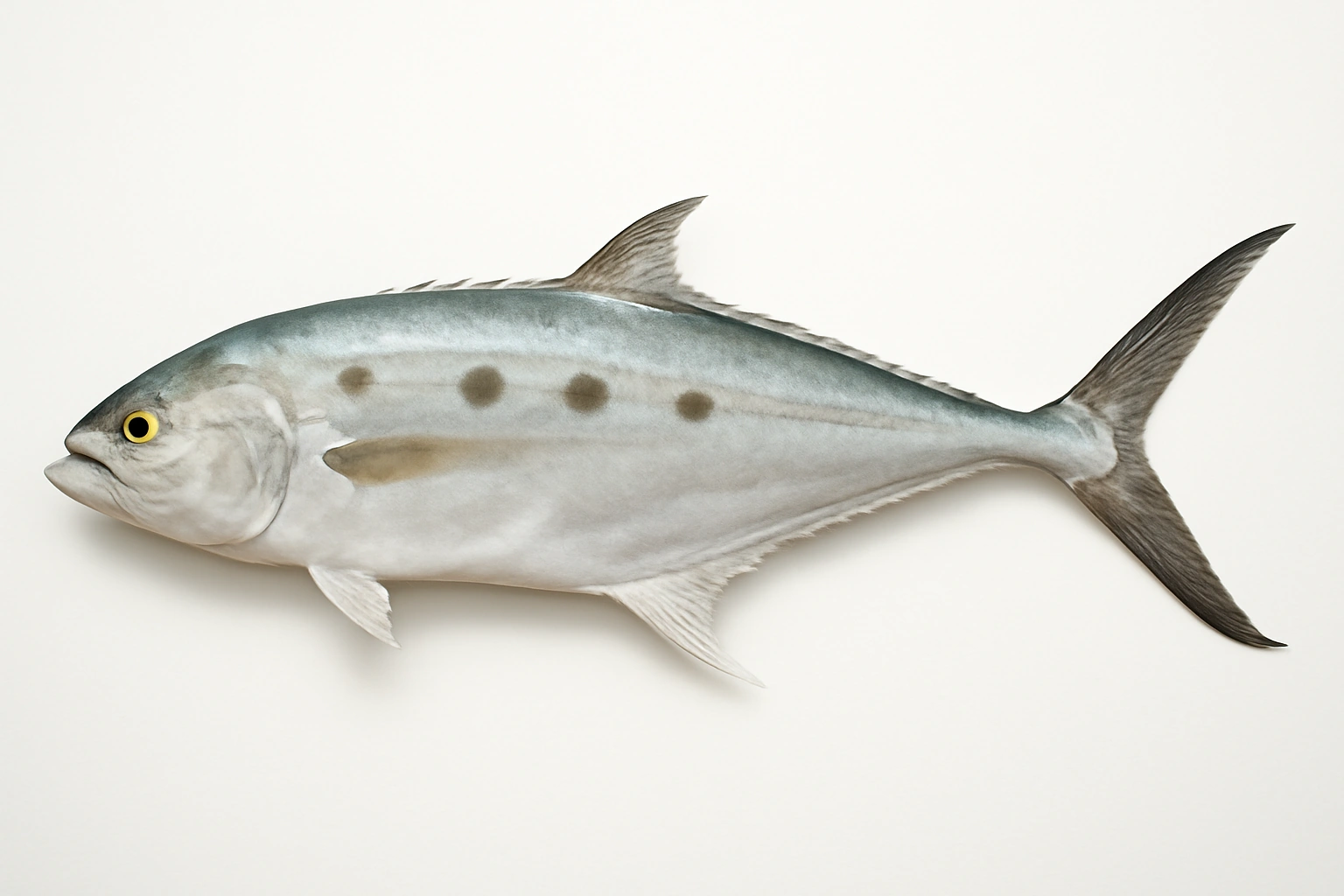
The Queenfish is one of the most spectacular fish in tropical Australian waters. The ultimate aerial fighter, it leaps repeatedly when hooked. Hunts in schools and attacks with great aggression. An exciting, visual fishing experience.
Identification
- Body
- Elongated and compressed body with a large, powerful mouth.
- Colouration
- Silvery with blue and green reflections, dark spots aligned along the body.
- Sexual dimorphism
- Absent/hardly noticeable
- Growth
- Fast, especially in the early years.
Taxonomy
- Family
- Carangidae
- Order
- Perciformes
- Class
- Actinopterygii
Related species
Habitat & distribution
- Environment
- Coast, Open sea, Reefs
- Preferred bottom
- Sand, Rock, Reef
- Geographic distribution
- Tropical and subtropical waters of the Indian and Western Pacific Oceans, including Australian coasts.
- Micro-habitat
- Often found near reefs, hunting close to the water's surface.
Prefers environments near structures like coral reefs and submerged cliffs.
Presence by sea area
Diet
- Primary prey
- small fish, crustaceans, squid
- Secondary prey
- shrimp, crabs, other pelagic fish
- Occasional prey
- water insects, other mollusks
- Feeding behaviour
- Hunts in small schools and attacks prey aggressively just below the surface, using speed to chase.
- Natural predators
- sharks, sea turtles, large predatory fish
Adapted to diets based on pelagic prey, utilizing speed and surprise.
Behaviour
- Activity
- diurnal
- Social behaviour
- small_groups
- Aggressiveness
- medium
- Migration
- Resident, but may make small seasonal movements based on food availability.
- Seasonal behaviour
- Feeding activity increases in warmer months when food resources are more abundant.
- Juveniles
- Juveniles form small groups and tend to stay near the coast for protection.
- Adults
- Adults form smaller groups and show greater mobility in their movements.
Reproduction
- Spawning season
- November, December, January
- Spawning depth
- between 20 and 60 meters
- Eggs
- Small pelagic eggs, floating near the surface.
- Larval stage
- The larva is pelagic, using currents to spread over wide areas.
- Sexual maturity
- 3-4 years
When to catch Queenfish
Activity calendar
Activity by season
Best times
This species shows peak fishing activity in spring, summer and autumn, when the productivity index (FPI) reaches its highest values.
Fishing activity decreases in winter, when conditions are less favourable.
Ideal conditions
Water temperature
Where to catch it
Best spots
Bottom preference
Spot type
Fishing techniques
Recommended
Other applicable
Recommended baits
Baits by pressure
How to really catch it
Silver, laterally compressed and built to run just under the surface, the queenfish is one of those pelagics that turns a feeding burst into a sudden spectacle. Meet it in the right place, near reefs and open coasts, and it will give you chases, jumps and sharp direction changes that demand real attention.
🐟 Good to know
One lesser-noticed biological detail is that its eggs are pelagic and float near the surface, while the larval stage also uses currents to disperse over wide areas. This is a typical strategy of coastal pelagic fishes and helps the species spread across broad tropical and subtropical waters.
🌊 Where & when
It lives along coasts, in open sea and around reefs, over sand or rock, from 1 to 100 meters, but it is often encountered where a reef edge rises toward open water and bait gathers near the surface. It is diurnal and becomes more catchable in warmer months, with feeding peaking from March to November; from November to January it spawns between 20 and 60 meters.
🎣 How to really catch it
The most concrete way to catch it is light-medium spinning in nearshore water and along reef edges, looking for surface activity and casting artificial lures or small baitfish where the school is pushing prey. A medium spinning rod with 20-30 lb braid and a 30-40 lb fluorocarbon leader gives control during fast retrieves and jumps; trolling, casting and fly fishing also work well, while squid or shrimp are best presented naturally with little or no weight.
💡 The detail that makes the difference
The most defensible tip is simple: do not fish the bottom when targeting queenfish. The species feeds mainly just below the surface in small groups, so it pays to cover the upper water and active reef edges with steady retrieves, watching for silver flashes, fleeing bait or scattered strikes: the useful sign is often above you, not below.
Catch & handling tips
- Fight
- Leaps out of the water and makes rapid directional changes.
- Handling
- Use gloves to avoid injury from sharp fins.
- Release
- Ensure it's well-oxygenated before release, avoiding excessive handling.
Curiosities & culture
- Record catches
- Maximum documented size: up to about 120 cm and 16 kg (source: FishBase). IGFA All-Tackle record: 17.89 kg (39 lb 7 oz), caught at Umkomaas (South Africa) in 2010.
- In the kitchen
- Locally often grilled or fried, but not highly sought after in global markets.
- Cultural notes
- Frequently featured in sport fishing legends for its strength and spectacular fight.
- Historical notes
- A popular catch among sport fishing enthusiasts for the challenge it presents.