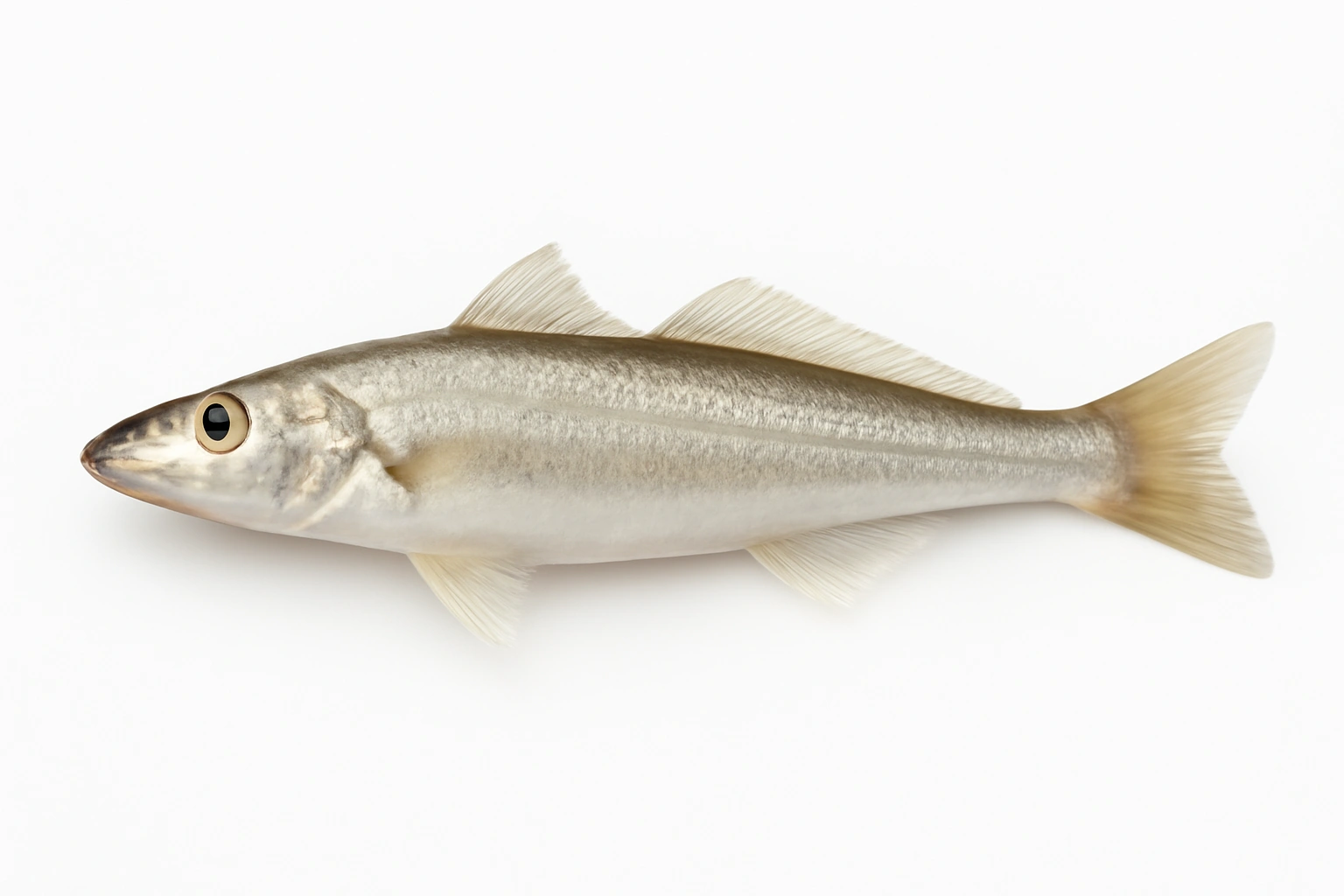

Overview
The Sand Whiting is one of Australia's most beloved fishing targets, found along the entire east coast. Lives on shallow sandy bottoms and is particularly active on flats during incoming tide. Excellent eating with firm white flesh.
Identification
- Body
- The body is elongated and slender, typical of species that hide in the sand.
- Colouration
- The color is generally silvery with golden hues, characterized by darker longitudinal lines.
- Sexual dimorphism
- Absent/not noticeable
- Growth
- Medium with visible growth in the first years of life.
Taxonomy
- Family
- Sillaginidae
- Order
- Perciformes
- Class
- Actinopterygii
Related species
Habitat & distribution
- Environment
- Coast, Estuaries
- Preferred bottom
- Sand
- Geographic distribution
- The Sand Whiting is mainly found along the eastern coast of Australia, from Queensland to Victoria.
- Micro-habitat
- Prefers sandy bottoms, often found in shallow waters during high tide.
Often hides in sand grooves or among seaweed near the bottom.
Presence by sea area
Diet
- Primary prey
- crustaceans, worms, small mollusks
- Secondary prey
- larval fish, shrimp, algae
- Occasional prey
- organic debris, plankton, aquatic insects
- Feeding behaviour
- Actively feeds during the day, digging in the sand for food with their protrusible mouth.
- Natural predators
- sharks, dolphins, seabirds
Adapts to different food sources depending on seasonal availability.
Behaviour
- Activity
- diurnal
- Social behaviour
- small_groups
- Aggressiveness
- low
- Migration
- Non-migratory with small seasonal moves for spawning.
- Seasonal behaviour
- During the summer months, it migrates to areas more suitable for spawning.
- Juveniles
- Juveniles tend to stay in shallow waters and form small groups.
- Adults
- Adults are mostly solitary or in small groups and tend to stay near sandy bottoms.
Reproduction
- Spawning season
- October, November, December, January
- Spawning depth
- between 2 and 5 meters
- Eggs
- Pelagic eggs, small and floating.
- Larval stage
- The larvae are pelagic and are carried by sea currents until they find suitable habitats to settle.
- Sexual maturity
- 2-3 years
When to catch Sand Whiting
Activity calendar
Activity by season
Best times
This species shows peak fishing activity in spring, summer and autumn, when the productivity index (FPI) reaches its highest values.
Fishing activity decreases in winter, when conditions are less favourable.
Ideal conditions
Water temperature
Where to catch it
Best spots
Bottom preference
Spot type
Fishing techniques
Recommended
Other applicable
Recommended baits
Baits by pressure
How to really catch it
The sand whiting is a slim, quick bottom fish built for moving across shallow sandy flats, often seen only at the last moment as a pale shape sliding over the tide edge. It lacks the brute attitude of larger predators, yet when hooked it answers with sharp lateral runs that make every capture feel vividly alive.
🐟 Good to know
One real and important biological feature is its protrusible mouth: it extends forward to search the sand, where it picks up and sucks in small crustaceans, worms, and mollusks. That explains why it often feeds close to the bottom and why a naturally presented bait can be especially effective.
🌊 Where & when
You will find it mainly along Australia’s eastern coast, from Queensland to Victoria, over sandy bottoms in coastal waters and estuaries from 1 to 20 meters. It readily moves into shallow water on high tide, remains highly fishable from March to November, and in summer makes small shifts toward spawning areas; reproduction takes place from October to January, including in 2-5 meters of water.
🎣 How to really catch it
The most practical way to target it is light bottom fishing on sandy bays, estuaries, sheltered beaches, and shallows covered on the high tide. A light rod, 4-8 lb monofilament, a 1-meter fluorocarbon leader, small hooks, and small sinkers are enough to fish worms, live shrimp, or small squid strips right on or just above the bottom, letting the bait look natural while the fish feeds through the sand by day.
💡 The detail that makes the difference
The small edge that often matters is simple: look for clean sand and work low in daylight, not midwater. Sand whiting feeds actively during the day and close to the bottom, often in skinny water on the high tide; if your bait stays low, understated, and just lively enough, it sits exactly where this fish is already searching.
Catch & handling tips
- Fight
- Energetic fight with quick lateral dashes.
- Handling
- Use wet towels or nets to reduce stress.
- Release
- Ensure the fish is vigorous before releasing it and avoid prolonged exposure to air.
Curiosities & culture
- Record catches
- Maximum documented size: up to about 51 cm and 1.4 kg (source: FishBase). There is no official IGFA All-Tackle record for this species.
- In the kitchen
- Highly valued in mixed fish fries, or simply grilled.
- Cultural notes
- The Sand Whiting is highly appreciated in Australian cuisine and often represented in local handcrafted artworks.
- Historical notes
- It has been fished along the Australian coasts for decades, using traditional techniques passed down through generations.