
Overview
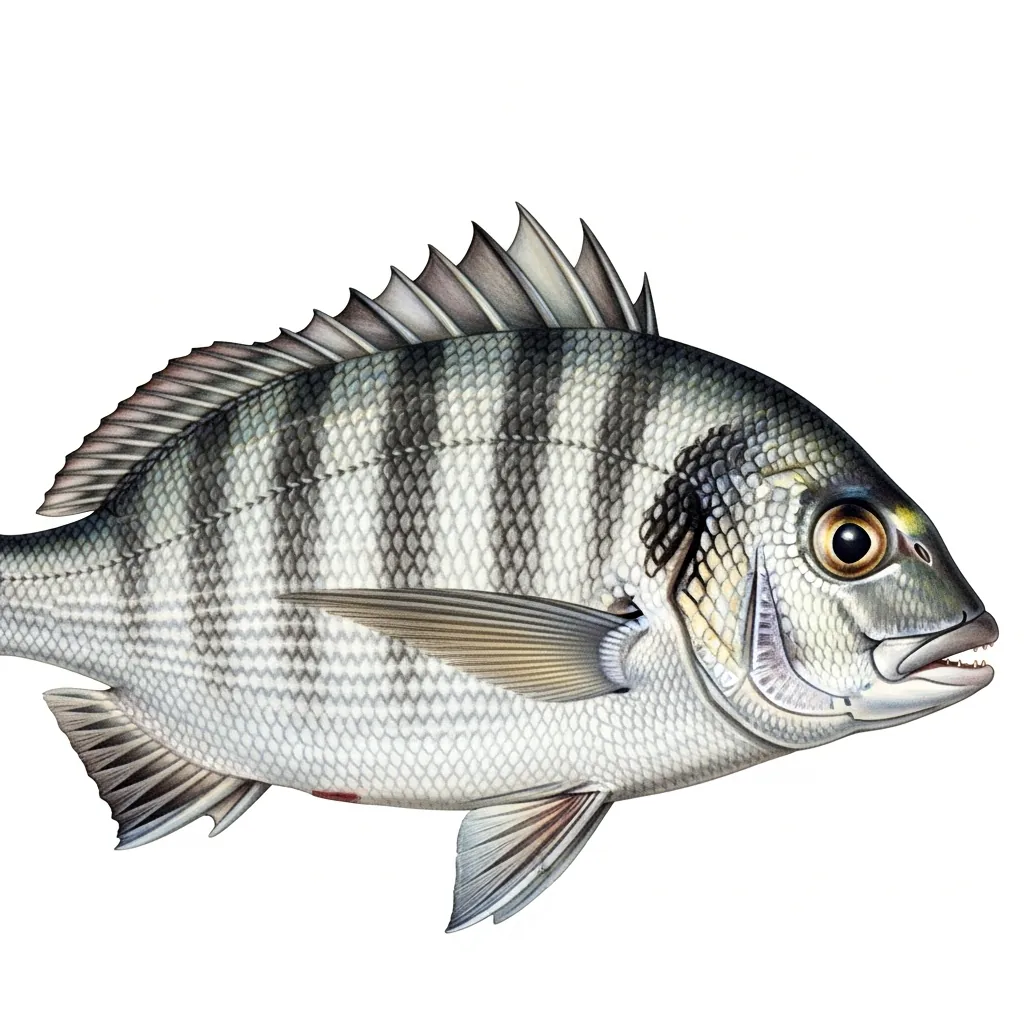
Robust and combative fish, loves reefs and mixed bottoms.
Identification
- Body
- Robust and laterally compressed body.
- Colouration
- Silvery with dark vertical bands on the body.
- Sexual dimorphism
- Absent/not very pronounced
- Growth
- medium, grows at a moderate rate especially in the early years
Taxonomy
- Family
- Sparidae
- Order
- Perciformes
- Class
- Actinopterygii
Related species
Habitat & distribution
- Environment
- Coast, Reefs, Seagrass
- Preferred bottom
- Rock, Reef, Seagrass
- Geographic distribution
- Found in the Mediterranean Sea and along the eastern Atlantic coasts from the British Isles to Senegal.
- Micro-habitat
- Seeks shelter among rocks and seagrass, often near submerged rocks.
Frequently found near rocky bottoms and seagrasses for feeding and shelter.
Presence by sea area
Diet
- Primary prey
- crustaceans, mollusks, small fish
- Secondary prey
- echinoderms, algae, annelids
- Occasional prey
- small cephalopods, plankton
- Feeding behaviour
- Actively hunts on the bottom, using jaw strength to break shells and crustaceans.
- Natural predators
- groupers, dentex, bluefish
Varied carnivorous diet makes it a versatile predator.
Behaviour
- Activity
- diurnal
- Social behaviour
- small_groups
- Aggressiveness
- medium
- Migration
- resident, with small seasonal movements
- Seasonal behaviour
- In summer, they venture closer to the shore, while in winter they tend to move to deeper waters.
- Juveniles
- Young ones often found in shallower waters and small groups.
- Adults
- Adults can be solitary or form small groups, especially when foraging.
Reproduction
- Spawning season
- April, May, June
- Spawning depth
- between 5 and 20 meters
- Eggs
- Eggs are pelagic and small.
- Larval stage
- The larvae are planktonic and develop within a few days.
- Sexual maturity
- 3-4 years
When to catch White sea bream
Activity calendar
Activity by season
Best times
This species shows peak fishing activity in spring, summer and autumn, when the productivity index (FPI) reaches its highest values.
Ideal conditions
Atmospheric pressure
Very active and less wary.
Regular activity.
Stays closer to rocks.
Normal activity, fewer surface bites.
Good conditions, feeds regularly.
Increases activity before bad weather. Good time to fish.
Water temperature
Where to catch it
Best spots
Bottom preference
Spot type
Fishing techniques
Recommended
Other applicable
Recommended baits
Baits by pressure
How to really catch it
The white seabream is a sturdy, alert bottom fish, built to live among rock and seagrass. When you truly meet it, you are not facing just a coastal grazer: you are facing a bottom predator with a powerful mouth and teeth able to crush, and that is exactly where the most interesting fishing begins.
🐟 Good to know
A key biological trait of the white seabream is its incisor-like dentition, suited to tearing and breaking hard prey such as mollusks and crustaceans. This structure, together with strong jaws, explains why it feeds actively on the bottom and why it naturally accepts compact, meaty baits.
🌊 Where & when
You find it in the Mediterranean and along the eastern Atlantic, among coasts, rocky reefs, reef areas and seagrass beds, from 1 to 50 meters, often close to submerged rocks where it can shelter. It is a diurnal fish and remains catchable through much of the year, moving closer to shore in summer and tending deeper in winter; from April to June it spawns between 5 and 20 meters.
🎣 How to really catch it
For white seabream, the most reliable approach is bottom fishing, especially from shore along rocky coasts, breakwaters and the edges of seagrass. A medium-action rod, 0.30-0.35 monofilament, 0.25-0.30 fluorocarbon leader, strong 2/0-4/0 hooks and a sliding sinker let you present shrimp, squid or annelids tight to the bottom, where it feeds and where, once hooked, it immediately tries to regain the rocks.
💡 The detail that makes the difference
The practical edge is simple: place the bait as close as possible to shelter, but keep the presentation clean and controlled. White seabream feed among rocks and seagrass leaves, yet during the fight they try to dive back into cover; that is why it pays to fish right against the structure and be ready to steer the fish out firmly as soon as it runs.
Catch & handling tips
- Fight
- Strong fighter with resistance, tends to seek shelter among rocks.
- Handling
- Handle with care due to sharp fins.
- Release
- Gently release back into the water, preferably near natural shelter.
Curiosities & culture
- Record catches
- Maximum documented size: up to about 45 cm and 1.9 kg (source: FishBase). IGFA All-Tackle record: 3.80 kg (8 lb 6 oz), caught in Spain in 1992.
- In the kitchen
- Often grilled or baked, the white seabream is appreciated for its tasty meat.
- Cultural notes
- Often mentioned in Mediterranean fishermen's tales for its strength and resilience.
- Historical notes
- Traditionally fished since ancient times along Mediterranean shores.