
Overview
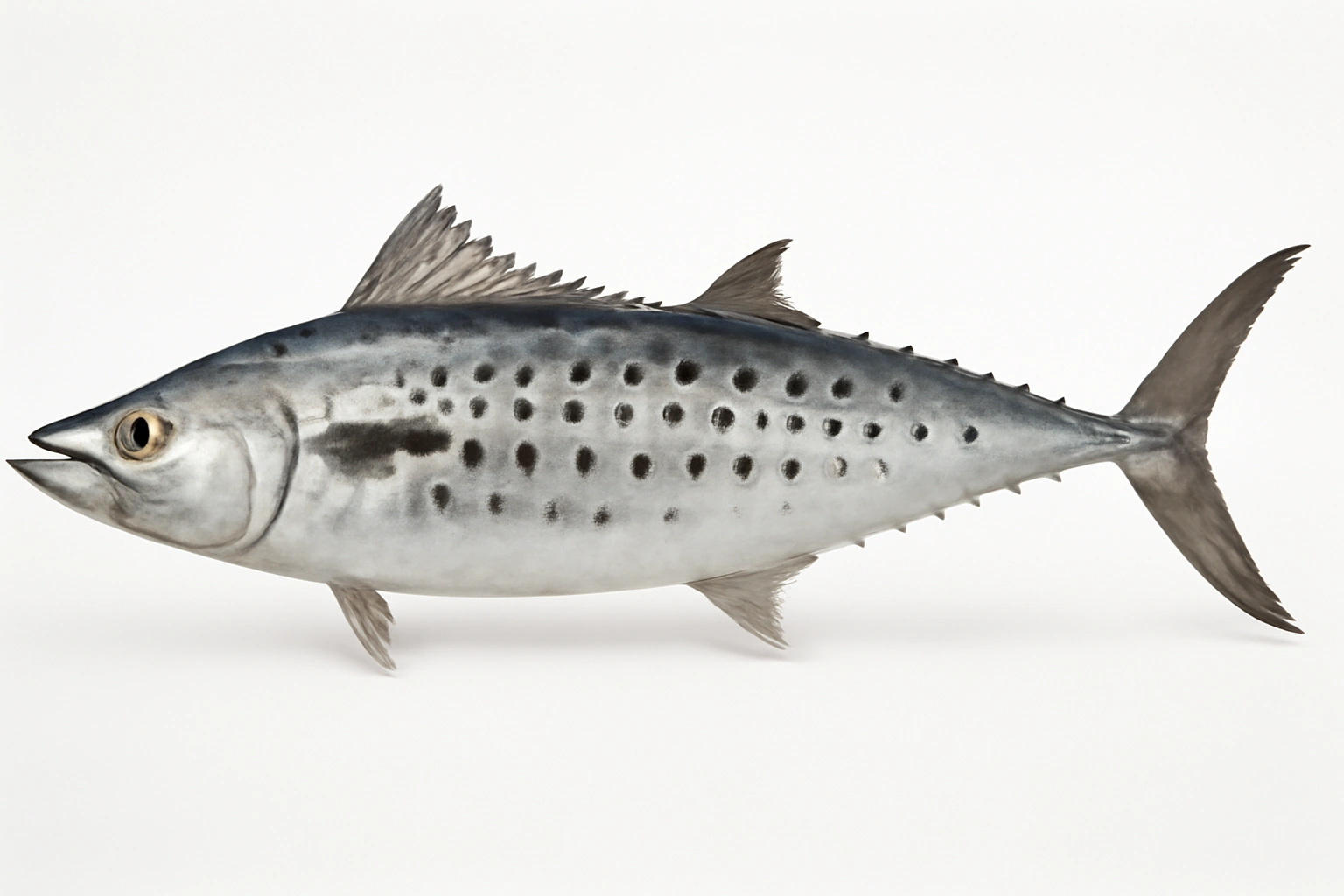
The Spotted Mackerel is one of the most popular pelagic species along Australia's east coast. Incredibly fast and aggressive, it attacks any fast-moving lure. Arrives in large schools during autumn and winter, creating a fishing frenzy.
Identification
- Body
- Streamlined and tapered body built for speed.
- Colouration
- Silver with dark spots along the body.
- Sexual dimorphism
- Absent or not pronounced
- Growth
- Rapid, especially in early years.
Taxonomy
- Family
- Scombridae
- Order
- Perciformes
- Class
- Actinopterygii
Related species
Habitat & distribution
- Environment
- Coast, Pelagic
- Preferred bottom
- Reef, Sand
- Geographic distribution
- Found mainly along the eastern coast of Australia, from Queensland to New South Wales.
- Micro-habitat
- Tends to stay in schools in open sea, often near coral reefs and sandy shores.
Well adapted to various pelagic and coastal environments.
Presence by sea area
Diet
- Primary prey
- minnows, crustaceans, squids
- Secondary prey
- anchovies, sardines, benthic crustaceans
- Occasional prey
- plankton, shrimp
- Feeding behaviour
- Opportunistic hunter, swiftly pursuing schools of small fish.
- Natural predators
- sharks, large pelagics, seabirds
Tends to hunt in areas with high densities of small prey.
Behaviour
- Activity
- diurnal
- Social behaviour
- large_schools
- Aggressiveness
- high
- Migration
- Seasonal migrations between feeding and breeding grounds.
- Seasonal behaviour
- Highly active in fall and winter, forming large schools near the coast.
- Juveniles
- Gather in large schools nearshore for protection.
- Adults
- Part of large schools that move to hunt efficiently.
Reproduction
- Spawning season
- June, July, August
- Spawning depth
- Between 20 and 60 meters
- Eggs
- Pelagic eggs, small and transparent.
- Larval stage
- Larvae are pelagic, with fast fin development for swimming.
- Sexual maturity
- 2-3 years
When to catch Spotted Mackerel
Activity calendar
Activity by season
Best times
This species shows peak fishing activity in spring, summer and autumn, when the productivity index (FPI) reaches its highest values.
Fishing activity decreases in winter, when conditions are less favourable.
Ideal conditions
Water temperature
Where to catch it
Best spots
Bottom preference
Spot type
Fishing techniques
Recommended
Other applicable
Recommended baits
Baits by pressure
How to really catch it
The Australian spotted mackerel is a fast, streamlined, high-strung pelagic fish, built to chase schools and strike decisively. When coastal water comes alive along reefs and beaches, seeing it switch into feeding mode means a clean, fast fishery of hard hits and long surface runs.
🐟 Good to know
Its eggs are pelagic, small and transparent, and the larvae also remain pelagic in their early stages, with rapid fin development that helps them swim in open water. That fits a species that lives in schools and uses open, dynamic coastal habitats.
🌊 Where & when
It is found mainly along Australia’s eastern coast, from Queensland to New South Wales, in 5 to 50 meters of coastal and pelagic water near reefs, sandy areas, bays, and current lines. It is highly active in fall and winter and through the long peak from March to November, while from June to August it makes migrations linked in part to spawning.
🎣 How to really catch it
The most direct way to target it is fast spinning with metal lures or artificials worked on the surface and mid-water, keeping a 7-8 foot medium-heavy rod ready for quick casts at moving schools. Trolling and live baits also work well near reefs and current, while 20-30 lb line and a steel or fluorocarbon leader help deal with sharp teeth, long runs, and jumps.
💡 The detail that makes the difference
The practical edge is not to waste time on the bottom: this mackerel feeds as a pelagic hunter, chasing small fish, squid, and crustaceans in open water. If you see activity near the surface or mid-column, run the lure fast across the edge of the school, not through the dead water after it has passed.
Catch & handling tips
- Fight
- Strong fighter, known for long runs and jumps out of the water.
- Handling
- Use gloves to avoid cuts from sharp teeth.
- Release
- Avoid touching the gills, release quickly into the water.
Curiosities & culture
- Record catches
- Maximum documented size: up to about 104 cm and 10.2 kg (source: FishBase). There is no official IGFA All-Tackle record for this species.
- In the kitchen
- Often grilled and served with light seasonings or citrus-based marinades.
- Cultural notes
- Important for sport fishing and valued for its tasty meat.
- Historical notes
- Australian Aborigines caught this species using spears and nets along the eastern coasts.