
Overview
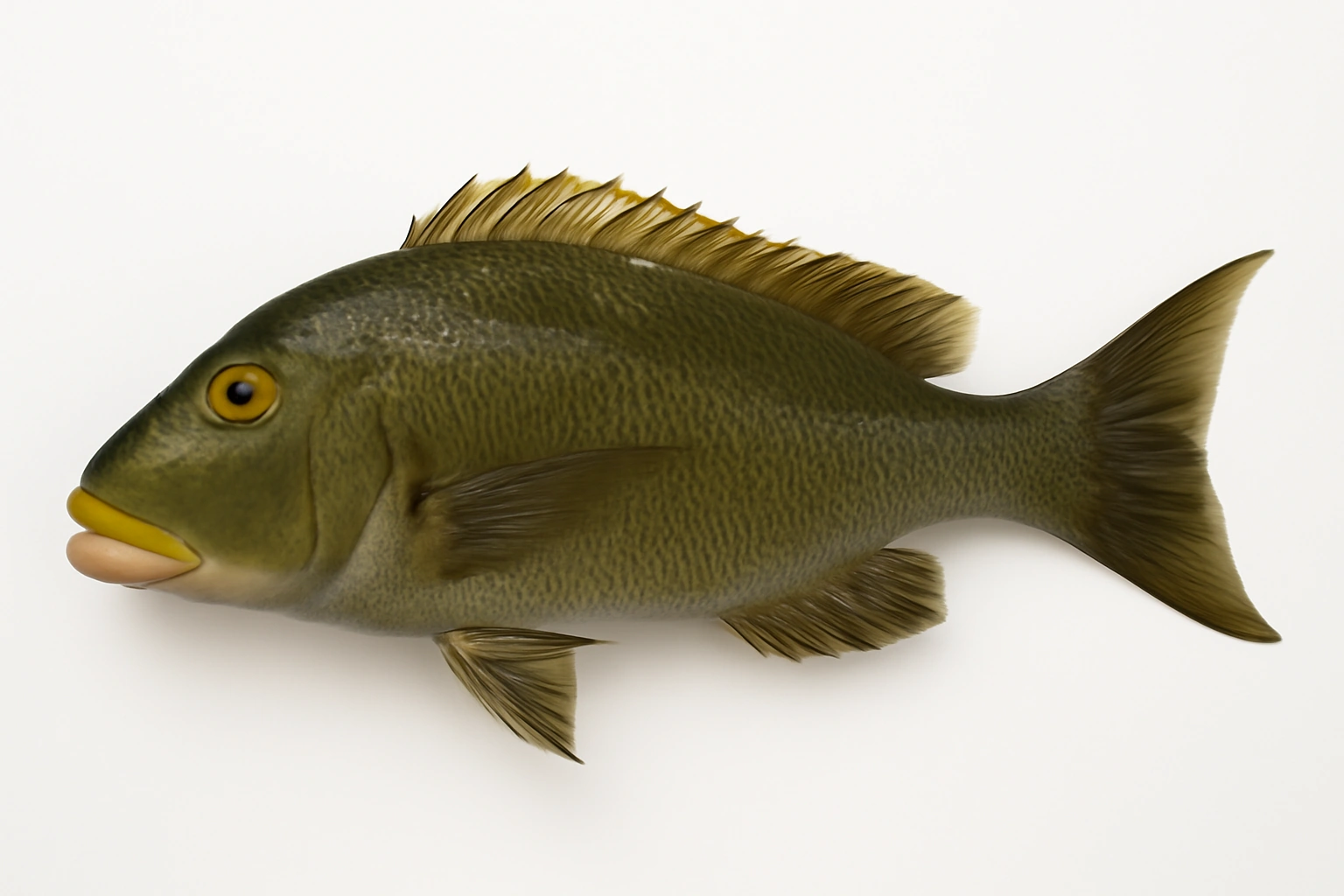
The Sweetlip Emperor, known in Australia simply as 'Sweetlip', is one of the tastiest reef fish. With its characteristic fleshy lips, it feeds on sandy bottoms near reefs. Very abundant on the Great Barrier Reef.
Identification
- Body
- Elongated and robust body with a slightly arched dorsal profile.
- Colouration
- Mainly pink to red coloration with brown spots along the sides.
- Sexual dimorphism
- Absent/not prominent
- Growth
- Moderate, reaches maturity over several years.
Taxonomy
- Family
- Lethrinidae
- Order
- Perciformes
- Class
- Actinopterygii
Related species
Habitat & distribution
- Environment
- Coast, Reefs, Open sea
- Preferred bottom
- Sand, Reef
- Geographic distribution
- Primarily found in the western Pacific, including Australia's Great Barrier Reef, and the Indian Ocean.
- Micro-habitat
- Dwells near sandy bottoms adjacent to reefs, often hides among corals and rocky formations.
Preferentially inhabits areas where reefs meet sandy bottoms.
Presence by sea area
Diet
- Primary prey
- crustaceans, mollusks, sea urchins
- Secondary prey
- small fish, polychaetes, echinoderms
- Occasional prey
- algae, amphipods
- Feeding behaviour
- Opportunistic predator, primarily feeds on the bottom during daylight or twilight hours.
- Natural predators
- sharks, larger predatory fish, large moray eels
Varied diet reflecting the seasonal availability of marine prey.
Behaviour
- Activity
- diurnal
- Social behaviour
- solitary
- Aggressiveness
- low
- Migration
- Sedentary within confined spaces around reefs.
- Seasonal behaviour
- Tends to stay near reefs year-round, with slight movement based on food availability.
- Juveniles
- Juveniles gather in small groups near shorelines or above seaweed beds.
- Adults
- Adults tend to be solitary and territorial, occupying well-defined areas near reefs.
Reproduction
- Spawning season
- January, February, March
- Spawning depth
- Between 20 and 60 meters
- Eggs
- Small pelagic eggs dispersed in open water.
- Larval stage
- Transparent larvae with a slimmer profile to aid ocean drift.
- Sexual maturity
- 4-5 years
When to catch Sweetlip Emperor
Activity calendar
Activity by season
Best times
This species shows peak fishing activity in spring, summer and autumn, when the productivity index (FPI) reaches its highest values.
Fishing activity decreases in winter, when conditions are less favourable.
Ideal conditions
Water temperature
Where to catch it
Best spots
Bottom preference
Spot type
Fishing techniques
Recommended
Other applicable
Recommended baits
Baits by pressure
How to really catch it
The Sweetlip Emperor is a reef-associated fish that seems to belong as much to the sand edge as to the coral itself: robust, solitary, and active by day. As it moves through coral, rock, and pale bottom patches, it becomes a very real presence but never an easy one, and that is exactly what makes it such a compelling target.
🐟 Good to know
One notable biological trait of Lethrinus miniatus is its pelagic spawning eggs: after release, the eggs drift in open water, and the larvae, transparent and more slender than adults, use oceanic drift before settling into coastal and reef habitats.
🌊 Where & when
You find it from 5 to 100 meters, especially over sandy bottoms beside reefs, among corals, rocks, and underwater rises along coasts, reefs, and open sea areas of the western Pacific and the Indian Ocean. It can be targeted year-round because it stays close to reefs, but it is most productive from March to November; it feeds during the day and at twilight, while from January to March it spawns between 20 and 60 meters.
🎣 How to really catch it
The most practical way to catch it is bottom fishing close to the seabed, working the edge where sand meets structure. Picture your rig dropping straight beside a submerged ledge, with a 50 to 100 gram sinker, a 30 lb fluorocarbon leader, and size 1/0 to 3/0 hooks baited with fresh shrimp, crustaceans, squid, or fish pieces: right there, in contact with the bottom, this opportunistic predator looks for food.
💡 The detail that makes the difference
The detail that often makes the difference is to focus on transition zones, where reef opens into sand. That is where the Sweetlip Emperor holds and feeds on benthic prey such as crustaceans, mollusks, and sea urchins; for that reason, a low, precise, still presentation tight to structure is often more logical than a drift set too far above the bottom.
Catch & handling tips
- Fight
- Exhibits a fair amount of resistance and strength once hooked.
- Handling
- Handle with care to avoid injury to dorsal fins and gills.
- Release
- Release quickly to minimize stress and boost survival chances.
Curiosities & culture
- Record catches
- Maximum documented size: up to about 90 cm and 9.6 kg (source: FishBase). There is no official IGFA All-Tackle record for this species.
- In the kitchen
- Highly valued for its delicate flavor, grilled or oven-baked.
- Cultural notes
- Often mentioned in Australian culinary culture as a delectable table fish.
- Historical notes
- Traditionally fished by coastal populations in the Pacific area for centuries.