
Overview
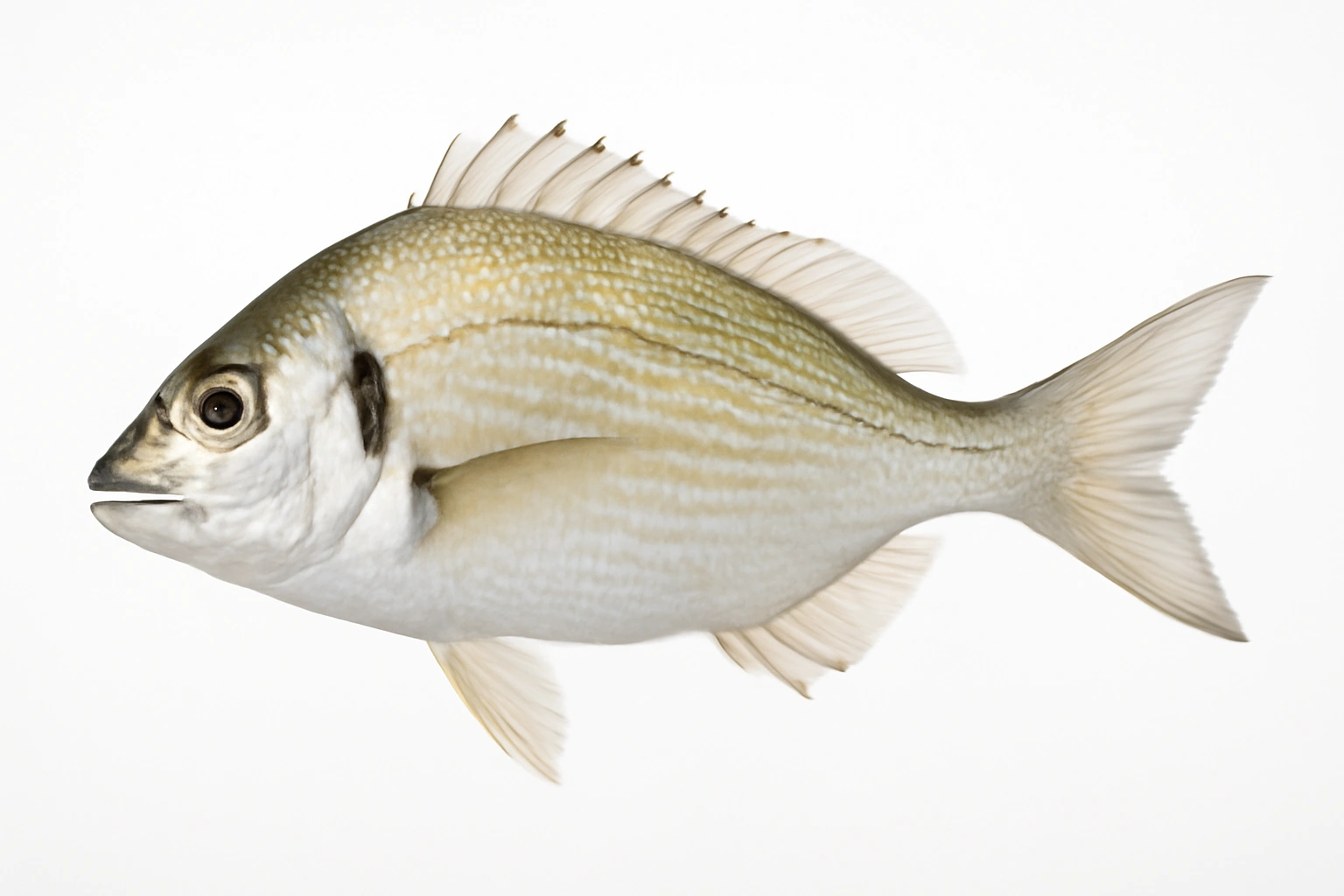
The Tarwhine is a close relative of the Bream, with a silvery body and golden fins. Found along the entire east coast of Australia. Often caught as a 'bonus' when targeting Bream, but an excellent table fish with sweet, delicate flesh.
Identification
- Body
- The body is laterally compressed with an arched profile above the head.
- Colouration
- Silvery with golden horizontal stripes along the sides and golden fins.
- Sexual dimorphism
- Absent/not very noticeable
- Growth
- medium with faster growth in the early years of life
Taxonomy
- Family
- Sparidae
- Order
- Perciformes
- Class
- Actinopterygii
Related species
Habitat & distribution
- Environment
- Coast, Estuaries
- Preferred bottom
- Sand, Rock, Seagrass
- Geographic distribution
- Widely distributed along the entire eastern Australian coast, extending marginally to the southeast Asian coast.
- Micro-habitat
- Often shelters among seagrass beds and rocky bottoms, where it finds both shelter and nourishment during the tides.
Prefers protected coastal habitats where currents carry abundant nutrients.
Presence by sea area
Diet
- Primary prey
- crustaceans, mollusks, small fish
- Secondary prey
- polychaetes, organic debris, algae
- Occasional prey
- insect larvae, fish eggs
- Feeding behaviour
- Feeds during daylight hours by digging into the substrate to find crustaceans and mollusks, but occasionally ventures into upper water columns to hunt small fish.
- Natural predators
- sharks, dolphins, larger predatory fish, seabirds
An opportunistic species, it exploits both benthic and pelagic resources depending on availability.
Behaviour
- Activity
- diurnal
- Social behaviour
- small_groups
- Aggressiveness
- low
- Migration
- residential, with small seasonal movements linked to water temperature.
- Seasonal behaviour
- During the warm season, it moves closer to shores and estuaries for spawning. In winter, it withdraws to deeper waters.
- Juveniles
- Juveniles tend to stay in shallow coastal areas, in seagrass meadows, and among rocks.
- Adults
- Adults form small groups and move according to tidal cycles, often staying in protected waters.
Reproduction
- Spawning season
- October, November
- Spawning depth
- between 10 and 30 meters
- Eggs
- Pelagic, small, transparent with a slight golden halo.
- Larval stage
- The larval stage is transparent and is mostly found in the water column, near the coast.
- Sexual maturity
- 3-4 years
When to catch Tarwhine
Activity calendar
Activity by season
Best times
This species shows peak fishing activity in spring, summer and autumn, when the productivity index (FPI) reaches its highest values.
Fishing activity decreases in winter, when conditions are less favourable.
Ideal conditions
Water temperature
Where to catch it
Best spots
Bottom preference
Spot type
Fishing techniques
Recommended
Other applicable
Recommended baits
Baits by pressure
How to really catch it
The tarwhine is a true grubbing fish of coasts and estuaries: silver-bodied, gold-tinted, with a small mouth built to search for life among sand, weed, and rock. It is not an explosive predator, and that is exactly why it can be subtle: to catch it consistently, you need to read the bottom and follow the rhythm of the water.
🐟 Good to know
One lesser-noticed trait of tarwhine is its highly flexible diet: although it mainly digs in the substrate for crustaceans and mollusks, it also takes polychaetes, algae, organic debris, and at times small fish. That versatility helps explain why it uses different habitats, provided they offer both cover and food.
🌊 Where & when
It lives along the coast and in estuaries, from sand to rock and seagrass, between 1 and 50 meters, often in protected water. It moves in small groups with the tides and becomes more approachable from late summer into the Australian spring, with a peak from March to November; in the warm season it comes closer to shore and estuaries to spawn, while in winter it tends to withdraw into deeper water.
🎣 How to really catch it
The most reliable way to target it is light bottom fishing, keeping the bait working close to the substrate where it feeds during daylight. A light spinning rod, 0.25-0.30 mm monofilament, a 0.20 mm fluorocarbon leader, size 2-4 hooks, and a light running sinker give a clean presentation with live prawns or small pieces of squid over seagrass beds, river mouths, and coastal reef edges; once hooked, the first runs are sharp but not long-lasting.
💡 The detail that makes the difference
The practical edge is simple: do not keep the bait too high off the bottom. Tarwhine often feed by nosing through sand or along seagrass, so a bait that stays low and natural, just nudged by the tide, matches exactly the kind of feeding signal this seabream is tuned to notice.
Catch & handling tips
- Fight
- Puts up a strong initial resistance with quick and sudden bursts, but not long-lasting.
- Handling
- Handle it delicately to avoid damaging the silvery and golden scales.
- Release
- Submerge it slowly in water, supporting the body until it swims away on its own.
Curiosities & culture
- Record catches
- Maximum documented size: up to about 80 cm and 12 kg (source: FishBase). There is no official IGFA All-Tackle record for this species.
- In the kitchen
- White and sweet meat, often used grilled or in fish soups.
- Cultural notes
- In some cultures, it is considered a symbol of abundance and good luck.
- Historical notes
- Historically fished by coastal communities for its delicate flavor and as a source of protein.