
Overview
One of the fastest fish in the ocean, aggressive pelagic predator.
Identification
- Body
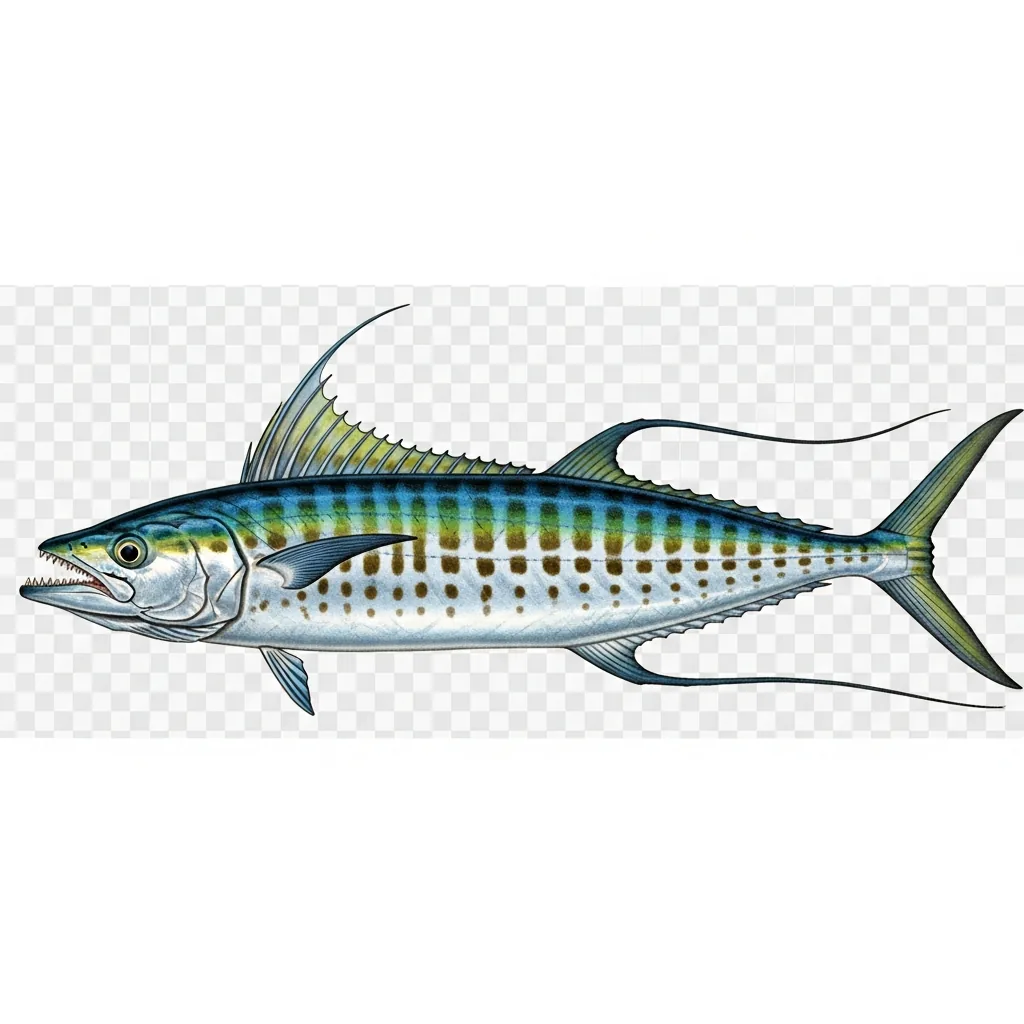
- The body is elongated and strongly streamlined, with a large mouth equipped with sharp teeth.
- Colouration
- The back is metallic blue with transverse blue stripes, lighter sides, and a white belly.
- Sexual dimorphism
- Absent or not prominent
- Growth
- Rapid; grows quickly due to its pelagic lifestyle and rich diet.
Taxonomy
- Family
- Scombridae
- Order
- Perciformes
- Class
- Actinopterygii
Related species
Habitat & distribution
- Environment
- Open sea, Pelagic
- Preferred bottom
- Open sea, Pelagic
- Geographic distribution
- The Wahoo inhabits tropical and subtropical oceanic waters globally.
- Micro-habitat
- Resides in the upper water column and prefers the open sea, near currents for hunting.
Often found near swift currents that bring abundant food.
Presence by sea area
Diet
- Primary prey
- flying fish, small tunas, mackerels
- Secondary prey
- squids, cuttlefish, small cephalopods
- Occasional prey
- shrimp, crabs
- Feeding behaviour
- A very fast predator that actively chases its prey, using speed and coordination for hunting.
- Natural predators
- sharks, orcas, large tunas
Prefers to attack prey in open waters where speed and agility provide an advantage.
Behaviour
- Activity
- diurnal
- Social behaviour
- solitary
- Aggressiveness
- medium
- Migration
- Resident in warm waters; occasionally migratory in search of prey.
- Seasonal behaviour
- During warmer months, approaches the surface following warm currents.
- Juveniles
- Juveniles stay closer to shore and form small groups for protection.
- Adults
- Adults prefer solitude in open waters.
Reproduction
- Spawning season
- May, June, July
- Spawning depth
- surface
- Eggs
- Pelagic eggs that float in the water column.
- Larval stage
- Larvae are pelagic and feed on zooplankton until they grow larger.
- Sexual maturity
- 1-2 years
When to catch Wahoo
Activity calendar
Activity by season
Best times
This species shows peak fishing activity in spring, summer and autumn, when the productivity index (FPI) reaches its highest values.
Fishing activity decreases in winter, when conditions are less favourable.
Ideal conditions
Atmospheric pressure
Frantic surface hunting.
Active along currents.
Deeper, less active.
Water temperature
Where to catch it
Best spots
Bottom preference
Spot type
Fishing techniques
Recommended
Other applicable
Recommended baits
Baits by pressure
How to really catch it
The wahoo is an offshore blue missile: fusiform body, sharp teeth, and a speed that turns open water into a hunting lane. When it slices the surface along a warm current, it seems to appear from nowhere, and that is exactly where it becomes a memorable opponent for anyone trolling with purpose.
🐟 Good to know
One remarkable biological trait of the wahoo is surface spawning with pelagic eggs, released into the water column. The larvae are pelagic as well and feed on zooplankton in their early stages, a life cycle beginning entirely in the open ocean.
🌊 Where & when
It lives in tropical and subtropical oceanic waters worldwide, mainly in the upper layers of the water column, offshore, near currents and current breaks. Adults are mostly solitary; in warmer months they come closer to the surface, and from March to November they are especially fishable, with spawning taking place from May through July.
🎣 How to really catch it
For wahoo, trolling is the most concrete approach: a powerful trolling rod, 30-50 lb braid, a steel leader, and strong trolling hooks. Work open water along ocean currents, reef edges, and current-change areas, presenting baitfish, squid, or artificial lures, including metal jet heads, in the upper water where it hunts by day.
💡 The detail that makes the difference
The practical edge is to focus on current changes rather than on the seemingly empty vastness offshore. Wahoo hunt pelagic prey such as flying fish, mackerels, and small tunas in the upper layers: if your spread crosses lively, oxygen-rich water with visible forage, you are fishing inside its natural travel lane.
Catch & handling tips
- Fight
- A tenacious fighter with powerful runs when hooked.
- Handling
- Use gloves to avoid injury from sharp teeth.
- Release
- Release quickly to minimize stress, ideally without removing it from the water.
Curiosities & culture
- Record catches
- Maximum documented size: up to about 250 cm and 83 kg (source: FishBase). IGFA All-Tackle record: 83.46 kg (184 lb), caught by Sara Hayward at Cabo San Lucas (Mexico) in 2005.
- In the kitchen
- Dense and flavorful meat, often used for grilling and sushi.
- Cultural notes
- Wahoo is esteemed for its legendary speed and is often mentioned in offshore fishing literature.
- Historical notes
- Historically fished by Pacific indigenous peoples with traditional tools, now a staple in sport fishing competitions.