
Overview
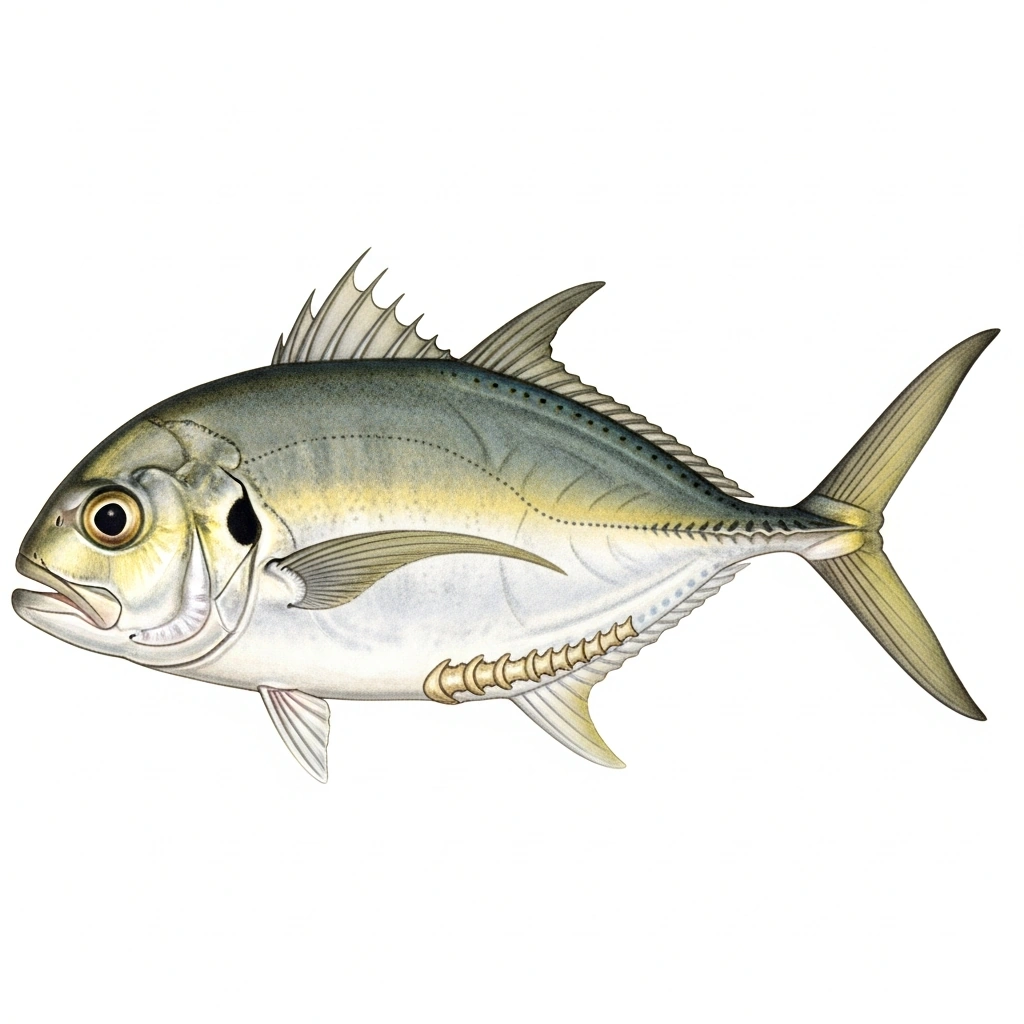
Extremely powerful and fast predator of the tropical Atlantic. Famous for explosive fights and brute strength.
Identification
- Body
- Robust and streamlined body with a powerful, muscular structure.
- Colouration
- Generally silver-colored with dark fins and a distinctive black spot at the base of the pectoral fins.
- Sexual dimorphism
- Absent/not evident
- Growth
- Fast, grows quickly in food-rich environments
Taxonomy
- Family
- Carangidae
- Order
- Perciformes
- Class
- Actinopterygii
Related species
Habitat & distribution
- Environment
- Coast, Open sea, Estuaries
- Preferred bottom
- Sand, Mud, Reef
- Geographic distribution
- Found along the western Atlantic coasts, from Massachusetts to Brazil, including Caribbean islands.
- Micro-habitat
- Tends to form large schools near shores and coral reefs, sometimes venturing into deeper or mixed estuarine waters.
Estuaries provide important growth areas for juveniles of the species.
Presence by sea area
Diet
- Primary prey
- small fish, crustaceans, squid
- Secondary prey
- shrimp, octopus, cuttlefish
- Occasional prey
- algae, jellyfish
- Feeding behaviour
- Agile and fast predator, often hunts in groups to push prey to the surface or against barriers.
- Natural predators
- sharks, dolphins, large pelagic fish
Adapts its diet to environmental conditions and prey availability.
Behaviour
- Activity
- diurnal
- Social behaviour
- large_schools
- Aggressiveness
- high
- Migration
- Resident in coastal areas but makes seasonal migrations to warmer waters.
- Seasonal behaviour
- More active in spring and summer when they gather for spawning.
- Juveniles
- Juveniles tend to congregate in estuaries, shallow bottoms, and lagoons for protection.
- Adults
- Adults can form large schools and are known for their aggression while hunting.
Reproduction
- Spawning season
- May, June, July
- Spawning depth
- between 20 and 60 meters
- Eggs
- Pelagic and translucent eggs, small in size
- Larval stage
- Larvae develop quickly in surface waters and have a high mortality rate in early stages.
- Sexual maturity
- 3-4 years
When to catch Crevalle jack
Activity calendar
Activity by season
Best times
This species shows peak fishing activity in spring, summer and autumn, when the productivity index (FPI) reaches its highest values.
Fishing activity decreases in winter, when conditions are less favourable.
Ideal conditions
Atmospheric pressure
Extremely aggressive. Attacks everything on the surface.
Actively hunts in schools.
Less active but still present.
Water temperature
Where to catch it
Best spots
Bottom preference
Spot type
Fishing techniques
Recommended
Other applicable
Recommended baits
Baits by pressure
How to really catch it
The crevalle jack is a powerful, high-strung carangid built to attack in schools along light, foam, and hard coastal edges. When it switches into feeding mode, the water changes rhythm: it is one of those predators that punish distraction and reward you with unforgettable strikes.
🐟 Good to know
One biological detail that matters to anglers is that juveniles often use estuaries, lagoons, and shallow bottoms, while adults form large schools in coastal water and around reefs. That separation is linked to juvenile protection and explains why size and habitat can differ so much from one spot to the next.
🌊 Where & when
You find it along the western Atlantic coast from Massachusetts to Brazil, including the Caribbean islands, over sand, mud, and reef bottoms, from very shallow water down to about 100 meters. It becomes more catchable from spring into autumn, with marked activity in spring and summer when it gathers to spawn; from May to July it generally spawns between 20 and 60 meters.
🎣 How to really catch it
To really fish for it, spinning is the most concrete approach: a strong spinning rod, 20-30 lb mono or braid, and a 50 lb fluorocarbon leader let you cast artificials or present live baitfish effectively near rocky shorelines, coral reefs, estuary mouths, and harbor areas. Look for moving water and signs of surface feeding: the crevalle jack is diurnal, hunts fast, and often drives prey to the surface or against structure.
💡 The detail that makes the difference
The practical edge is to work the edge, not the middle: close passes along reefs, rocks, or estuary openings make more sense than retrieving through empty water, because this predator uses barriers and shorelines to compress small fish, crustaceans, and squid. After the strike, pull it clear of structure quickly: it fights with violent bursts and uses the environment to escape.
Catch & handling tips
- Fight
- Fights fiercely, quickly accelerating and using the environment to escape.
- Handling
- Use wet cloths to avoid damaging the skin.
- Release
- Release quickly and carefully, preferably in water.
Curiosities & culture
- Record catches
- Maximum documented size: up to about 124 cm and 32 kg (source: FishBase). IGFA All-Tackle record: 30 kg (66 lb 2 oz), caught in Angola.
- In the kitchen
- Not particularly valued in the kitchen for its meat texture, but can be smoked or marinated.
- Cultural notes
- Often depicted in Caribbean artwork due to its significance as a sport quarry.
- Historical notes
- In the past, the species was more common along the eastern US coast, but climate changes have partially shifted its distribution.