
Overview
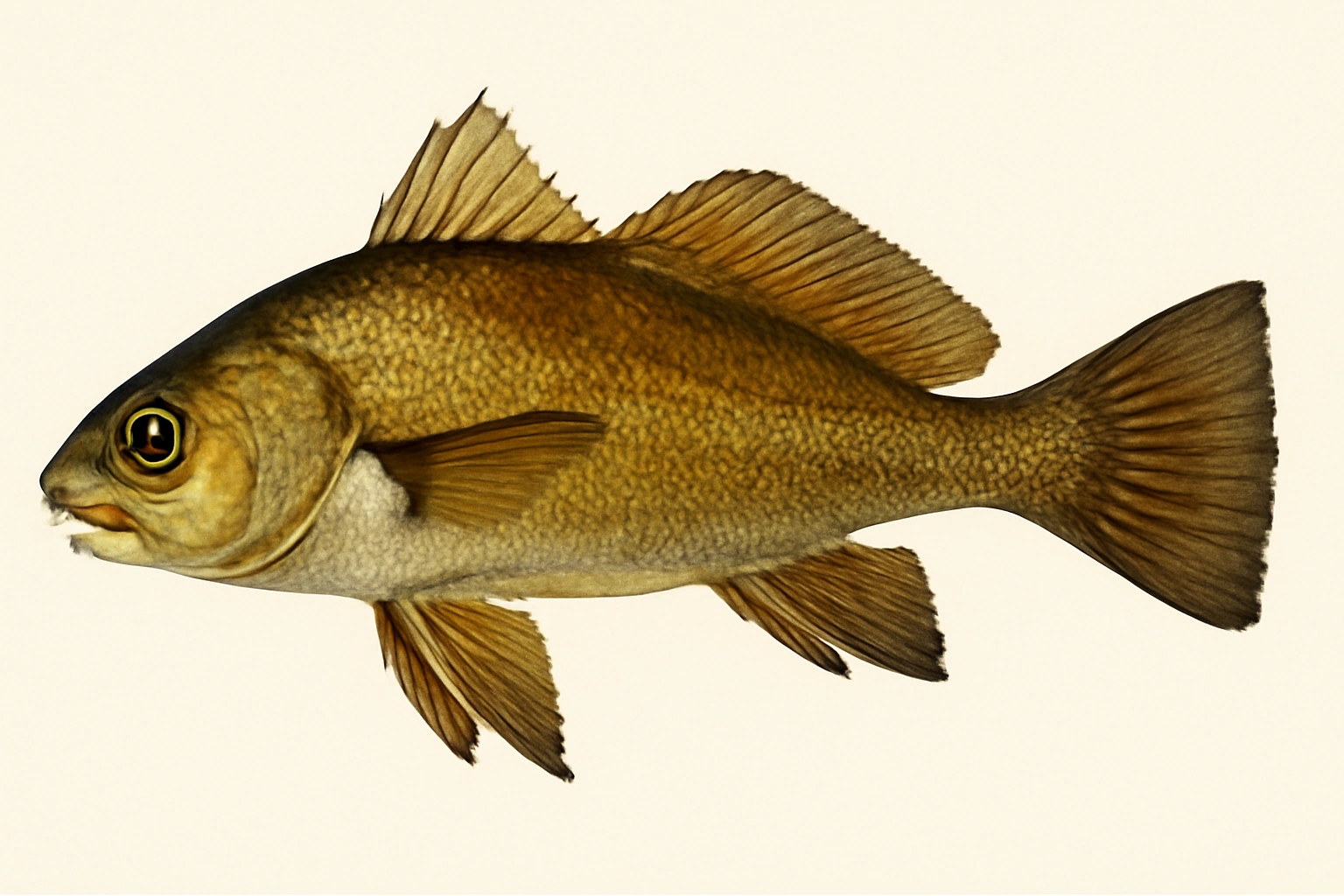
Prized reef fish, nocturnal and shy. Produces a characteristic drumming sound with its swim bladder.
Identification
- Body
- Oval-shaped body, laterally compressed, with a convex profile.
- Colouration
- Bronze-brown color with golden sheen and scattered dark spots.
- Sexual dimorphism
- Absent/not evident
- Growth
- Moderate, common in warmer environments fostering growth
Taxonomy
- Family
- Sciaenidae
- Order
- Perciformes
- Class
- Actinopterygii
Related species
Habitat & distribution
- Environment
- Coast, Reefs
- Preferred bottom
- Rock, Reef
- Geographic distribution
- Found along the coasts of the Mediterranean Sea and the Black Sea, and along the eastern Atlantic Ocean coasts, from the Bay of Biscay to Angola.
- Micro-habitat
- Hides during the day in crevices and cavities among rocks, comes out at night to feed.
The presence of refuge habitats like caves and crevices is essential for its survival.
Presence by sea area
Diet
- Primary prey
- small fish, cephalopods, crustaceans
- Secondary prey
- annelids, polychaete worms, bivalve mollusks
- Occasional prey
- plankton, cnidarians
- Feeding behaviour
- Hunts mainly at night, using auditory senses to locate prey. Feeds near the rocky bottom.
- Natural predators
- groupers, dolphins, white-tipped shark, seals
Able to detect prey vibrations with specialized sensory organs.
Behaviour
- Activity
- nocturnal
- Social behaviour
- small_groups
- Aggressiveness
- low
- Migration
- Non-migratory, with seasonal movements between different depths.
- Seasonal behaviour
- Tends to move to deeper waters during colder months. In warmer months, it's more commonly found near the shore.
- Juveniles
- Young ones tend to stay in shallower waters, hiding among rocks.
- Adults
- Adults form small groups and are more mobile at night for hunting.
Reproduction
- Spawning season
- April, May, June
- Spawning depth
- between 20 and 60 meters
- Eggs
- Pelagic eggs, very small, floating in plankton.
- Larval stage
- Pelagic larvae that develop in plankton until maturity.
- Sexual maturity
- 3-4 years
When to catch Brown meagre
Activity calendar
Activity by season
Best times
This species shows peak fishing activity in spring, summer and autumn, when the productivity index (FPI) reaches its highest values.
Ideal conditions
Atmospheric pressure
Very active at night, leaves caves to hunt.
Regular activity, feeds normally.
Stays in caves, less active.
Reduced activity.
Feeds regularly at night.
More active, leaves shelter earlier.
Water temperature
Where to catch it
Best spots
Bottom preference
Spot type
Fishing techniques
Recommended
Other applicable
Recommended baits
Baits by pressure
How to really catch it
The brown meagre is a shy, nocturnal rock fish, with large eyes and a downturned mouth built to feed close to the bottom. By day it seems to vanish into crevices, but when the light fades it leaves cover and becomes a real target for anyone who can read its habitat.
🐟 Good to know
One real and distinctive feature is its swim bladder, adapted to produce sounds. In sciaenid fishes this trait is well known, and it is one of the biological marks behind the common names used for many members of the family.
🌊 Where & when
It lives around rocky coasts, reefs, shoals and artificial structures, generally from 5 to 50 meters, across the Mediterranean, Black Sea and eastern Atlantic. It hides by day in cavities and cracks, then moves over the bottom at night. In warm months it is easier to find near shore, while in colder months it tends to hold deeper; from April to June it is in its spawning period, between 20 and 60 meters.
🎣 How to really catch it
To catch it for real, the most practical approach is bottom fishing or boat ledgering over live rock, shoals and the edges of lairs, especially in the evening and at night. A sturdy 2.4-3 meter rod, 0.30 mm nylon, 0.25 mm fluorocarbon leader, size 1/0 hooks and a 50-100 g sinker let you present shrimp, squid, sardine or mussel close to the bottom, where the fish looks for small fish, cephalopods and crustaceans.
💡 The detail that makes the difference
The tip that truly matters is simple: work the edge of cracks, not deep inside them. The brown meagre shelters by day but feeds near the rocky bottom when it comes out; keeping the bait just outside the hide reduces snags and places it right on the fish’s natural nighttime route.
Catch & handling tips
- Fight
- Moderate resistance with attempts to take refuge among rocks.
- Handling
- Handle with care to prevent damage to sensitive skin.
- Release
- Release quickly to minimize stress, preferably in deep water.
Curiosities & culture
- Record catches
- Maximum documented size: up to about 70 cm in length (source: FishBase). There is no IGFA All-Tackle record for this species.
- In the kitchen
- Valued in Mediterranean cuisine, usually fried or baked.
- Cultural notes
- In some Mediterranean cultures, it is sometimes associated with sea rhythms for its drumming sound.
- Historical notes
- Long considered a prized species by fishermen for its tasty meat.