
Overview
Very strong bottom predator, loves rocky and mixed bottoms.
Identification
- Body
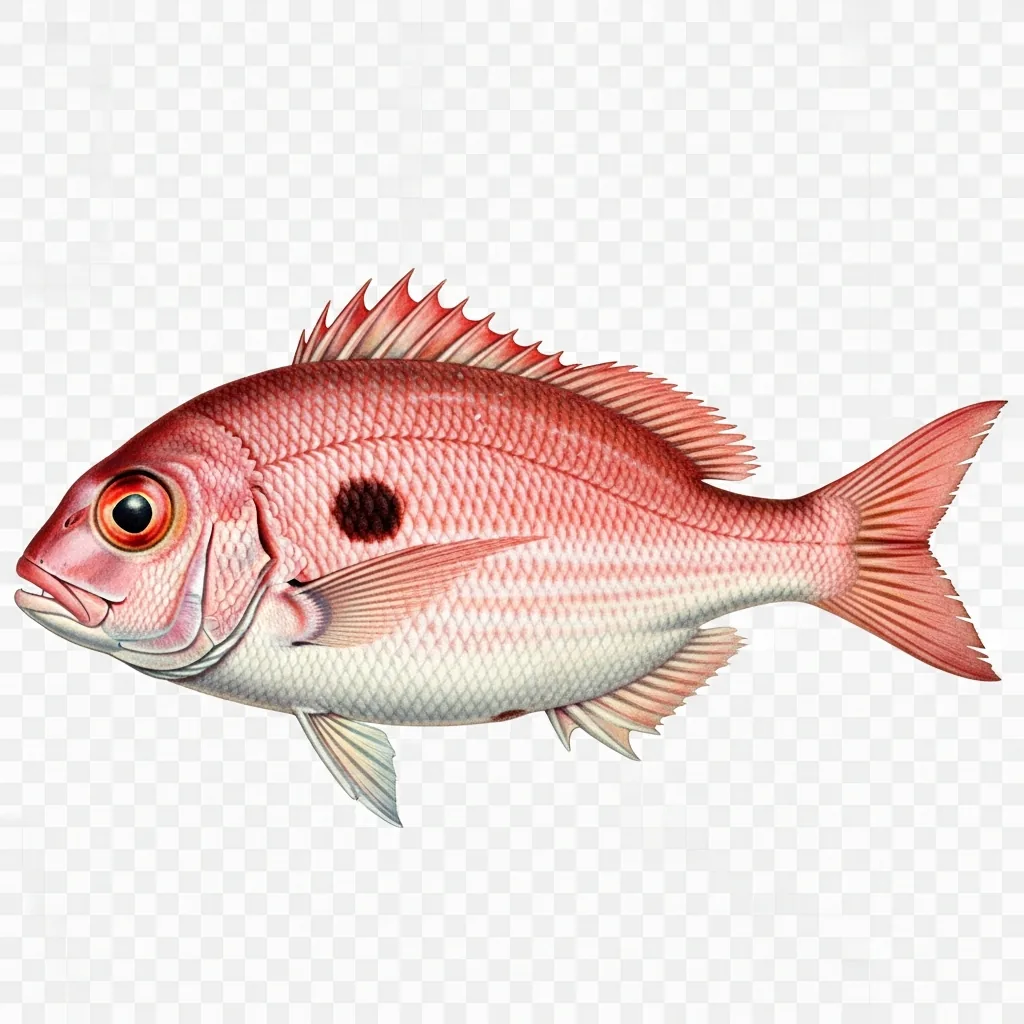
- Oval body with a compressed profile, and a sturdy head.
- Colouration
- Pinkish-red coloring with silvery reflections; gold and blue lines on the body.
- Sexual dimorphism
- Differences not very noticeable
- Growth
- medium, with faster growth in the early years
Taxonomy
- Family
- Sparidae
- Order
- Perciformes
- Class
- Actinopterygii
Related species
Habitat & distribution
- Environment
- Coast, Open sea, Reefs
- Preferred bottom
- Rock, Sand, Gravel
- Geographic distribution
- Found in the temperate and subtropical waters of the eastern Atlantic, from the Mediterranean to the Black Sea, down to South Africa.
- Micro-habitat
- Prefers to reside and hunt near rocky and mixed seabeds with marine vegetation.
Its presence is often an indicator of healthy marine ecosystems.
Presence by sea area
Diet
- Primary prey
- crustaceans, mollusks, echinoderms
- Secondary prey
- small fish, annelids, polychaetes
- Occasional prey
- plankton, algae, fish eggs
- Feeding behaviour
- Active predator that primarily hunts during the day near the seafloor; uses its powerful jaw to crack open hard-shelled prey.
- Natural predators
- sharks, groupers, tunas
Often plays a key role in controlling benthic invertebrate populations.
Behaviour
- Activity
- diurnal
- Social behaviour
- small_groups
- Aggressiveness
- medium
- Migration
- non-migratory, with small seasonal migrations to deeper waters for breeding
- Seasonal behaviour
- In the winter months, it may move to deeper waters, while in summer it comes closer to the shore to feed.
- Juveniles
- Young form small groups and prefer protected coastal areas.
- Adults
- Adults tend to be more solitary and territorial.
Reproduction
- Spawning season
- May, June, July
- Spawning depth
- between 60 and 180 feet
- Eggs
- Small pelagic eggs, with quick hatching.
- Larval stage
- Planktonic larvae drift with ocean currents until they develop in safer areas.
- Sexual maturity
- 3-4 years
When to catch Red porgy
Activity calendar
Activity by season
Best times
This species shows peak fishing activity in spring, summer and autumn, when the productivity index (FPI) reaches its highest values.
Ideal conditions
Atmospheric pressure
Very active, rises from bottom.
Regular activity.
Stays very deep.
Water temperature
Where to catch it
Best spots
Bottom preference
Spot type
Fishing techniques
Recommended
Other applicable
Recommended baits
Baits by pressure
How to really catch it
The red porgy is a solid, bright bottom fish, with a robust head, a powerful mouth, and a presence you feel as soon as the bait reaches the right stretch of seabed. When it starts feeding near rock, sand, and mixed ground, it can turn a take into a tense, honest fight: it is worth learning where to look for it properly.
🐟 Good to know
One well-documented biological trait of the red porgy is its diet, which includes hard-shelled prey: crustaceans, mollusks, and echinoderms are part of its menu, and its strong mouth with pronounced teeth allows it to crush organisms that many other bottom predators handle less efficiently.
🌊 Where & when
You can find it from 10 to 250 meters over rocky, sandy, or gravel bottoms, especially near submerged reefs, rocky banks, wrecks, and mixed ground with marine vegetation. It is most interesting from spring through autumn, with strong activity from March to November; in summer it comes closer to the coast to feed, while in winter it tends to move deeper, also in relation to spawning, which takes place from May to July between 20 and 60 meters.
🎣 How to really catch it
The most reliable way to target it is medium-heavy bottom fishing presented precisely over mixed and rocky seabeds, where a 100 to 200 gram sinker keeps the bait close to the bottom without letting it wander too much. A medium-heavy bottom rod, 0.40-0.60 mm monofilament, and an abrasion-resistant fluorocarbon leader match a fish that lives around rough ground and pulls hard; on 2/0-4/0 beak hooks, sardine, shrimp, squid, and marine annelids are all sound choices.
💡 The detail that makes the difference
The real small edge is to work the edge of mixed ground rather than the tightest heart of the rock. The red porgy hunts close to the seabed and uses rocky and mixed areas with marine vegetation, so the transition between rock, sand, or gravel is often where it more easily finds crustaceans, mollusks, and other benthic organisms.
Catch & handling tips
- Fight
- Feisty and tough, with strong runs to escape the hook.
- Handling
- Use gloves to avoid injury from fin spines.
- Release
- Release quickly back into the water to reduce stress and damage, promoting species recovery.
Curiosities & culture
- Record catches
- Maximum documented size: up to about 91 cm and 7.7 kg (source: FishBase). IGFA All-Tackle record: 7.72 kg (16 lb 15 oz), caught at Gibraltar in 1997.
- In the kitchen
- Highly regarded for grilling, fish soups, and baked recipes, especially in Mediterranean coastal regions.
- Cultural notes
- Symbol of abundance in Mediterranean countries and often mentioned in seafaring literature.
- Historical notes
- Historically fished by ancient Greeks and Romans, considered a delicacy for centuries.