
Overview
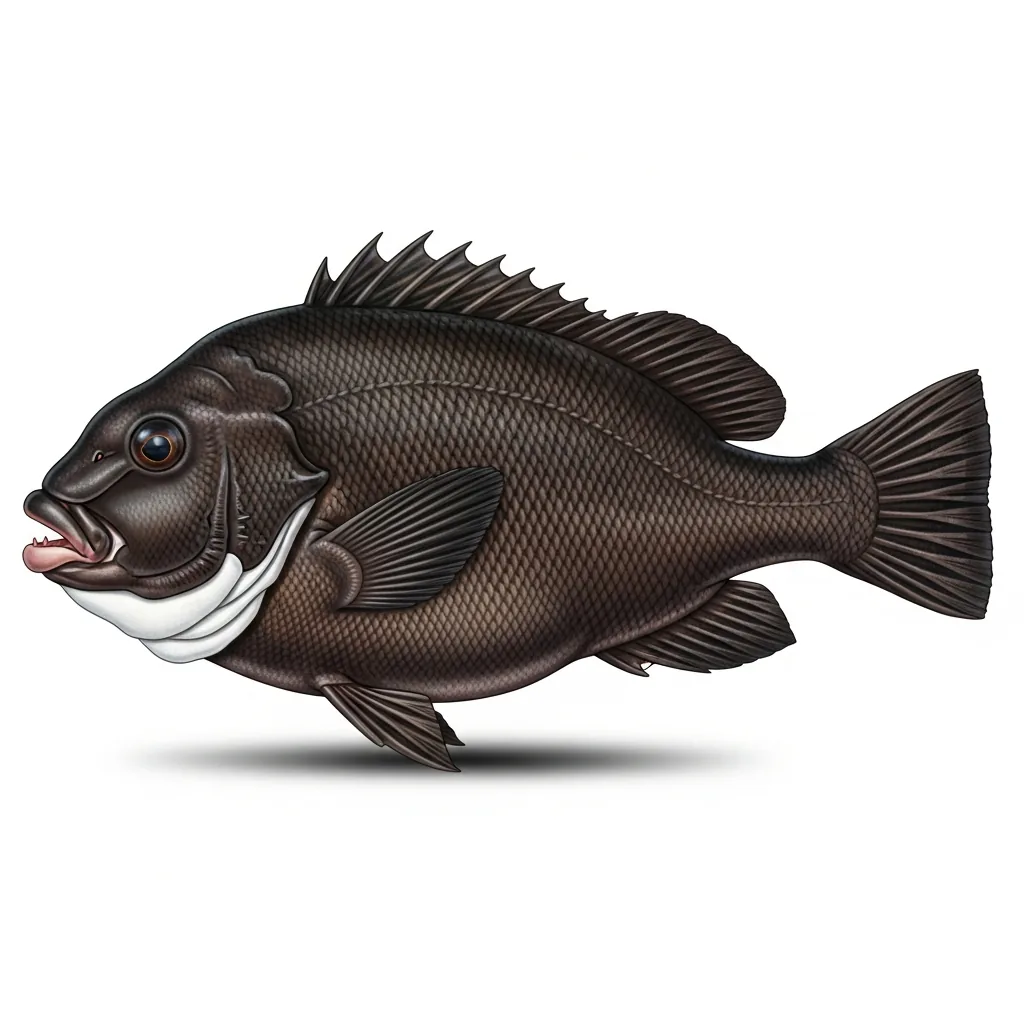
Also known as 'Blackfish', one of the most sought-after fish in the NE US. Powerful fighter living among rocks and structures.
Identification
- Body
- Robust body and laterally compressed.
- Colouration
- Color varies from brownish to black, with lighter spots.
- Sexual dimorphism
- Not very noticeable, except for the slightly larger size of males.
- Growth
- Medium, with faster growth in the early years.
Taxonomy
- Family
- Labridae
- Order
- Perciformes
- Class
- Actinopterygii
Related species
Habitat & distribution
- Environment
- Coast, Reefs
- Preferred bottom
- Rock, Reef, Gravel
- Geographic distribution
- Distributed along the Atlantic coast of North America, from Canada to the Carolinas.
- Micro-habitat
- Often seeks shelter in rocky crevices and submerged structures during the day.
Often groups in areas with abundant rocky cover, providing protection from predators.
Presence by sea area
Diet
- Primary prey
- mollusks, crustaceans, sea urchins
- Secondary prey
- annelids, gastropods, tunicates
- Occasional prey
- algae, small fish
- Feeding behaviour
- Diurnal forager, uses strong teeth to crush prey shells.
- Natural predators
- sharks, tunas, large predatory fish
Varied diet, dependent on the availability of benthic prey.
Behaviour
- Activity
- diurnal
- Social behaviour
- small_groups
- Aggressiveness
- medium
- Migration
- Non-migratory, with small seasonal movements in search of food.
- Seasonal behaviour
- In winter, moves to deeper and warmer waters to avoid the cold.
- Juveniles
- Juveniles find refuge in shallower waters among rocks and seaweed.
- Adults
- Adults gather in small groups, especially during spawning season.
Reproduction
- Spawning season
- April, May, June
- Spawning depth
- between 20 and 60 meters
- Eggs
- Small, pelagic and transparent eggs.
- Larval stage
- Pelagic larvae that float before settling on the bottom.
- Sexual maturity
- 3-4 years
When to catch Tautog
Activity calendar
Activity by season
Best times
This species shows peak fishing activity in spring, summer and autumn, when the productivity index (FPI) reaches its highest values.
Fishing activity decreases in winter, when conditions are less favourable.
Ideal conditions
Water temperature
Where to catch it
Best spots
Bottom preference
Spot type
Fishing techniques
Recommended
Other applicable
Recommended baits
Baits by pressure
How to really catch it
The tautog is a compact, powerful wrasse built for hard bottom and tight margins for error. To understand it, picture it tucked among rocks and wrecks, feeding close to cover and trying to dive straight back into structure the moment it feels pressure.
🐟 Good to know
One well-documented biological trait of tautog is its strong dentition: it uses powerful teeth to crush the shells of mollusks, crustaceans, and sea urchins. That feeding specialization helps explain its close link to hard bottoms and structure-rich areas full of benthic invertebrates.
🌊 Where & when
It lives along the Atlantic coast of North America, from Canada to the Carolinas, over rock, reef, and gravel bottoms from 5 to 60 meters, often around rocky jetties, wrecks, and artificial reefs. It is most appealing to target from March through November; in winter it tends to move into deeper, warmer water. Spawning occurs from April through June, generally between 20 and 60 meters.
🎣 How to really catch it
To really catch tautog, the most concrete approach is precise bottom fishing tight to structure, using a 30-60 g sliding sinker, 20-30 lb braid, a 0.50 mm fluorocarbon leader, and a 1/0-3/0 beak hook. Crabs, clams, shrimp, and other mollusks match its natural diet perfectly: present them still, close to the rocks, where tautog feeds by day and where it heads immediately after the strike.
💡 The detail that makes the difference
The practical edge is simple: fish as close to the crevice as you dare, but keep constant contact with the sinker. Tautog uses rocky cracks and submerged structure as daytime shelter and often tries to rush back into the rocks after taking the bait; feeling that first move and steering it clear right away is the decisive part.
Catch & handling tips
- Fight
- Strong and tenacious fighter, often tries to seek refuge among rocks.
- Handling
- Handle with care to avoid cuts from sharp teeth.
- Release
- Gently release back into the water, avoiding excessive stress.
Curiosities & culture
- Record catches
- Maximum documented size: up to about 91 cm and 10.2 kg (source: FishBase). IGFA All-Tackle record: 12.9 kg (28 lb 13 oz), caught by Kenneth Westerfeld in New York State (USA) in 2015.
- In the kitchen
- Great for soups and baked dishes, considered a delicacy in the local cuisines of the Northeast US.
- Cultural notes
- In popular culture, it's valued both for sport fishing and its tasty meat.
- Historical notes
- Species of historical interest in artisanal and industrial fishing along the American Atlantic coasts.