
Overview
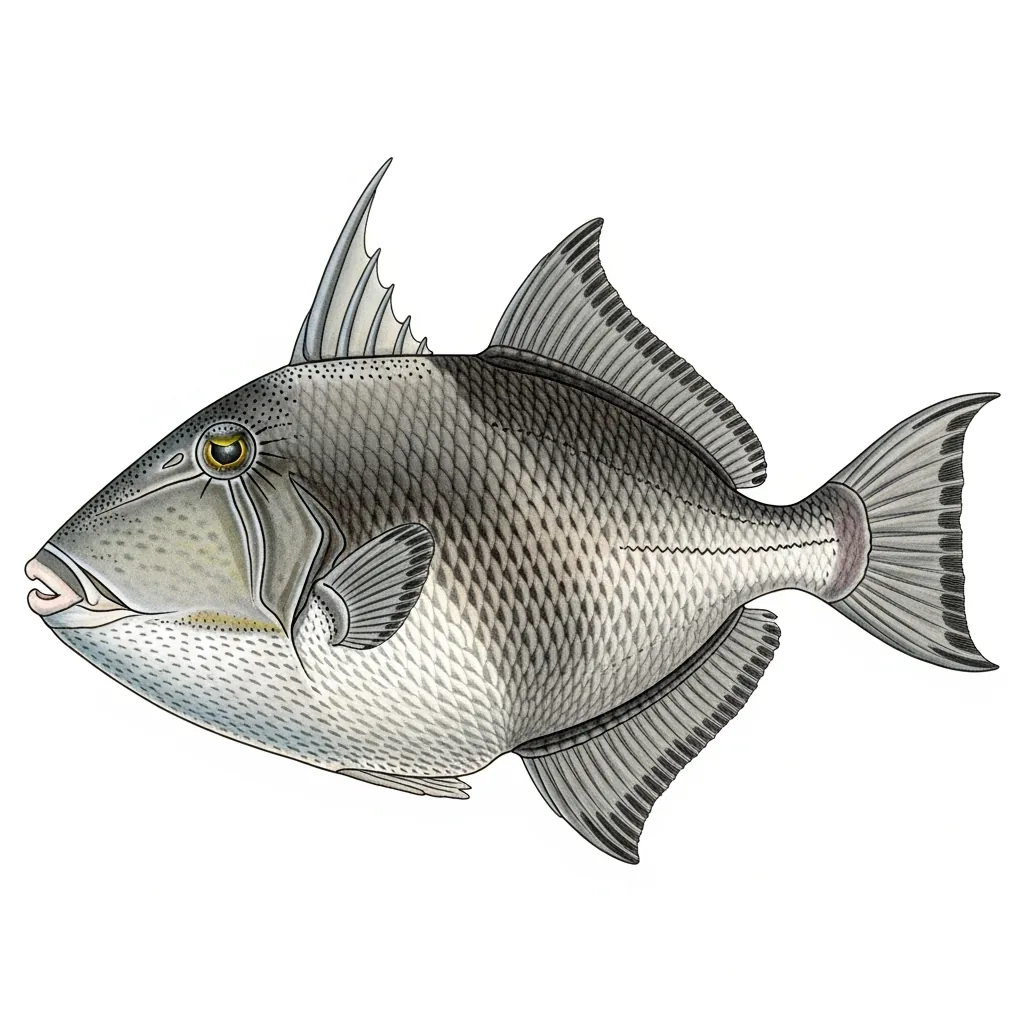
Smart and feisty fish, very popular in the Gulf of Mexico. Excellent meat and technical challenge for skilled anglers.
Identification
- Body
- Oval, laterally compressed body with a small mouth and prominent teeth.
- Colouration
- Gray colors with olive green shades and dark spots.
- Sexual dimorphism
- Absent/not prominent
- Growth
- Moderate, grows steadily over time.
Taxonomy
- Family
- Balistidae
- Order
- Tetraodontiformes
- Class
- Actinopterygii
Related species
Habitat & distribution
- Environment
- Coast, Reefs, Open sea
- Preferred bottom
- Rock, Sand, Reef
- Geographic distribution
- Present in the Atlantic Ocean, from Massachusetts down to Brazil, including the Gulf of Mexico.
- Micro-habitat
- Hides among rocks and corals, seeking refuge in crevices and cavities.
Prefers clean waters and habitat rich in shelters.
Presence by sea area
Diet
- Primary prey
- echinoderms, crustaceans, mollusks
- Secondary prey
- jellyfish, small fish, polychaetes
- Occasional prey
- algae, organic debris
- Feeding behaviour
- Feeds by digging the seabed and using its teeth to crack open shells and crustaceans.
- Natural predators
- sharks, sea turtles, large tuna
Has strong teeth suited to breaking crustaceans and shells.
Behaviour
- Activity
- diurnal
- Social behaviour
- small_groups
- Aggressiveness
- medium
- Migration
- Resident, with minor seasonal movements.
- Seasonal behaviour
- In summer, it moves closer to the shore for spawning.
- Juveniles
- Young ones tend to stay hidden among shelters.
- Adults
- Adults form small groups and become more territorial.
Reproduction
- Spawning season
- June, July, August
- Spawning depth
- between 20 and 60 meters
- Eggs
- Small translucent pelagic eggs.
- Larval stage
- Transparent larvae developing in open sea.
- Sexual maturity
- varies between 3 and 5 years
When to catch Gray Triggerfish
Activity calendar
Activity by season
Best times
This species shows peak fishing activity in spring, summer and autumn, when the productivity index (FPI) reaches its highest values.
Fishing activity decreases in winter, when conditions are less favourable.
Ideal conditions
Water temperature
Where to catch it
Best spots
Bottom preference
Spot type
Fishing techniques
Recommended
Other applicable
Recommended baits
Baits by pressure
How to really catch it
The gray triggerfish lacks the flashy elegance of some reef fish, but beneath that rough armor it hides attitude, powerful teeth, and a feeding style that makes it unmistakable. When you look for it in the right places, among rock, sand, and reef, you quickly realize you are not fishing for just any bottom dweller.
🐟 Good to know
A remarkable biological feature of Balistes capriscus is its dorsal spine mechanism: the first spine can be locked upright and secured by the second, a real defensive system that helps the fish deter predators and wedge itself into shelters among rocks and cavities.
🌊 Where & when
It lives along coasts, reefs, and open-sea areas over rocky, sandy, and mixed bottoms, generally from 10 to 100 meters, often near cliffs, reefs, and structures where it can slip into cracks and cavities. It is a diurnal, resident species; from spring through autumn it is very fishable, while in summer it moves closer to shore for spawning, especially between 20 and 60 meters.
🎣 How to really catch it
The most practical way to truly catch it is bottom fishing over rocky ground, cliffs, reefs, or platforms, letting a simple but sturdy setup do the work: a medium-heavy rod, 0.30 mm monofilament, 0.50 mm fluorocarbon leader, size 1/0 hook, and a 50 g sliding sinker. Shrimp, clams, and small pieces of octopus are ideal baits to keep close to the bottom, where the triggerfish digs and crushes hard prey.
💡 The detail that makes the difference
The tip that really makes a difference is to work tight to the shelter, not out over empty bottom. Gray triggerfish feed around cavities, rocks, and small bottom breaks; if the bait rests precisely on that sharp edge where sand meets rock, it enters the fish’s natural feeding zone and becomes far more convincing.
Catch & handling tips
- Fight
- Strong and feisty, puts up a good fight.
- Handling
- Wear gloves to avoid sharp teeth and spines.
- Release
- Quickly release back into water to reduce stress.
Curiosities & culture
- Record catches
- Maximum documented size: up to about 66 cm and 6.2 kg (source: FishBase). IGFA All-Tackle record: 6.15 kg (13 lb 9 oz), caught at Murrells Inlet, South Carolina (USA), in 1989.
- In the kitchen
- White, delicate meat used in soups and fry-ups.
- Cultural notes
- Considered intelligent fish in fishermen tales for their ability to evade hooks.
- Historical notes
- Once overlooked by fishermen due to preparation difficulties, now highly appreciated.