
Overview
Very powerful nocturnal predator, lives in deep lairs and reefs.
Identification
- Body
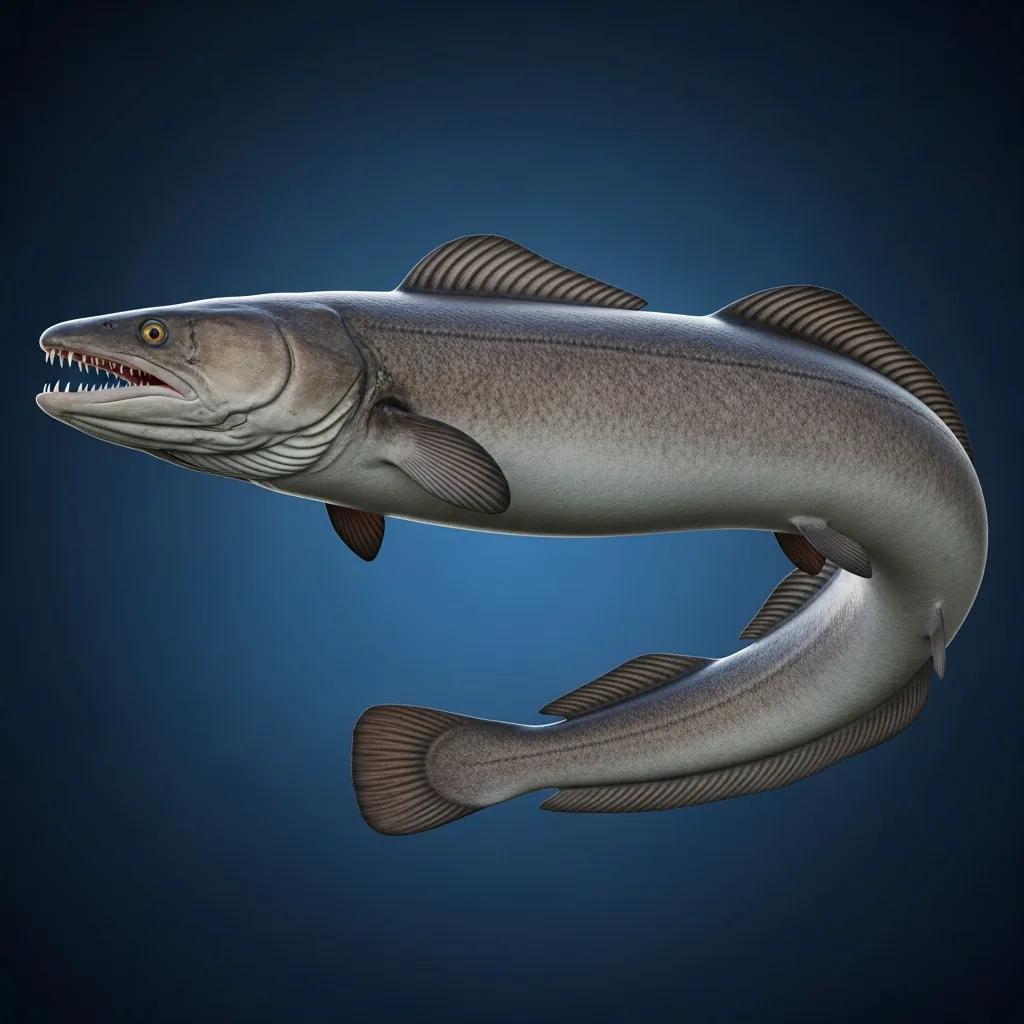
- Cylindrical and elongated body with a serpentine form.
- Colouration
- Typically dark gray-silver on the back and lighter on the belly; some variations include darker stripes or spots.
- Sexual dimorphism
- Absent/not very noticeable
- Growth
- Slow, grows gradually over the years
Taxonomy
- Family
- Congridae
- Order
- Anguilliformes
- Class
- Actinopterygii
Related species
Habitat & distribution
- Environment
- Coast, Reefs, Deep sea
- Preferred bottom
- Rock, Reef
- Geographic distribution
- Found in the Mediterranean Sea and the northeastern Atlantic Ocean, from the coasts of Norway to Senegal.
- Micro-habitat
- Hides in rocky crevices and caves during the day, prefers hard seabeds.
Preferred habitat is rich in crevices and hiding places among rocks.
Presence by sea area
Diet
- Primary prey
- fish, crustaceans, squid
- Secondary prey
- small cephalopods, crabs, shrimp
- Occasional prey
- octopus, mollusks
- Feeding behaviour
- Primarily a nocturnal predator, actively hunts prey in intricate rock and coral labyrinths.
- Natural predators
- sharks, large pelagic fish, humans
Excellent nocturnal hunter using its ability to hide to ambush prey closely.
Behaviour
- Activity
- nocturnal
- Social behaviour
- solitary
- Aggressiveness
- medium
- Migration
- Resident, with possible movements at various depths depending on the seasons.
- Seasonal behaviour
- More active during warm months, tends to seek deeper refuge in winter.
- Juveniles
- Young hide near the coast in safe dens.
- Adults
- Adults occupy larger territories and prefer deeper habitats.
Reproduction
- Spawning season
- May, June, July
- Spawning depth
- between 20 and 60 meters
- Eggs
- Eggs are pelagic, transparent, and small.
- Larval stage
- Larvae pass through a long leptocephalus stage before transforming into juveniles.
- Sexual maturity
- varies between 4 and 8 years
When to catch European conger
Activity calendar
Activity by season
Best times
This species shows peak fishing activity in spring, summer and autumn, when the productivity index (FPI) reaches its highest values.
Ideal conditions
Atmospheric pressure
Very active and aggressive.
Regular activity.
Stays hidden.
Water temperature
Where to catch it
Best spots
Bottom preference
Spot type
Fishing techniques
Recommended
Other applicable
Recommended baits
Baits by pressure
How to really catch it
The conger eel is a dense, silent presence of rocky ground: a serpentine body that vanishes into cracks by day and rules the bottom again at night. If you truly want to meet it, you must fish where the sea turns hard, dark, and full of crevices.
🐟 Good to know
One of the conger’s best-known biological traits is its leptocephalus larval stage: the larvae are ribbon-like and very different from the adult before transforming into juveniles. This is a real, well-documented phase in the life cycle of anguilliform fishes.
🌊 Where & when
It lives over hard bottoms, among cliffs, reefs, shoals, and underwater caves, from about 10 down to 500 meters, in the Mediterranean and the northeastern Atlantic. By day it stays hidden in crevices and dens; in warm months it is more active and therefore more catchable, while in winter it tends to seek deeper shelter. Between May and July it spawns between 20 and 60 meters.
🎣 How to really catch it
The most concrete approach is bottom fishing with a rod over rocky ground, right at the mouth of a den or along the edge of a shoal. A sturdy saltwater rod, 20 to 50 lb nylon, a steel or heavy nylon leader, strong 5/0 to 8/0 hooks, and bottom weights matched to the current let you present fresh fish, squid, cuttlefish, or shrimp where the conger comes out to hunt at night.
💡 The detail that makes the difference
The detail that makes the difference is not fishing “in empty water,” but setting the bait tight to structure: crevices, split boulders, cave entrances. The conger is a nocturnal predator that moves through rocky labyrinths chasing fish, crustaceans, and cephalopods; for that reason, bait works best when it seems to come straight from its natural hunting corridor.
Catch & handling tips
- Fight
- Fights hard when hooked, trying to retreat into crevices or caves.
- Handling
- Handle with care due to the fish's power and energy, use gloves.
- Release
- Gently release back into the water, preferably after oxygenating by holding it in the current.
Curiosities & culture
- Record catches
- Maximum documented size: up to about 300 cm and 110 kg (source: FishBase). IGFA All-Tackle record: 60.44 kg (133 lb 4 oz), caught by Vic Evans off Berry Head (England) in 1995.
- In the kitchen
- Used in soups and fish stews, especially in Mediterranean cuisine.
- Cultural notes
- In Greek mythology, conger eels were often associated with the depths of the sea and ocean mysteries.
- Historical notes
- Historically important species for coastal artisanal fishing, part of traditional recipes in Mediterranean regions.