
Overview
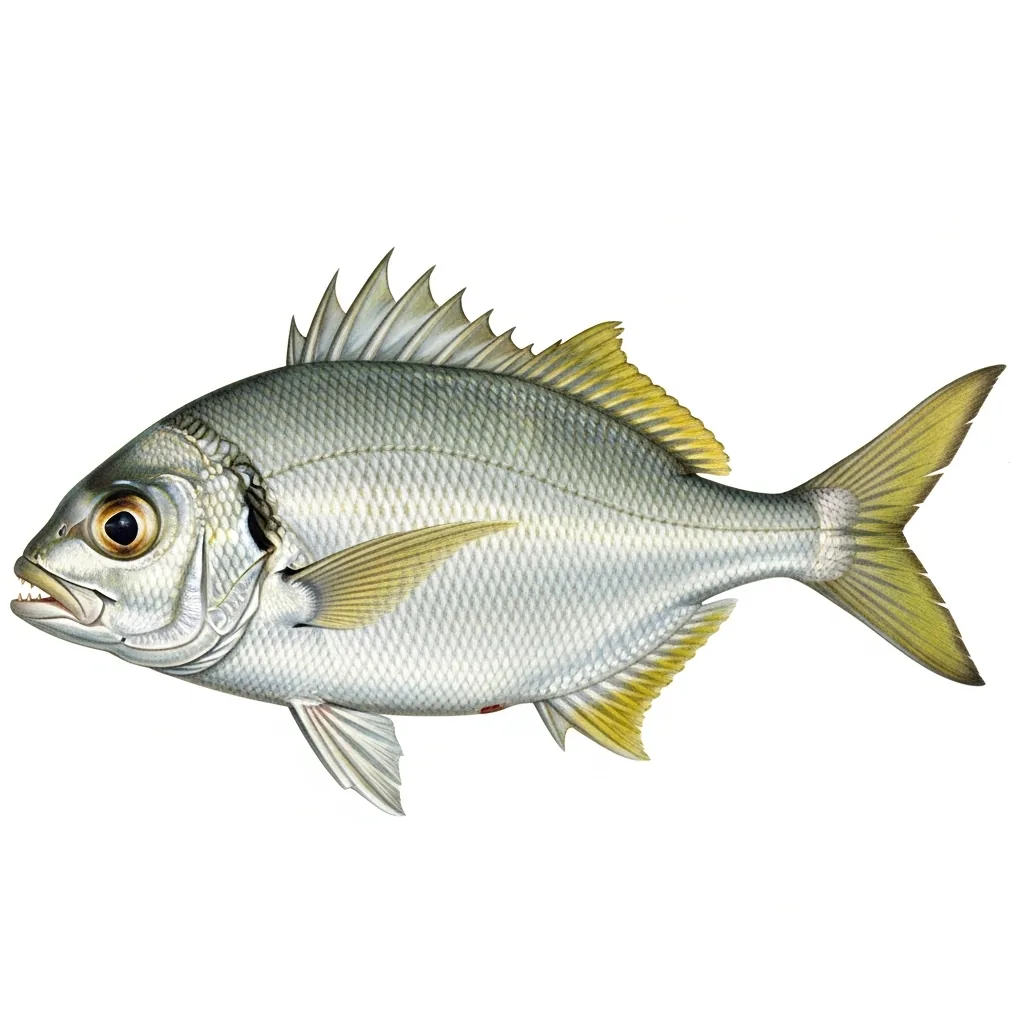
Also known as 'Porgy', one of the most caught fish in NE US. Abundant, feisty, and delicious.
Identification
- Body
- Oval body, laterally compressed with a small mouth.
- Colouration
- Silvery coloration with dark spots on the back and blue-green reflections.
- Sexual dimorphism
- Absent/not noticeable
- Growth
- Medium, with relatively steady growth during the early years.
Taxonomy
- Family
- Sparidae
- Order
- Perciformes
- Class
- Actinopterygii
Related species
Habitat & distribution
- Environment
- Coast, Reefs, Estuaries
- Preferred bottom
- Rock, Sand
- Geographic distribution
- Found along the U.S. Atlantic coast, from Massachusetts to North Carolina.
- Micro-habitat
- Prefers sheltering among rocks and often swims near coral reefs and submerged structures.
Scup prefer hard, structured bottoms for protection and feeding.
Presence by sea area
Diet
- Primary prey
- crustaceans, small mollusks, annelids
- Secondary prey
- seaweed, marine sponges, organic debris
- Occasional prey
- small fish, insect larvae
- Feeding behaviour
- Feeds by scraping the sea bottom, using teeth to crush prey.
- Natural predators
- sharks, larger fish, seabirds
Diet varies depending on the seasonal availability of benthic resources.
Behaviour
- Activity
- diurnal
- Social behaviour
- large_schools
- Aggressiveness
- low
- Migration
- Non-migratory, but more present in coastal areas during warm seasons.
- Seasonal behaviour
- Moves closer to the shore in spring and summer for spawning.
- Juveniles
- Stays in large schools for protection from predators.
- Adults
- Forms large schools and moves between different depths.
Reproduction
- Spawning season
- June, July
- Spawning depth
- between 20 and 60 meters
- Eggs
- Pelagic eggs, small, transparent, and floating.
- Larval stage
- Larval stages live among plankton until metamorphosis.
- Sexual maturity
- 3-4 years
When to catch Scup
Activity calendar
Activity by season
Best times
This species shows peak fishing activity in spring, summer and autumn, when the productivity index (FPI) reaches its highest values.
Fishing activity decreases in winter, when conditions are less favourable.
Ideal conditions
Water temperature
Where to catch it
Best spots
Bottom preference
Spot type
Fishing techniques
Recommended
Other applicable
Recommended baits
Baits by pressure
How to really catch it
The scup is a coastal porgy with a compact profile, a small mouth, large eyes, and bluish flashes that flicker over lively bottom. When a school moves onto rocks and submerged structure, its presence can seem subtle, but for anyone who can read the bottom it turns into steady, precise fishing.
🐟 Good to know
One biological trait of scup that often goes unnoticed is how it feeds: it scrapes the bottom and uses its teeth to crush crustaceans, small mollusks, and annelids. That benthic diet clearly explains why it favors hard, sandy, or mixed areas where food stays close to the substrate.
🌊 Where & when
It is found along the U.S. Atlantic coast from Massachusetts to North Carolina, around coasts, estuaries, reefs, piers, and submerged structures, from 5 to 90 meters. In spring and summer it moves closer to shore for spawning; between June and July it spawns from 20 to 60 meters, and that is exactly when it becomes especially worth targeting.
🎣 How to really catch it
The most practical way to catch it is light reel fishing with a light spinning rod, 4-8 lb main line, a 10-15 lb fluorocarbon leader, size 2 to 4 hooks, and a 10-30 g sinker. Work close to the bottom around rocks, piers, and reefs with shrimp, squid, or mollusks: scup feed there, scraping the substrate in large schools and by day.
💡 The detail that makes the difference
The tip that really matters is simple: always think in two dimensions, school and bottom. If you hook one fish on a piece of structure, stay in that same band and keep the bait working tight to the substrate, because adults form large schools and feed where the bottom offers shelter and small prey to crush.
Catch & handling tips
- Fight
- When hooked, it shakes rapidly and twists to free itself.
- Handling
- Handle carefully using a wet cloth to avoid scale removal.
- Release
- Gently release avoiding impacts, preferably in deep water.
Curiosities & culture
- Record catches
- Maximum documented size: up to about 46 cm in length (source: FishBase). IGFA All-Tackle record: 2.06 kg (5 lb 14 oz), caught at Nantucket Sound (USA) in 1992.
- In the kitchen
- Often roasted or fried, appreciated for its white and flavorful meat.
- Cultural notes
- In some cultures, the Scup is seen as a symbol of marine abundance.
- Historical notes
- A species historically fished along the U.S. Atlantic coast, known to Native Americans.