
Overview
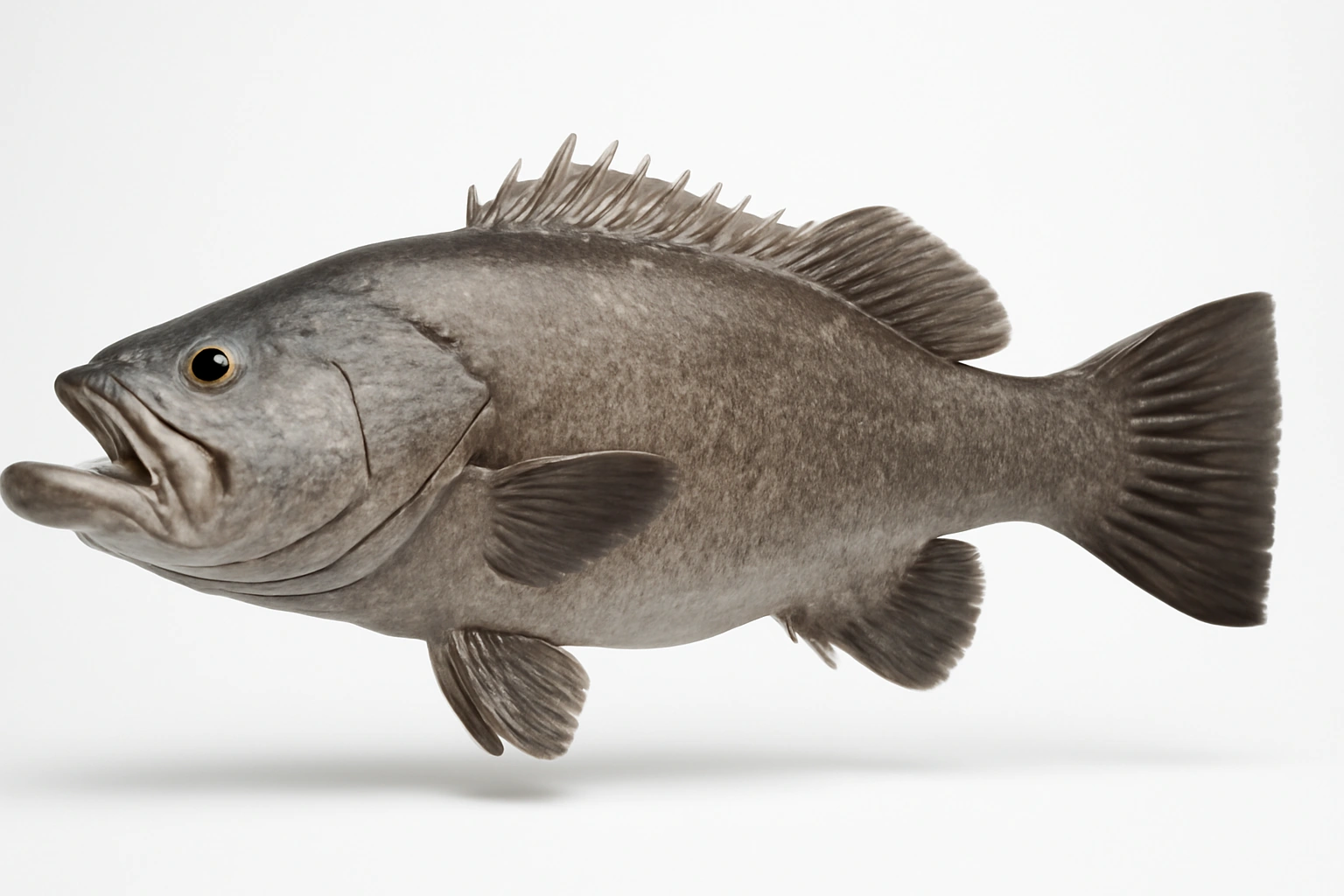
The Hapuka (Bass Groper) is one of Australia's most prized deep-water fish. Lives on deep reefs and rocky structures at hundreds of metres depth. An incredibly powerful fighter and its flesh is among the finest in the world.
Identification
- Body
- The body is sturdy and elongated, with a large head and wide mouth.
- Colouration
- Typically bluish-gray or brownish with silver highlights, the belly tends to be white.
- Sexual dimorphism
- Absent or not very noticeable
- Growth
- Slow, takes many years to reach large sizes
Taxonomy
- Family
- Polyprionidae
- Order
- Perciformes
- Class
- Actinopterygii
Related species
Habitat & distribution
- Environment
- Deep sea, Reefs
- Preferred bottom
- Rock, Reef
- Geographic distribution
- Primarily found in the temperate waters of the Southern Hemisphere, including Australia, New Zealand, and South America.
- Micro-habitat
- Hides among rocky crevices and reef structures in deep waters, often hundreds of meters down.
Ideal habitat includes rocky formations and reef bases offering shelter and plentiful prey.
Presence by sea area
Diet
- Primary prey
- bony fish, squid, crabs
- Secondary prey
- shrimp, octopus, small crustaceans
- Occasional prey
- various benthic animals, jellyfish
- Feeding behaviour
- An ambush predator that uses its wide, powerful mouth to capture large prey.
- Natural predators
- great white shark, orcas, large pelagic sharks
Prefers large prey due to its wide, muscular mouth, adaptable to bottom conditions.
Behaviour
- Activity
- nocturnal
- Social behaviour
- solitary
- Aggressiveness
- medium
- Migration
- Sedentary with limited movements to different depths seasonally.
- Seasonal behaviour
- Found closer to shore in winter and tends to deeper waters in summer.
- Juveniles
- Young are found in shallower waters and often form small groups.
- Adults
- Adults are more solitary, residing in deep habitats where they patrol personal territories.
Reproduction
- Spawning season
- May, June, July
- Spawning depth
- between 200 and 400 meters
- Eggs
- Eggs are pelagic and transparent, about 2-3 millimeters in diameter.
- Larval stage
- Larvae are pelagic and carried by currents before settling.
- Sexual maturity
- Varies between 8 and 13 years
When to catch Hapuka
Activity calendar
Activity by season
Best times
This species shows peak fishing activity in spring, summer and autumn, when the productivity index (FPI) reaches its highest values.
Fishing activity decreases in winter, when conditions are less favourable.
Ideal conditions
Water temperature
Where to catch it
Best spots
Bottom preference
Spot type
Fishing techniques
Recommended
Other applicable
Recommended baits
Baits by pressure
How to really catch it
The hapuka is a giant of deep rock: thick-bodied, big-headed, large-eyed, with a presence that seems to rise out of the dark reef. It is not a fish of chance encounters; you have to look for it where the bottom drops, cracks, and holds life, and there it can reward patience with heavy, decisive takes.
🐟 Good to know
One remarkable biological trait is its slow path to maturity: hapuka reaches sexual maturity between 8 and 13 years of age. That fact alone shows how adult fish are the product of long time scales and of a delicate balance in the deep environments they inhabit.
🌊 Where & when
It lives on deep reefs, rocky slopes, continental shelves, and submarine canyons, generally between 100 and 400 meters, tucked into cavities and bottom structure. It becomes more approachable from late winter into advanced spring and through much of the productive period given, with a winter tendency to occur closer to shore; from May to July it spawns between 200 and 400 meters.
🎣 How to really catch it
To catch it for real, the most concrete method is vertical bottom fishing over hard rock and deep ledges, sending down a natural bait such as squid, sardine, oily fish, or a tuna strip until it works tight to the bottom. You need a sturdy offshore rod, 50-80 lb braid, an 80-100 lb leader, a large circle hook, and heavy sinkers: the goal is to place a believable meal in front of a solitary ambush predator.
💡 The detail that makes the difference
The detail that often matters most is avoiding the empty water and fishing the lairs instead: cavities, cracks, sharp breaks in slope, and reef edges. Hapuka patrols deep territories and feeds by ambush, so a precise drop that keeps the bait right against the structure without pulling it too far away is often more sound than broad, wandering drifts.
Catch & handling tips
- Fight
- Strong head shakes and sudden runs, requires experience and sturdy gear.
- Handling
- Use protective gloves to avoid injury from fins and hooks.
- Release
- Try to minimize time out of water and enhance survival by gently submerging it.
Curiosities & culture
- Record catches
- Maximum documented size: up to about 160 cm and 100 kg (source: FishBase). There is no IGFA All-Tackle record for this species.
- In the kitchen
- The white, firm flesh is highly valued and used in gourmet dishes, often grilled or baked.
- Cultural notes
- Considered a prestigious catch in Southern Hemisphere fishing communities, prized for its rarity and culinary value.
- Historical notes
- Heritage of traditional deep-sea fishing, with stories and folklore among coastal communities.