
Overview
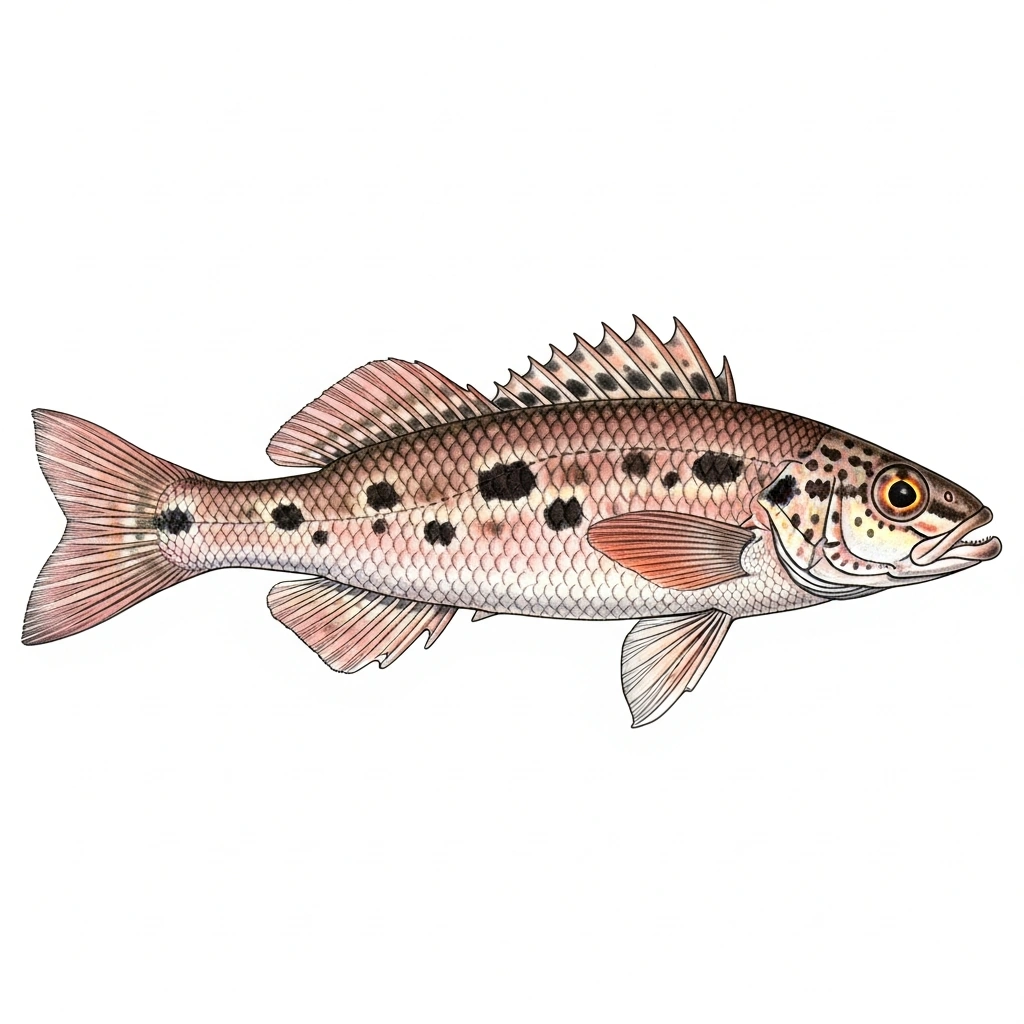
Bottom fish endemic to Brazil, highly prized for its flesh. Lives on rocky and mixed bottoms.
Identification
- Body
- Elongated and streamlined body, typical of benthic fish.
- Colouration
- Light brown coloration with dark spots and stripes on back and sides.
- Sexual dimorphism
- Absent/not prominent
- Growth
- Medium, typical of bottom species living in temperate waters
Taxonomy
- Family
- Pinguipedidae
- Order
- Perciformes
- Class
- Actinopterygii
Related species
Habitat & distribution
- Environment
- Coast, Reefs
- Preferred bottom
- Rock, Gravel, Sand
- Geographic distribution
- Endemic to the coasts of Brazil, prefers coastal areas with mixed rock and sand bottoms.
- Micro-habitat
- Hides among rock crevices and under ledges to avoid predators.
Prefers areas with moderate currents, which aid in food availability.
Presence by sea area
Diet
- Primary prey
- Crustaceans, Small fish, Mollusks
- Secondary prey
- Annelids, Echinoderms, Shrimp
- Occasional prey
- Plankton, Fish larvae
- Feeding behaviour
- Hunts on the seafloor, using its speed and skill in camouflaging among rocks.
- Natural predators
- Sharks, Large groupers, Sea birds of prey
Its diet varies slightly depending on seasons and prey availability.
Behaviour
- Activity
- diurnal
- Social behaviour
- solitary
- Aggressiveness
- medium
- Migration
- Resident
- Seasonal behaviour
- More active during the warm season, when prey is more abundant.
- Juveniles
- Juveniles are often more social, forming small groups near sandy bottoms.
- Adults
- Tends to establish individual territories and hunt alone.
Reproduction
- Spawning season
- January, February, March
- Spawning depth
- Between 20 and 60 meters
- Eggs
- Pelagic eggs, small with a transparent membrane.
- Larval stage
- Larvae are planktonic, growing rapidly in the first few months.
- Sexual maturity
- 3-4 years
When to catch Sandperch
Activity calendar
Activity by season
Best times
This species shows peak fishing activity in spring, summer and autumn, when the productivity index (FPI) reaches its highest values.
Fishing activity decreases in winter, when conditions are less favourable.
Ideal conditions
Atmospheric pressure
Moves off the bottom to feed.
Regular bottom feeding.
Stationary on bottom, delicate bites.
Water temperature
Where to catch it
Best spots
Bottom preference
Spot type
Fishing techniques
Recommended
Other applicable
Recommended baits
Baits by pressure
How to really catch it
The namorado is a refined, practical bottom predator, built to vanish among rock and sand and then strike close to the substrate. When you truly target it, you are not just chasing a fish: you are reading cracks, ledges, and bottom corridors, where a solitary hunter turns every passage into an ambush.
🐟 Good to know
An important biological trait of the namorado is its reproduction through pelagic eggs and planktonic larvae. Adults are closely tied to the bottom and to individual territories, but the earliest life stages develop in the water column before juveniles more often use sandy areas and mixed coastal habitats.
🌊 Where & when
It is endemic to the Brazilian coast and inhabits mixed bottoms of rock, gravel, and sand from 10 to 100 meters, especially along coasts, reefs, ledges, and rocky stretches. It becomes more active in the warm season, with peak interest from March to November; from January to March it spawns between 20 and 60 meters.
🎣 How to really catch it
The most reliable way to target it is bottom fishing or mid-depth boat ledgering placed precisely beside rocks, crevices, and underwater ledges. Shrimp, squid, and fish strips are natural baits that match its benthic diet perfectly; alternatively, small fish-shaped artificial lures worked very close to the bottom can also produce. Strong tackle is important: a 40-60 lb rod, 30-50 lb braid, 60 lb steel leader, 3/0-5/0 hooks, and 100-150 g sinkers.
💡 The detail that makes the difference
The practical edge is keeping the bait low, inside the fish's feeding band, without wedging it into the rough bottom. Namorado hunts on the seabed and, once hooked, tends to drive toward the rocks, so precise placement matters as much as the hook-set, especially along the edges of holes and ledges.
Catch & handling tips
- Fight
- Strong and strategic, tends to head for rocks to free the hook.
- Handling
- Handle carefully avoiding spiny areas, use gloves if possible.
- Release
- Release quickly after checking for damage, preferably in water.
Curiosities & culture
- Record catches
- Maximum documented size: up to about 120 cm and 20 kg (source: FishBase). There is no official IGFA All-Tackle record for this species.
- In the kitchen
- Used in traditional dishes like moqueca, a Brazilian fish stew.
- Cultural notes
- Loved for its delicate and tasty meat, present in various Brazilian local festivities.
- Historical notes
- Traditionally fished by the coastal population of Brazil, it is a fish known for its numerous uses in local cuisine.