
Overview
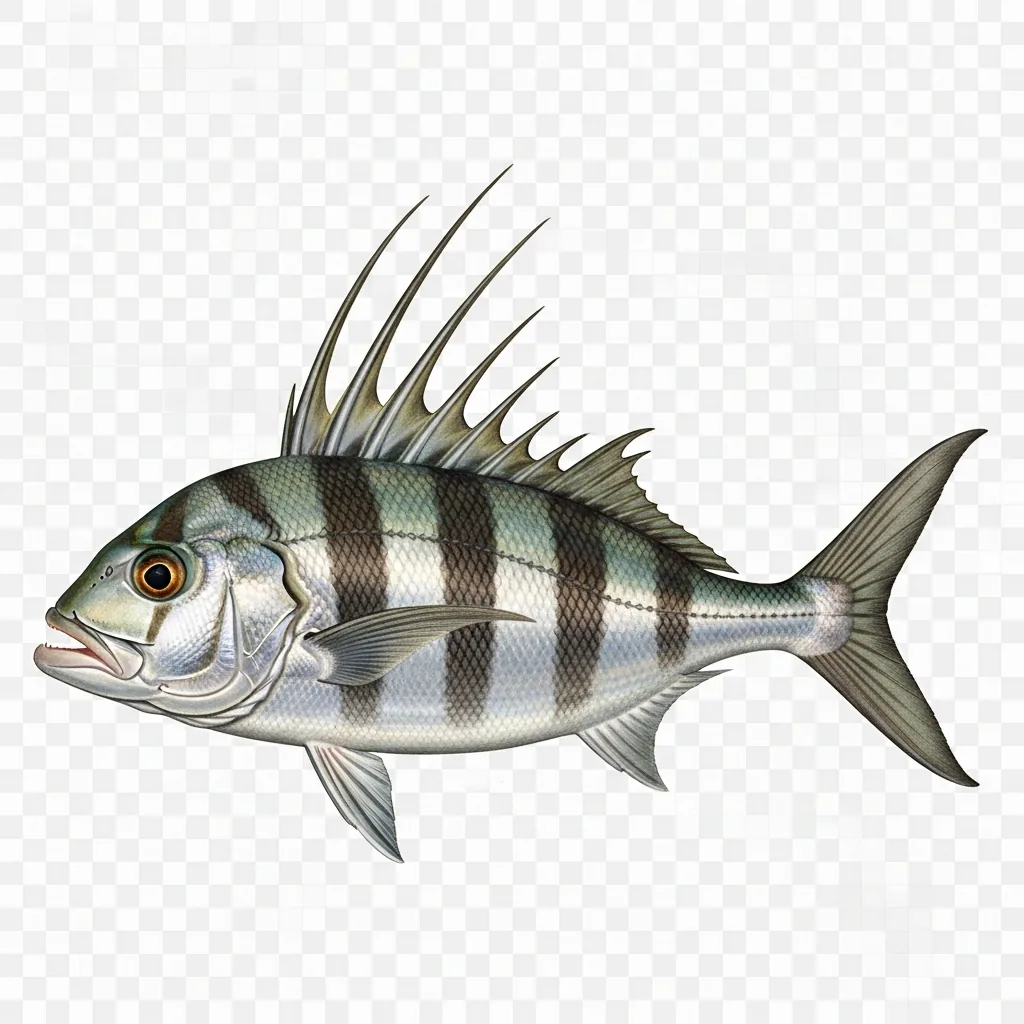
Coastal predator of the eastern tropical Pacific, with its unique dorsal crest.
Identification
- Body
- The body is elongated and laterally compressed, with a distinctive dorsal crest formed by seven long spines.
- Colouration
- The coloration is silvery with dark vertical stripes on the body.
- Sexual dimorphism
- Absent/not very noticeable
- Growth
- Moderate, growth proportional to prey availability
Taxonomy
- Family
- Nematistiidae
- Order
- Perciformes
- Class
- Actinopterygii
Related species
Habitat & distribution
- Environment
- Coast, Open sea, Reefs
- Preferred bottom
- Sand, Rock, Reef
- Geographic distribution
- Tropical and subtropical along the eastern Pacific coasts, from the Gulf of California to Peru.
- Micro-habitat
- Often found in shallow waters near rocky reefs and sandbanks.
Lives near the coast, where food is abundant and vegetation offers shelter.
Presence by sea area
Diet
- Primary prey
- small fish, shrimp, squid
- Secondary prey
- crustaceans, gastropods, fish larvae
- Occasional prey
- algae, plankton
- Feeding behaviour
- An active predator that hunts primarily during twilight hours, using speed and surprise.
- Natural predators
- sharks, larger fish, seabirds
Feeds mainly in the morning and evening, when prey are more active.
Behaviour
- Activity
- diurnal
- Social behaviour
- small_groups
- Aggressiveness
- medium
- Migration
- Coastal migrations linked to prey availability.
- Seasonal behaviour
- Tends to frequent warmer waters in summer and migrate to deeper areas in winter.
- Juveniles
- The young live near the shore, hiding among rocks and algae.
- Adults
- Adults form small groups to hunt, but sometimes they are solitary.
Reproduction
- Spawning season
- May, June, July
- Spawning depth
- between 20 and 60 meters
- Eggs
- Pelagic eggs, small and transparent.
- Larval stage
- Larvae are pelagic and are carried by ocean currents.
- Sexual maturity
- varies between 3 and 5 years
When to catch Roosterfish
Activity calendar
Activity by season
Best times
This species shows peak fishing activity in spring, summer and autumn, when the productivity index (FPI) reaches its highest values.
Fishing activity decreases in winter, when conditions are less favourable.
Ideal conditions
Atmospheric pressure
Very active in the surf.
Regular hunting along the coast.
Less present in the surf.
Water temperature
Where to catch it
Best spots
Bottom preference
Spot type
Fishing techniques
Recommended
Other applicable
Recommended baits
Baits by pressure
How to really catch it
The roosterfish is one of the most recognizable coastal predators of the eastern Pacific: silver body, dark bars, and that dorsal crest that seems to cut through the light. When it moves in to hunt over sand and rock, it can be spectacular and powerful, with sharp strikes and leaps that make every encounter memorable.
🐟 Good to know
A distinctive biological feature of the roosterfish is its long dorsal fin formed by seven highly developed spines, a rare and instantly recognizable trait. Its eggs are pelagic, small, and transparent, and the larvae also live suspended in the water column, carried by ocean currents.
🌊 Where & when
It lives along the tropical and subtropical coasts of the eastern Pacific, from the Gulf of California to Peru, between shoreline, open sea, and reefs, over sandy, rocky, and mixed bottoms. It is often found in shallow water near rocky reefs and sandbanks; it is most interesting from spring through autumn, while in winter it tends to move deeper. Between May and July it spawns from 20 to 60 meters.
🎣 How to really catch it
To target it effectively, spinning is the most concrete approach: work along rocky points, sandy beaches, and sandbanks, especially near structure or reef edges, fishing small baitfish, shrimp, squid, or poppers in shallow water. A medium 7-9 ft rod with 20-30 lb monofilament and a 30-40 lb fluorocarbon leader gives control and enough security when it hits hard and then jumps clear of the water.
💡 The detail that makes the difference
The most defensible tip is to focus your casts during twilight windows and on transitions between sand and rock. Roosterfish hunt small fish, shrimp, and squid with speed and surprise: running the lure right along that boundary, where the bottom changes and prey tends to gather, makes the presentation much more consistent with its real behavior.
Catch & handling tips
- Fight
- Fights vigorously with sharp attacks and jumps out of the water.
- Handling
- Be careful with the dorsal crest when handling it to avoid injury.
- Release
- Gently remove the hook and release the fish in deep water to avoid stress.
Curiosities & culture
- Record catches
- Maximum documented size: up to about 163 cm (source: FishBase). IGFA All-Tackle record: 51.71 kg (114 lb), caught by Abe Sackheim at La Paz, Baja California (Mexico), in 1960.
- In the kitchen
- Appreciated in some local cuisines, it can be grilled or fried.
- Cultural notes
- Considered a trophy among sport fishermen for its energetic fight.
- Historical notes
- The roosterfish has long been prized by sport fishermen due to its size and strength.