
Overview
The Australian Salmon (not related to northern hemisphere salmon) is one of the hardest fighting fish for its size. Arrives in huge schools along southern coasts, offering non-stop action. Perfect for beginners, fights hard and is easily caught on lures.
Identification
- Body
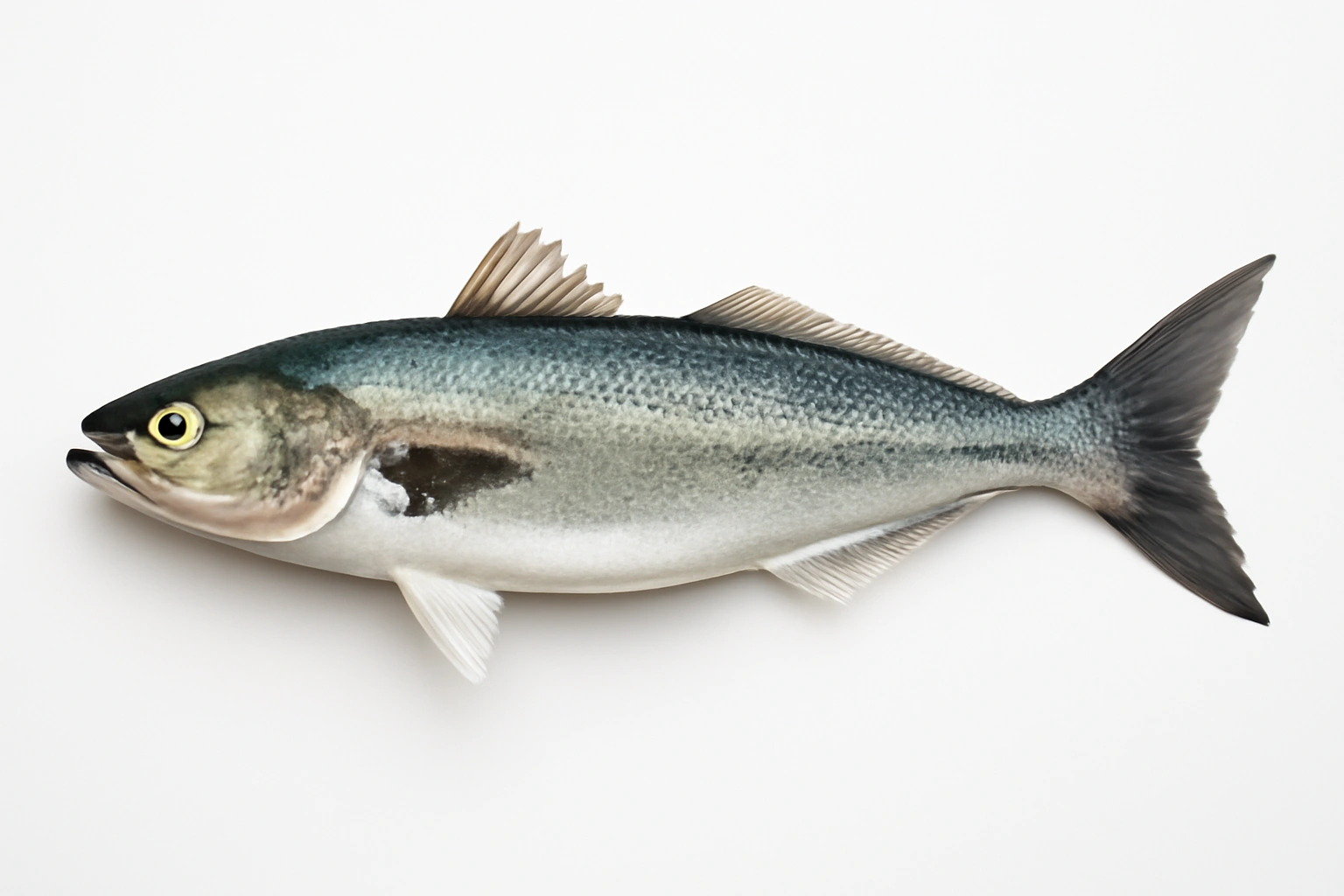
- Streamlined body with a robust head and wide mouth.
- Colouration
- Bluish-green coloration on the back with silver sides and a white belly.
- Sexual dimorphism
- Absent/not very evident
- Growth
- Rapid during juvenile stage, then average
Taxonomy
- Family
- Arripidae
- Order
- Perciformes
- Class
- Actinopterygii
Related species
Habitat & distribution
- Environment
- Coast, Open sea
- Preferred bottom
- Sand, Gravel, Reef
- Geographic distribution
- Along the southern coasts of Australia and New Zealand.
- Micro-habitat
- Prefers to hunt near the surface, often near natural barriers or in the surf.
Prefers clear waters, often around natural structures.
Presence by sea area
Diet
- Primary prey
- small fish, crustaceans
- Secondary prey
- squid, shrimp
- Occasional prey
- larvae, plankton
- Feeding behaviour
- Hunts in groups, attacking prey en masse, often near the surface.
- Natural predators
- sharks, seals, cormorants
Diet varies with seasonal availability of prey.
Behaviour
- Activity
- diurnal
- Social behaviour
- large_schools
- Aggressiveness
- medium
- Migration
- Undergoes seasonal migrations along the coasts for spawning and food searching.
- Seasonal behaviour
- In warmer months, it approaches the shores, while in winter it migrates to deeper waters.
- Juveniles
- Juveniles tend to stay in shallow waters, in large schools.
- Adults
- Adults actively hunt and move in schools in more open waters.
Reproduction
- Spawning season
- September, October, November
- Spawning depth
- Between 20 and 60 meters
- Eggs
- Pelagic, transparent, floating eggs.
- Larval stage
- Fry develop quickly, feeding on small planktonic organisms.
- Sexual maturity
- 3-4 years
When to catch Australian Salmon
Activity calendar
Activity by season
Best times
This species shows peak fishing activity in spring, summer and autumn, when the productivity index (FPI) reaches its highest values.
Fishing activity decreases in winter, when conditions are less favourable.
Ideal conditions
Water temperature
Where to catch it
Best spots
Bottom preference
Spot type
Fishing techniques
Recommended
Other applicable
Recommended baits
Baits by pressure
How to really catch it
Australian salmon is a fast, high-strung coastal predator, with a streamlined body, robust head, and wide mouth built to chase prey schools near the surface. When the sea wrinkles over sand or along rocks and the school switches into feeding mode, it is one of those fish that can suddenly turn the water into pure action.
🐟 Good to know
A lesser-noticed biological trait is that it lays pelagic, transparent, floating eggs: instead of staying on the bottom, the eggs remain suspended in the water column. In their earliest stages, the fry also feed on small planktonic organisms before gradually shifting to larger prey.
🌊 Where & when
It lives along the southern coasts of Australia and New Zealand, over sandy beaches, gravel, reefs, estuaries, rocky shores, and open water, from the shoreline down to 200 meters. In warmer months it moves closer to shore and becomes more reachable, especially from March to November; between September and November it undertakes spawning migrations and reproduces between 20 and 60 meters.
🎣 How to really catch it
To truly fish for it, spinning is the most direct approach: look for surface activity in the surf, beside natural barriers, from piers, or along rocky points, and cast artificial lures retrieved at a lively pace to imitate fleeing baitfish. Surfcasting, light trolling, and live or natural baits such as sardines, shrimp, and small fish also work well, with a 5-8 ft medium-heavy rod, 10-15 lb line, and a 20-25 lb fluorocarbon leader.
💡 The detail that makes the difference
The most reliable tip is to read the school, not the individual fish: this species hunts in groups and often concentrates its attacks near the surface. If you see the water come alive in the surf or along a rocky point, do not insist on fishing deep: keep the presentation high in the water column, even unweighted in shallow water, and cover water quickly.
Catch & handling tips
- Fight
- Energetic, with numerous jumps and sudden bursts.
- Handling
- Handle carefully to avoid damaging the scales.
- Release
- Release promptly to reduce stress, preferably removing the hook in the water.
Curiosities & culture
- Record catches
- Maximum documented size: up to about 89 cm and 9.4 kg (source: FishBase). There is no official IGFA All-Tackle record for this species.
- In the kitchen
- Used in grilled and smoked dishes.
- Cultural notes
- Considered an important species for sport fishing due to its fighting ability.
- Historical notes
- Traditionally fished by coastal communities for generations.