
Overview
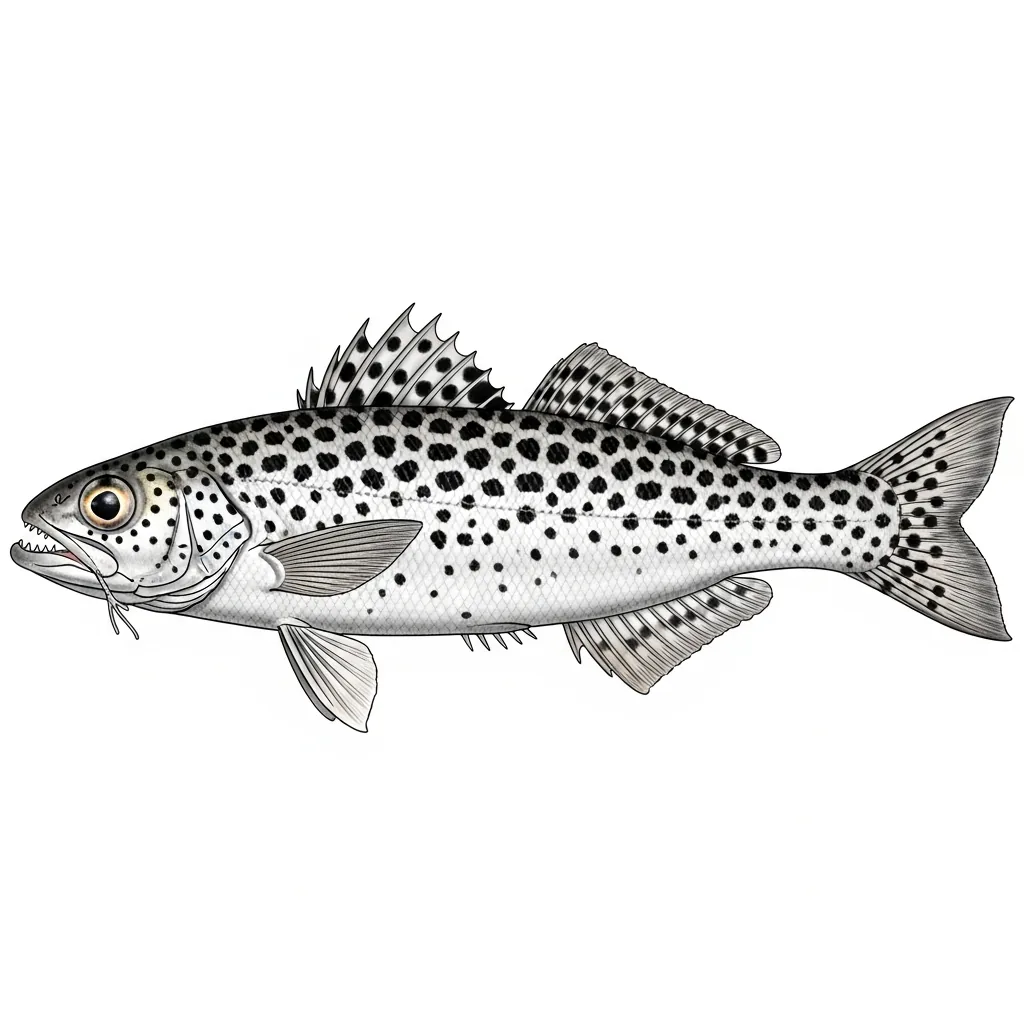
Very popular coastal predator in the Gulf of Mexico and US Atlantic coast.
Identification
- Body
- Elongated, sleek body with a moderately pointed head.
- Colouration
- Silvery color with dark spots along the back and sides.
- Sexual dimorphism
- Not very evident
- Growth
- Rapid, especially in the first few years.
Taxonomy
- Family
- Sciaenidae
- Order
- Perciformes
- Class
- Actinopterygii
Related species
Habitat & distribution
- Environment
- Coast, Estuaries, Brackish
- Preferred bottom
- Seagrass, Mud, Sand
- Geographic distribution
- Primarily along the Gulf of Mexico and the Atlantic coast of the United States.
- Micro-habitat
- Often hides among seagrass meadows and shallow areas of river deltas.
Prefers areas with abundant marine vegetative cover.
Presence by sea area
Diet
- Primary prey
- shrimp, small fish, cephalopods
- Secondary prey
- crabs, other crustaceans
- Occasional prey
- jellyfish, algae
- Feeding behaviour
- Hunts mainly at dusk and dawn, using speed and surprise to catch prey.
- Natural predators
- sharks, dolphins, jackfish
Easily adapts to changing prey according to seasonal availability.
Behaviour
- Activity
- diurnal
- Social behaviour
- small_groups
- Aggressiveness
- medium
- Migration
- Resident, with small local migrations between feeding and breeding areas.
- Seasonal behaviour
- During the summer months, moves to deeper water, while in winter, more common in bays and rivers.
- Juveniles
- Juveniles tend to stay in sheltered, shallow waters.
- Adults
- Adults frequent both coastal and estuarine environments in search of food.
Reproduction
- Spawning season
- April, May, June
- Spawning depth
- between 1 and 5 meters
- Eggs
- Pelagic eggs, spherical and transparent.
- Larval stage
- Larvae drift in marine currents before settling in coastal areas.
- Sexual maturity
- 2-4 years
When to catch Spotted seatrout
Activity calendar
Activity by season
Best times
This species shows peak fishing activity in spring, summer and autumn, when the productivity index (FPI) reaches its highest values.
Fishing activity decreases in winter, when conditions are less favourable.
Ideal conditions
Atmospheric pressure
Very active on flats.
Good activity.
Less active, deeper.
Water temperature
Where to catch it
Best spots
Bottom preference
Spot type
Fishing techniques
Recommended
Other applicable
Recommended baits
Baits by pressure
How to really catch it
The spotted seatrout is an elegant predator of shallow coastal water, sleek-bodied, dark-spotted along the back, and always ready to exploit a prey’s brief mistake. When the light fades or begins to return, among seagrass, sand, and mud, it becomes a very real and compelling fish to target with purpose.
🐟 Good to know
One well-documented biological trait of Cynoscion nebulosus is that it releases pelagic eggs that are spherical and transparent. After hatching, the larvae drift in marine currents before settling in coastal zones. It is a key stage in the species’ life cycle, linking open water to the estuaries and bays where juveniles later grow.
🌊 Where & when
You’ll find it mainly in estuaries, bays, river mouths, and seagrass meadows, over sand, mud, or grassy bottoms, from the surface down to about 20 meters, primarily along the Gulf of Mexico and the Atlantic coast of the United States. In winter it is more common in bays and rivers; in summer it tends to move deeper. The most favorable period runs from March to November, with spawning from April to June in shallow water.
🎣 How to really catch it
To catch it for real, medium-light spinning is the clearest and most reliable approach: a sensitive rod, 10-15 lb nylon, a 20 lb monofilament leader, and light presentations with live shrimp or artificials worked through lanes in the seagrass and along the edges of shallow flats. Fish them naturally at first light and dusk, when it hunts small fish, crustaceans, and cephalopods with quick strikes. Casting, bait fishing, and a slow drift also work well in estuaries.
💡 The detail that makes the difference
The practical edge is to read the boundary, not the middle: the contact line between seagrass and sand, or between more open water and a river mouth, gathers both prey and ambush points. With a light sinker or a subtle artificial, run the bait tight along that seam and keep the action simple, because this species often strikes where cover and open space meet.
Catch & handling tips
- Fight
- Fights vigorously with sporadic bursts and quick escapes.
- Handling
- Hold firmly to prevent slips, carefully free the gill openings.
- Release
- Gently release while supporting the fish's weight.
Curiosities & culture
- Record catches
- Maximum documented size: up to about 100 cm in length (source: FishBase). IGFA All-Tackle record: 7.92 kg (17 lb 7 oz), caught at Ft. Pierce, Florida (USA).
- In the kitchen
- Highly valued fried or baked, often accompanied by fresh salads or spicy sauces.
- Cultural notes
- In American popular culture, often celebrated for its culinary and sporting qualities.
- Historical notes
- Traditionally hunted by sport-fishers along the Atlantic coast for its fight and flavor.